
Outdoors
How Does The Fly Agaric Actually Kill Flies?

Even if you don’t know much about mushrooms, the fly agaric will not be confused with other species. This bright forest inhabitant has a poor reputation. The Latin and Russian names for it are Amanita Muscaria (mushroom fly-agaric). What is the origin of this unusual name? Does the fly agaric actually kill flies? Valentina Pavlovna Wasson, a mycologist, and Robert Gordon Wasson, a historian, answered this question in their book “Mushrooms. Russia and History”. Today you can find Amanita Muscaria for sale in a variety of forms.
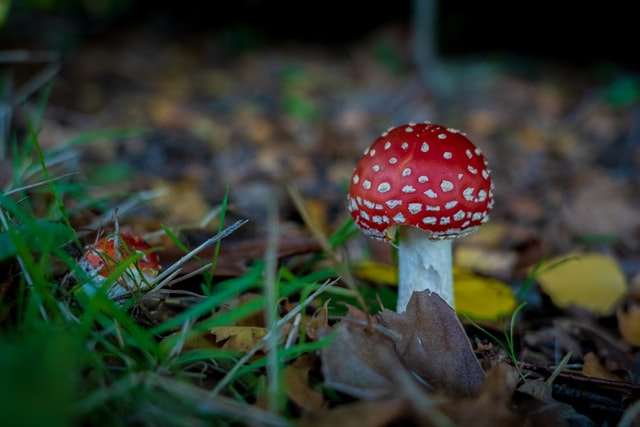
Many people have believed since childhood that fly-agaric kills all insects that try it. These mushrooms can still be used in Europe as an insecticide-free of charge. People are very confident in their effectiveness. People are taught about the properties and effectiveness of fly agarics by their elders.
It is unknown when this myth was created. Although ancient authors wrote often about mushrooms, they did not mention killing flies. It is certain that the majority of the population in rural Italy and Greece have never heard about the poisonous fungus’ insecticidal qualities. It is also not known by the Basques or the entire Iberian Peninsula population.
Eugene Rolland, a biologist, noted in his book “Popular Flora” that the French name “tuemouche”, which means “killer of flies”, was often used in France by the Alsace and Department of Aude villagers, bordering Germany. The name “fly-agaric” was a light term that made it into the majority of French mushroom reference books. However, only educated people use this name.
Rolland reports that red fly agarics hang from the ceiling in some houses in Le Val-d’ajol, Vosges. They believe they can “suck the life out” of flies. This phenomenon is not widespread and does not affect the whole population of France.
Germans have their own derivatives of Fliegenschwamm (or “fly mushroom”) in all dialects. In Dutch, and all Germanic languages in Scandinavia, there is a “fly-agaric”. By the way, English does not associate the mushroom’s name with flies. The well-known English-language names fly agaric, fly amanita, and fly agaric were only discovered in the past two centuries. Slavs use the name “fly agaric”, and many forms of “killer flies” exist in nearly all languages.
The Wassons point out that the link between red mushrooms and flies can only be found in the languages of the Germanic or Slavic peoples in Northern Europe. Sources older than 600 years can contain the word “fly-agaric” in some form. In the 13th century, Albert the Great, a medieval scientist, wrote about fly-agaric for the first time. The fungus is mentioned twice in his massive work “De Vegetabilibus”, (“About Plants”), and both times it is described as being poisonous to flies. Here’s one excerpt:
Konrad von Megenberg (German scientist), the author of “Das Buch der Natur”), a book about nature, was born 100 years later. He almost exactly replicates the recipe of Albert the Great with milk. “Fly mushroom” is the name used by the author, which was widely used in Germany in the 14th century. Although there are some other authors that claim the mushroom is toxic to flies, they are all Germans.
It is also interesting to note that von Megenberg often imagines a fly-agaric appearing and confuses it with Lactarius piperatus, a conditionally edible mushroom. Albert the Great’s description of “bubbles looking like bubbles on patients with leprosy skin” is either an invention or a reference to another mushroom.
This means that German pundits shouldn’t be trusted as they seem to be fantasizing. Except for them, nobody talks about mushrooms that can be poisonous to flies, not the British, the Italians or the French. Carl Linnaeus, a great Swedish biologist, wrote about fly agarics being used for fly baiting in Smaland province in Sweden. In one of his books, Linnaeus also describes how to make a paste of fly agarics that can be spread on cracks of houses to kill bedbugs.
Jean Baptiste Bulyar (French mycologist), was the author of “History of poisonous plants and suspicious plants in France”, published 1799. He decided to end this issue. The biologist traveled throughout France and Spain looking for people who used fly agaric to control their insecticides. He decided to test the German authors by conducting an experiment that failed.
We don’t know if the scientist did a clarifying experiment. Bulyar may have had other important tasks than watching for flies and hanging fly agarics. One thing is certain: Bulyar wrote in his diary in 1793 that Amanita Muscaria, which is the mushroom fly agaric name, should be changed to Agaricus pseudoaurantiacus, just before his death.
Despite having vast knowledge on all topics, humanity has not been able deal with the poisonous mushrooms that are the middle band’s most prevalent. It is not known if he has killed flies yet. We do know that the Germans invented the term “fly agaric”, although we don’t know if they knew what they were talking about.
Don’t believe them if you tell them that fly agaric mushrooms are the most beautiful. Our “fly killers”, while more beautiful and amazing than any mushrooms found in nature, are far away from.
This is a super interesting post, thanks for it.
very interesting ,I didnt know that
Interesting piece. But the English is very bad. If written by a non-native speaker it should be better checked and edited.