
Health and Wellness
Smart Strategies for Safe and Responsible Waste Disposal

Key Takeaways
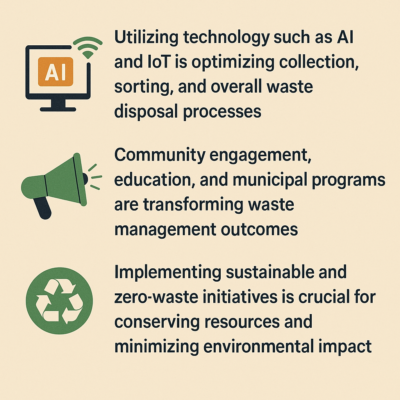
- Utilizing technology such as AI and IoT is optimizing collection, sorting, and overall waste disposal processes.
- Community engagement, education, and municipal programs are transforming waste management outcomes.
- Implementing sustainable and zero-waste initiatives is crucial for conserving resources and minimizing environmental impact.
Effective waste management is crucial for maintaining healthy communities and protecting the environment. As the quantities of household, industrial, and hazardous waste grow, developing safe and efficient disposal methods becomes more essential. Implementing practical strategies can reduce pollution, lower health risks, and help conserve natural resources. Raising awareness and educating people about different types of waste and their effects enables individuals and businesses to make informed, responsible choices. Small actions, such as separating recyclables from organic waste, can collectively make a big difference in keeping our environment clean and sustainable.
In more complex scenarios, specialized equipment plays a vital role in safely handling waste. For instance, a vacuum truck is often used to collect liquid or sludge waste from industrial sites, septic systems, and construction areas. This technology ensures that hazardous or difficult-to-handle materials are transported and disposed of efficiently, reducing the risk of spills and contamination. By combining everyday responsible practices with professional support when necessary, communities can maintain higher standards of sanitation and environmental safety.
Leveraging Technology in Waste Management
The evolution of technology has significantly altered how waste is managed. Artificial Intelligence (AI) solutions, for instance, now power advanced sorting systems that can accurately classify waste on recycling lines. These innovations not only boost the amount of recyclable materials processed but also significantly reduce contamination rates, which have long been a challenge in traditional recycling.
The Internet of Things (IoT) also offers a new layer of intelligence by monitoring waste bin fill levels and communicating data to centralized systems. This enables municipalities to optimize collection schedules, minimize fuel consumption, and prevent unsanitary overflows.
Community Engagement and Education
A successful waste management strategy depends heavily on resident participation and awareness. Municipal educational campaigns provide valuable information on the safe handling of recyclables, hazardous household items, and electronic waste. For example, following a tragic incident involving unsafe hazardous waste disposal, the Nelson Mandela Bay Municipality in South Africa launched a targeted awareness program for its citizens. These initiatives demonstrate that local engagement and consistent education can significantly enhance compliance and public safety, resulting in fewer accidents and healthier communities.
Implementing Smart Waste Collection Systems
Cities worldwide are adopting smart waste collection systems to modernize their traditional waste management methods. These systems use real-time sensors to track bin fill levels, allowing waste management crews to plan more efficient collection routes. In Singapore, the deployment of IoT-equipped smart bins resulted in a 30% increase in collection efficiency, leading to fuel savings, reduced emissions, and lower operational costs. Such systems can also trigger rapid responses to overflows or the detection of hazardous materials, keeping neighborhoods cleaner and safer.
Adopting Zero Waste Programs
Many municipalities are now committed to zero-waste policies—ambitious programs designed to reduce landfill contributions significantly. The City of Oakland’s Zero Waste Program, for instance, has set an ambitious target to reduce landfill waste by 90%, from over 400,000 tons annually to just 40,000 tons, through expanded recycling and composting initiatives, as well as supportive policy changes. These comprehensive frameworks serve as guides for other cities seeking to move beyond disposal and toward proper resource recovery.
Encouraging Sustainable Practices
Individuals and businesses can significantly help reduce waste by adopting sustainable practices at all levels. Recycling, reusing, and upcycling not only save natural resources but also generate economic opportunities and boost community health. By collaborating and thinking creatively, communities can develop innovative solutions tailored to their waste issues—such as composting programs, local repair shops, or educational recycling initiatives.
Utilizing Data Analytics for Waste Management
The integration of data analytics is helping municipalities unlock new efficiencies in waste management. By analyzing waste generation patterns, city officials can fine-tune collection schedules, resource allocation, and design incentive programs that encourage reduced waste and greater recycling rates. Software solutions paired with smart sensors not only track real-time data but also provide long-term insights, allowing cities to adjust their approaches as population densities and habits shift.
Conclusion
Smart and responsible waste management is critical for modern society. Leveraging advanced technologies, engaging communities, and prioritizing sustainable practices enable cities and individuals to minimize their environmental impact and promote public health. By adopting these strategies, both small towns and large urban centers can chart a path toward safer, cleaner, and more efficient waste disposal for future generations.
This is such an important topic. Our city recently added smart bins, and the difference is huge, fewer overflowing cans and fewer trucks driving around wasting fuel. I used to think recycling didn’t matter much, but seeing real data and how quickly bins fill up changed my mind. Even small habits at home help, we started composting last year, and our trash output dropped by almost half. When researching disposal options, I’ve even ended up on sites like https://offerup.pissedconsumer.com/review.html while decluttering. Every little bit adds up when a whole community participates.