
Business
Trends Shaping Lobbying and Government Relations Services
Key Takeaways
- Lobbying and government relations are rapidly evolving in response to digital transformation and increased political engagement from emerging industries.
- State policy trends, public-private partnerships, and record lobbying expenditures are reshaping the advocacy landscape.
- Organizations that adopt data-driven, adaptable strategies in both federal and state environments are best positioned for success.
Table of Contents
- Introduction
- Digital Transformation in Lobbying
- Increased Lobbying Expenditures
- Emergence of New Industries in Lobbying
- Focus on Infrastructure and Public-Private Partnerships
- State-Level Policy Trends
- Conclusion
Introduction
Lobbying and government relations are undergoing significant change as digital technology, complex public expectations, and new industries transform the advocacy landscape. For organizations working to influence legislative and regulatory outcomes, adapting to these shifts is more essential than ever. One central component is understanding the growing emphasis on federal government relations, which provide the backbone for successful policy engagement at every level.
Technological advancements, increased citizen activism, and heightened regulatory pressures are all prompting organizations to reassess their approach to government relations. Stakeholders, from advocacy groups to multinational corporations, see the value in innovative strategies that deliver measurable impact while maintaining transparency and credibility with policymakers and the public alike.
Data analytics, real-time digital mobilization, and the rapid pace of legislative cycles have created new challenges and opportunities. As a result, many organizations are exploring hybrid grassroots-digital campaigns and data-centric outreach methods to strengthen their influence in Washington and beyond. These trends make expert guidance and sophisticated government relations services more vital than ever.
Another critical factor is the breadth and depth of policy issues on today’s legislative agenda, from technology ethics to infrastructure renewal. Organizations are not only advocating on traditional topics but are also expanding their focus to encompass areas with significant and far-reaching political and economic impacts.
Digital Transformation in Lobbying
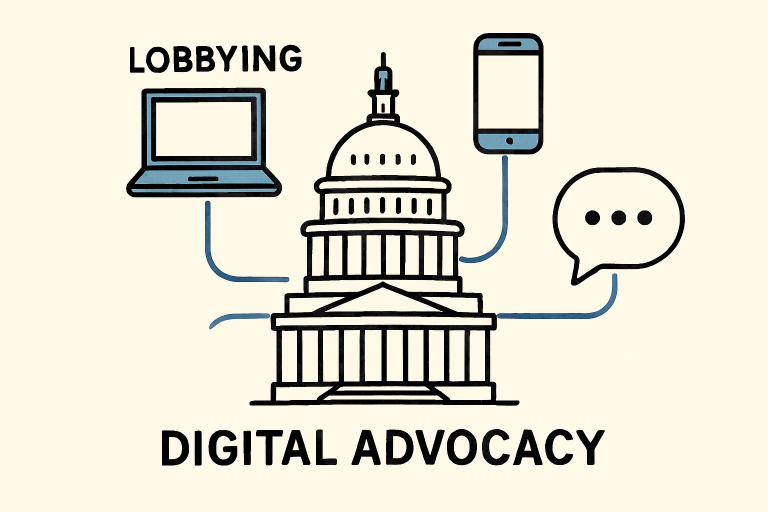
The shift to digital-first lobbying, often referred to as “Lobbying 4.0,” is fundamentally reshaping advocacy strategies. By leveraging advanced analytics, organizations and lobbyists can assess the impact of policy proposals, identify key influencers, and deploy targeted messaging with unprecedented accuracy. Social listening and digital monitoring offer real-time feedback loops, improving outreach effectiveness and response agility.
Digital grassroots platforms enable organizations to quickly galvanize supporters, amplifying their voices at critical moments in legislative debates. This empowerment of individuals and coalitions has democratized policy influence, allowing niche and previously underrepresented groups to gain a foothold in political discussions. For an in-depth look at digital advocacy’s influence, see Politico’s coverage of technology lobbying trends.
Increased Lobbying Expenditures
Lobbying expenditures have reached record levels, with federal lobbying spending exceeding $4.5 billion in 2024. This surge is driven by companies and organizations responding to urgent issues such as tax reform, artificial intelligence governance, and evolving healthcare regulations. New market entrants and established firms alike are investing heavily in lobbying to shape policy frameworks and ensure their interests are represented.
The rise in spending reflects an environment where every legislative change holds significant consequences. As highlighted by The Washington Post’s analysis on lobbying growth, this financial commitment underscores the competitive and strategic nature of modern advocacy.
Emergence of New Industries in Lobbying
New sectors, such as cryptocurrency, artificial intelligence (AI), and renewable energy, are now key players in the lobbying world. High-profile campaigns by pro-crypto organizations, which spent more than $100 million to influence federal policy in the past year, exemplify this shift. The rapid growth of these industries has prompted lawmakers to debate regulations on new technologies and business models, providing both opportunities and risks for innovators.
AI, in particular, has catalyzed urgent discussions around ethics, transparency, and public safety. The intersection between emerging technologies and policymaking is changing the conversation in both Congress and state legislatures, with ripple effects that are likely to shape lobbying for years to come.
Focus on Infrastructure and Public-Private Partnerships
Infrastructure remains a cornerstone of economic competitiveness, and lobbying activity around these issues has intensified as well. The expanding role of public-private partnerships (PPPs) – formal collaborations between government and the private sector – has become central to advancing critical infrastructure projects efficiently. These partnerships supplement public funds with private investment and expertise, requiring careful advocacy to align stakeholder interests and promote favorable policy outcomes.
This focus on collaboration, data-informed project proposals, and outcome-based influence has led to more sophisticated and productive lobbying on behalf of both industry and the public sector. As highlighted by The New York Times in its infrastructure lobbying report, the interplay between national priorities and industry needs is reshaping how major infrastructure projects are developed and implemented.
State-Level Policy Trends
State legislatures are playing an increasingly significant role in shaping policy on issues such as privacy, AI, and pay transparency. This shift has compelled organizations not only to monitor but also to actively participate in advocacy at the state and local government levels. State policies on tech, regulation, and economic development now routinely set precedents for national debates, amplifying the importance of multistate strategies.
Organizations are responding with team expansions focused on specific states, investing in digital tracking tools for local legislation, and relying on coalitions to influence lawmakers where the stakes are highest. The fluidity of the state policy environment, coupled with differences in regulatory timelines and priorities, requires constant vigilance and strategic adjustment.
Conclusion
The landscape for lobbying and government relations is more dynamic than ever. Mastery of digital advocacy, understanding the nuances of emerging industries, and proactive engagement with state policy developments are all fundamental to effective advocacy today. Organizations that keep pace with these changes through ongoing investment and strategic flexibility will remain influential partners in the policymaking process – shaping decisions that impact entire industries and communities.
The focus on state-level policy is also crucial. Lately, I’ve noticed more legislative action happening in local statehouses than in D.C. on tech issues. While I was researching some affordable connectivity options to help a local community group stay plugged into these digital advocacy tools, I ended up checking https://airtalk-wireless.pissedconsumer.com/customer-service.html to see if their support was reliable enough for our volunteers. It really highlights how critical access is, you can’t participate in this new digital democracy if you can’t even get online.