
Health and Wellness
The Rise of Habitual Vaping: Why Many Users Are Choosing to Go Nicotine Free

Many individuals believe that vaping is synonymous with nicotine. However, many users do not vape for this purpose alone. In fact, the entire experience of vaping, including inhaling and exhaling the vapor, is satisfying in itself. This difference between the act and the substance is what has turned vaping without nicotine into a lifestyle product rather than just a quitting aid.
The habit is doing more work than we thought
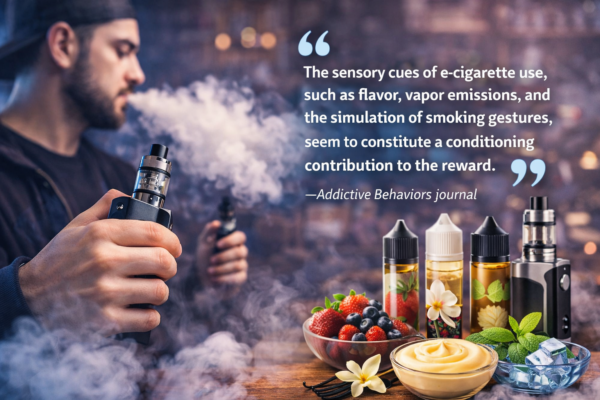
Many who attempt to quit vaping actually miss the ritual more than the product itself. The physical feeling, the routine of bringing your hand to your mouth and back, breathing in and out of something, seeing the vapor escape your lips… these are all cues that can be perceived as very comforting and pleasant. According to Addictive Behaviors journal, the sensory cues of e-cigarette use, such as flavor, vapor emissions, and the simulation of smoking gestures, seem to constitute a conditioning contribution to the reward. That is, the rewarding feeling of vaping may occur in response to these cues, perhaps independently of nicotine administration.
This is why, frequently, trying to quit cold turkey is an exercise in setting oneself up for failure. Your body has ingrained a set of often unconscious responses in you that it wants to associate with pleasure, or at the very least relaxation. That is why it must be approached not as a side-effect of the nicotine, but as an element of the addiction in and of itself.
Why the step-down model actually works
If you’re looking to cut out the nicotine, the vape taper has been a pretty effective method. Most e-liquids are labeled in milligrams and cycle down through 18mg, 12mg, 6mg, 3mg, and eventually 0mg is a popular way to ease off the substance over a few weeks without demanding superhuman reserves of willpower to overcome the total battery of withdrawal symptoms that hit you like a freight train when you go cold turkey.
But more importantly, it’s also much easier to psychologically avoid withdrawal when you can have the exact same experience minus the withdrawal, right down to the physical device and ritual, and comfort flavors. The “experience vs. withdrawal” dynamic going on makes it super psychologically easy to quit, or even just come down in dose from time to time if you want to keep using.
What changes at zero nicotine
The first thing users will notice is the throat hit (or lack of it). Nicotine is known to cause a scratchy sensation in the throat, which is particularly pronounced in high-nicotine salt e-liquids. At 0mg nicotine, this sensation goes away, so you’ll feel an obviously gentler draw, which highlights the taste even more, as there’s no “irritation” masking it.
This is where zero nicotine vape options with great ingredients come in. If there’s no nicotine there to mask the flavor of the e-liquid and it’s crafted from excellent, top-quality ingredients to begin with, it’s instantly clear in every puff. A good PG/VG ratio has to deliver a satisfying enough throat hit and reasonable vapor production even without the nicotine. Similarly, the flavor has to be solid enough to stand on its own without the nicotine aiding it. Sub-ohm devices are particularly good at this. The bigger clouds and richer flavor are perfect for this type of vaper: without nicotine, the cloud is the draw, not the flavor hit on the throat.
The wellness angle isn’t just marketing
A new type of vaper is emerging, and they were never smokers in the first place. The sensory qualities of vaping are too enjoyable to restrict it to only those using it to ditch a dangerous habit, and there are plenty of reasons beyond nicotine dependency to choose no-nic e-liquid.
The first step is to address the misconception that 0mg vapers “don’t need” to vape, or that they aren’t physically dependent on their ecig. This is because public misconception leads to a marginalization of this group but also, sometimes, they stigmatize themselves. Many of the effects of a physical dependency aren’t actually physical – there are routine and behavioral elements that drive continued use of a vape for many former smokers, and they’re no less significant just because they aren’t caused by a nic fit.
Vaping provides a range of different and unique flavors, from creamy dessert flavors to fresh fruit flavors – enough to make even the most avid candy enthusiast happy. But this flavor offering would be notably incomplete without the kick of the traditional tobacco flavored varieties. Like wine, alcohol, and coffee – another common reason to partake in a substance is the flavor. The nicotine-free option doesn’t leave this group of users high and dry.
Flavor matters more than it used to
The variety of flavors available in 0mg has continued to grow substantially as the industry has adapted to the needs of consumers. Fruit, dessert, menthol, and botanical flavor profiles are now offered in formulations made especially for those who desire a pure, strong flavor experience unalloyed by nicotine. Vape tongue, the tendency of the taste buds to become desensitized after overuse of a single flavor, is something to be avoided by rotating through your e-liquids regularly.
The world of nicotine free vaping is becoming more appealing to those who wish to incorporate the hobbyist aspect of the culture without the addiction that traditionally went with it.
Removing nicotine from vaping doesn’t lessen the flavors. For many, it heightens it – taking a habit that involves nicotine and turning it into a conscious choice with better flavors.
What’s surprising about that? Many people try to break their nicotine addiction this way. I also chose vaping. For anyone new to this, I’d suggest focusing on ease of use rather than chasing advanced features right away. Simple devices often provide a more consistent experience while you’re still learning. I remember going through https://hazesmokeshop.ca and noticing how different models are designed for different levels of users.
For anyone thinking about quitting or switching, it’s worth remembering that choices like going nicotine‑free can have broader health benefits – including for oral health. That’s something the team at Shoreline Dental Studio emphasizes in their care approach: protecting long-term dental wellness often starts with reducing habits that may contribute to gum irritation, enamel wear, and dry mouth. Whether you’re curious about nicotine‑free vaping or simply looking for support as you rethink your relationship with vaping, it’s encouraging to see more conversations like this happening https://www.shorelinedentalstudio.com
this really resonates with what i’ve observed among friends who vape. there’s definitely a psychological component that goes beyond the nicotine itself. the hand-to-mouth motion, the exhale, the whole sensory experience creates a ritual that becomes deeply embedded in daily routines.
i think what’s interesting is how this shifts the conversation around vaping cessation. when someone tries to quit but finds themselves missing the act rather than the substance, it suggests that the habit itself needs to be addressed separately from the chemical dependency. that’s not an easy thing to navigate because you’re essentially trying to break a physical routine you’ve likely built over months or years.
what i appreciated about this piece is how it frames nicotine-free vaping as a legitimate middle ground rather than just dismissing it. not everyone is ready to completely walk away from the ritual, and having options that satisfy that need without the nicotine dependency seems like a practical approach for many people.
the comparison to other habitual behaviors like nail biting or hair twirling makes sense – we all have these unconscious routines that provide comfort. recognizing that vaping can serve that same psychological function for some people is an important distinction that often gets lost in the broader conversation around vaping and health.