
Auto/Vehicle
Modern Boat Cover Solutions for Everyday Boaters

Key Takeaways
- Boat covers are essential to protecting watercraft from sun, rain, and debris.
- A variety of materials and designs are available to suit different needs and budgets.
- Recent innovations, such as automatic cover systems, simplify maintenance and daily use.
- Choosing the right solution depends on factors like fit, material, usability, and sustainability.
Table of Contents
- The Importance of Boat Covers
- Types of Boat Covers
- Innovations in Boat Cover Technology
- Choosing the Right Boat Cover
- Maintenance Tips for Boat Covers
- Cost Considerations
- Environmental Impact
- Conclusion
Protecting your boat from harsh weather and environmental factors is vital for ensuring its long-term value and performance. With new technologies and design innovations, today’s boat covers offer unmatched convenience and superior protection, making them more accessible and practical for the everyday boat owner. Many boaters are now considering motorized boat covers for their ability to simplify boat care while maximizing security.
Investing in the right boat cover saves time and money by preventing avoidable wear, such as mold and mildew, UV fading, and accidental damage during storage or transport. This not only reduces repair costs but also keeps your vessel looking and performing its best for years to come. Modern covers are engineered to handle varied climates and frequent use, making them suitable for weekend enthusiasts and serious boaters alike. Learning about available types and understanding key features empowers owners to make smart choices that directly affect their boats’ longevity and value.
As awareness about the impact of single-use plastics and non-reusable materials grows, sustainable and innovative boat cover options have come to the forefront. These solutions offer boaters durability without sacrificing environmental responsibility, which is an increasingly important factor for many in the boating community. From highly customized fitted covers to automatic and remote-controlled systems, the range of available options continues to expand as technology and user demand evolve.
The Importance of Boat Covers
Boat covers shield vessels from external threats, including ultraviolet sun damage, rain, snow, and airborne debris. Without proper protection, these elements can degrade surfaces, cause fading and cracking, and encourage the growth of mold or mildew. By blocking out harmful rays and moisture, a good cover not only preserves the aesthetic appeal of your boat but also prevents costly repairs to both interior and exterior components.
According to experts at Boating Magazine, consistently using an appropriate cover can extend a boat’s lifespan by several years and help avoid breakdowns or premature aging of surfaces and electrical systems. Proper covering is especially crucial during off-season storage or when trailering, as even a few months of unprotected exposure can lead to significant deterioration. Source
Types of Boat Covers
The modern market offers a variety of boat cover solutions, each with its own features, advantages, and drawbacks:
- Tarps: These are lightweight, budget-friendly, and widely available, but they often lack a customized fit, allowing wind and water to get underneath and potentially cause abrasion or moisture damage.
- Shrink-Wrap: An ideal option for long-term or winter storage, it provides a tight, complete seal around the boat. However, it is typically used only once and can contribute to environmental waste if not properly recycled.
- Fitted Covers: Custom or semi-custom fitted covers are tailored to specific makes and models, ensuring a snug fit that better protects against weather and reduces the risk of wind lift. Properly maintained, these covers can last eight to ten years, providing both value and reliability.
Choosing the correct style depends on your storage circumstances, local climate, boat usage frequency, and concern for environmental impact. For more details on the different types and their use cases, consult established resources such as Boating Magazine.
Innovations in Boat Cover Technology
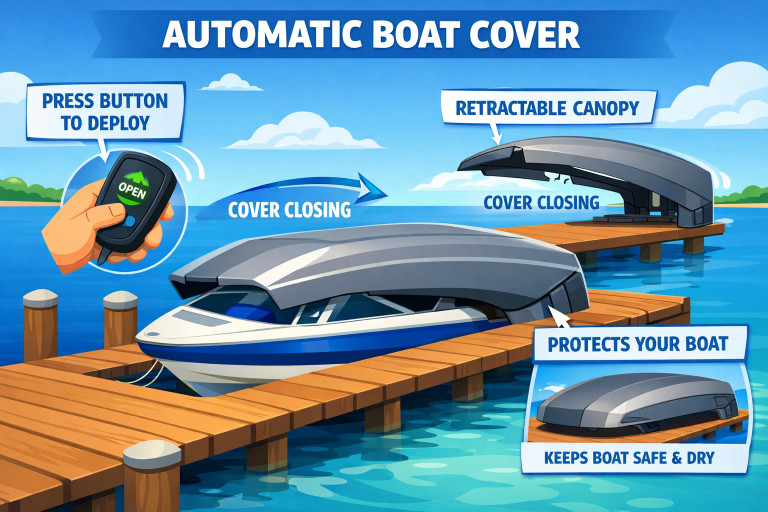
Cutting-edge advancements have revolutionized the boat cover landscape, providing options that are both convenient and highly protective. Automatic or motorized systems now allow boaters to cover or uncover their boats with minimal effort. With the touch of a button, these systems roll or retract covers along patented tracks, typically operated by a remote control or smartphone app. That means solo boaters can securely cover a large vessel in minutes, streamlining both arrival and departure at the dock.
One notable innovation came from a collaboration between Hewitt Machine & Manufacturing, Inc. and Marine Concepts, which developed a track-based system that enables a single person to manage a 40-foot boat cover effectively. This helps eliminate labor-intensive steps and ensures your vessel is protected quickly every time it is docked or stored. The efficiency of these systems also reduces the risk of forgetting or skipping coverage, further preserving the boat’s integrity.
Choosing the Right Boat Cover
Several factors determine which boat cover is best for your needs:
- Material Quality: Opt for marine-grade, UV-resistant, and mildew-resistant fabrics for maximum long-term durability.
- Fit: A proper fit is essential, as loose or generic covers can lead to wind-related damage and water entry. Custom and semi-custom covers often provide the highest level of protection.
- Ease of Use: Select a cover that matches your lifestyle. If you launch frequently, consider the convenience of automatic or quick-release designs so daily use does not become a hassle.
If unsure, your local marina or a qualified marine supply retailer can help you compare options and find the perfect match for your vessel’s dimensions and your storage environment.
Maintenance Tips for Boat Covers
To ensure your boat cover remains an effective shield, regular maintenance is necessary:
- Clean your cover frequently using mild soap and water to prevent mold or mildew buildup.
- After every use, inspect for any signs of wear, holes, or seam separation, and make repairs promptly to prevent larger issues.
- Store your cover completely dry to avoid moisture-related damage. If possible, fold it loosely to prevent creasing or premature fabric fatigue.
Cost Considerations
Although custom covers and automatic systems often demand a larger initial investment, the long-term benefits in reduced repair bills and prolonged vessel life are significant. Generic tarps are the least expensive upfront, but they may need to be replaced more often and offer less protection. Finding the right balance between upfront cost and expected duration is key.
Keep in mind that insurance providers may offer reduced premiums for boats that are consistently covered and well-maintained, which can further offset cover-related expenses.
Environmental Impact
Sustainability is an important consideration in boating equipment. Disposable covers like shrink-wrap are practical for some applications but contribute to landfill waste unless recycled through specialty programs. In contrast, quality reusable covers can last nearly a decade, minimizing waste and environmental footprint. Many manufacturers are adopting recycled materials and non-toxic coatings, making it easier to find eco-friendly options.
When possible, opt for reusable materials and support local recycling initiatives to help make your boating experience more sustainable for future generations.
Conclusion
Modern boat cover solutions have evolved to offer far greater protection, convenience, and sustainability than ever before. With options ranging from simple fitted tarps to sophisticated automatic systems, today’s boaters can easily find a solution that matches their lifestyle and priorities. By understanding your specific needs and choosing a reliable, long-lasting cover, you help protect both your boat and the environment, ensuring many more safe and enjoyable outings on the water.