
Business
How Modern Warehouse Layouts and Equipment Choices Impact Shift Productivity
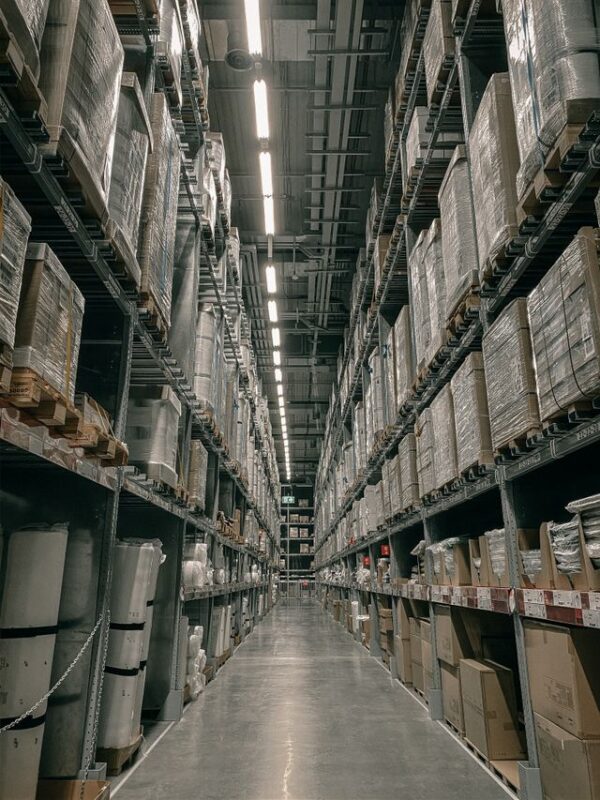
The efficiency of a warehouse is not determined by its size or the number of trucks available. What really matters is how effectively an operator uses their shift to get work done, and how much of that time is lost due to unnecessary movements, difficult access, or truck unavailability. This means that layout and equipment decisions are ultimately about optimizing the time of operators. The problem is that most operations are not aware of how many hours they are actually losing.
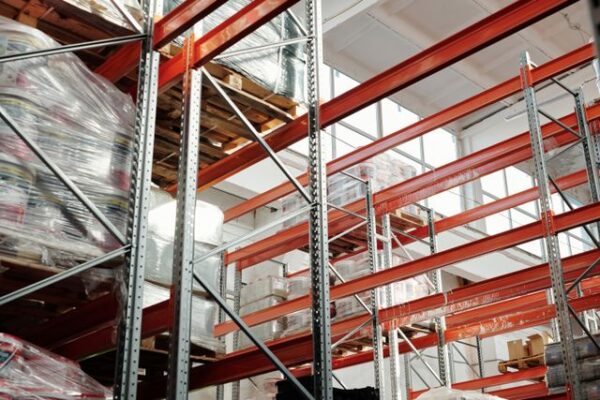
The Density-Accessibility Trade-Off Nobody Budgets For
Every warehouse manager must decide whether to cram more pallet positions into the same footprint or keep aisles wide enough for fast movement. Narrow aisle and very narrow aisle layouts solve the storage problem, but they require specialized equipment that is slower for general dock work or long horizontal runs due to its tight turning radius.
This trade-off is often overlooked. A facility redesigns for maximum storage density, purchases the specialized trucks the new racking demands, and is surprised that cycle times increased instead of decreasing. The layout should drive the SKU velocity, not the other way around. If 20% of your SKUs generate 80% of your order volume, those SKUs need short, fast pick paths. Everything else can live in denser, slower-to-access storage. If you design one layout for all of your inventory, regardless of how often it moves, you’ll pay too much for racking and rack up too many disappointed order pickers at the same time.
Travel Time, Not the Pick Itself, Eats the Shift
If you ask most managers where labor is spent in picking, they’ll tell you it’s in the picking. But it’s not. They don’t say it because they’re lying or lazy. They say it because they’re assuming it. It’s counterintuitive, but labor is mostly travel. The implicit view of the “labor is spent in picking” manager is an operator in a deep-sea of shelving, popping a product in or out of a bin, case, or tote every few seconds for hours on end while commanding a bay-crane or robot with their mind (presumably while barefoot, wading through 12″ of brine). In reality, that operator is walking or driving to a location for the bulk of a pick cycle. The picking part only occupies a fraction of it.
Comfort is a Throughput Investment, Not a Perk
Fatigue impacts productivity even before affecting comfort. For example, operators during a ten-hour session on a firm, poorly suspended seat lose posture, lose attention, and lose pick rate in the back half of the day, and exposure to vibrations is a well-documented contributor to this fatigue. Whole-body vibration from worn suspension compounds hour after hour, and these effects appear as longer cycle times, near misses, and higher error rates, well before someone files an official complaint.
This is the part of the conversation about productivity that gets skipped in favor of bigger, flashier fixes. A site will approve a six-figure automation plan and ignore a seat that’s been degrading for three years. Operators working long shifts on worn OEM seats with flattened cushioning and shot lumbar support are pushing through discomfort that a proper suspension seat would remove. Operations serious about sustaining pick rates across a full shift, especially in multi-shift sites where the same truck runs sixteen or twenty hours a day, are better off treating seating as a fleet asset instead of an afterthought, which is exactly why facilities upgrading aging cabins increasingly look at forklift seats sydney suppliers rather than settling for whatever OEM replacement ships with the truck. It’s a low-cost fix against a real, measurable productivity drag.
Slotting Fast Movers Into the Golden Zone
The golden zone is that perfect area of height between your waist and your shoulders. It’s the spot that’s easy for you to reach, no bending, stretching, or climbing required. Put your highest-velocity stock keeping units right there. Near the dispatch end of the warehouse. And you simultaneously cut travel time and reach time. It sounds so simple. That’s why it is completely ignored.
Too many warehouses slot by arrival date or available space. We’ve all seen it; the highest selling item packed away on the TOP beam. You can almost smell the opportunity costs as the reach truck gains altitude, then gingerly maneuvers back to earth with its yuppie load. Or, taking an additional 30 seconds to extract it from floor level. Ideally, your team wants to avoid both of these scenarios. However, when slotting is optimized, this is exactly the kind of counterintuitive game-changing action you can expect. If you slot your top-selling items right, you could quite easily triple the number of picks your operators make in an hour. Or, and this is often missed, you could reduce the number of times they pick it up by half.
Matching Truck Class to the Task, Not the Fleet
There are so many different types of forklifts, depending on the specific needs of the warehouse or job site: counterbalance, reach, pallet jack, order picker, etc. However, many operators and managers treat these forklift classes as though they can be swapped in and out with each other. The truth is, these are fundamentally different logistics machines that are each designed to excel in a different aspect of the materials handling process. Counterbalance trucks are the catch-all forklift. Dock work, general handling, this is the truck you want. They’re rugged, versatile, and ready for anything.
Reach trucks are higher and nimbler so you can slot them down narrow aisles between higher racks. But if you need to push heavy pallets quickly from A to B, with very little lift, then you’re wasting a reach’s gift. A pallet jack will run rings around it for that job and probably handle a load twice as heavy in the process. For that matter, a rider pallet jack will do the same job as a walkie at twice the speed. Forklift order pickers: same deal. They’re designed to get order pickers up and down, all shift long, safely. If you maybe occasionally need to raise and lower an order picker, but mostly it’s all about the horizontal running you’re wasting a day on every order picker. Or a stacker. Or a rider stacker. Or a turret. And so on.
Matching the class to the task isn’t sexy, but when your pallets per hour rate spikes it’s amazing how quickly you become a true believer in buying the right tool for the job.
Electric vs Internal Combustion: The Shift-Hours Math
The decision to choose an electric or internal combustion forklift depends on more than just environmental concerns or the upfront cost. It’s really about how you can use your forklifts to move the most material in the shortest time at the lowest ongoing expense.
When electric’s your best answer, it’s because it’s got the lowest total cost of ownership at the end of the day. You can kind of see this as electric having a lot of the costs of running a forklift bundled upfront, in the form of facility power upgrades and batteries. But once you’ve paid those costs back, you’ve got this really efficient, really low-cost way to move goods.
It’s a similar principle when internal combustion wins the argument. A lot of its “total costs” show up in the cost to operate the thing: the fuel. So you’ve got the higher maintenance costs and shorter lifespan to deal with in trade for a truck that just plain runs more of the time.
Deadheading and the Case For Task Interleaving
Driving without cargo is known as deadheading. This wasted movement occurs when a forklift must move from one location to another without anything to carry. A truck that just delivered a pallet must return to the other side of the warehouse before it can handle its next assignment. In the meantime, it’s not doing anything but wasting time. Effort, time and fuel for nothing are added up over an entire shift and then deadheading can quickly eat up a lot of your fleet’s total hours.
Warehouse management system task interleaving will make sure of it, as put-away, picking, and replenishment moves are combined and the truck will seldom have to travel empty if there is a useful task close by. Not to mention that a zone-based layout design will have the same aim in mind, as it doesn’t allow tasks to spread all over the building but keeps them close. New equipment isn’t needed to optimize this challenge, just smarter dispatch logic.
Maintenance, Safety, and the Cost of One Breakdown
When a forklift is down, so is everything that pallet was supposed to touch, meaning other operators can’t pack or unpack other loads, move putaway stock into picking position, or complete an order that’s now short a line item. The scheduling cost is easy to measure, but the knock-on productivity losses it generates are not. Fix one problem while it’s just a worn belt and you’ll often prevent a cascade of others that it would have sparked on its way out, and if the belt was just going to hold on for another week, everything it should have been running in that week will take a real productivity hit when it stops doing its share of the work.
Measure Before You Redesign
Before you sign up for a layout overhaul or order a fleet of lift trucks, run this simple test: for the next couple of weeks, just record your picks per labor hour, forklift utilization rate, and average travel distance per order. If you’re like most managers, you’ll find at least one situation to improve in that list. If you’re busy reordering the trucks and letting the consultants specify the layout without first gathering that data, well, see the note about cost up there. A hundred thousand dollars at the wrong solution is $100,000 less to spend on the right one.
A facility with low utilization and high travel distance per order has a layout issue. A facility with high utilization but declining picks and putaways starting at about three in the afternoon has an operator fatigue or maintenance issue. Those operators aren’t suddenly hitting a wall in their productivity, and your lift trucks aren’t suddenly losing top speed, they’re both just getting worn as the shifts go on. Fixing a maintenance problem is reliable and profitable, a sloping line on a consultant’s PowerPoint not so much.