
Business
How to Prepare for a Professional Drain-Cleaning Visit
A professional drain-cleaning visit goes better when the homeowner prepares before the truck arrives. The useful preparation is mostly clear access and clear information. Most of it takes less than an hour.
Note the symptoms without provoking another backup
Plumbers rely on the symptom history a homeowner provides, and they say specifics matter more than guesses about causes. Write down which fixtures drain slowly, which ones gurgle, and where odors appear.
A single slow sink often points to a local clog, sometimes inside the P-trap, the curved pipe under the basin. Slow drainage at several fixtures, or a toilet that bubbles while a shower runs, points toward the main sewer line.
Floor drains in basements and laundry rooms belong on the list, since odors or standing water there often point toward the main line.
Gurgling is worth noting separately. Technicians describe it as trapped air escaping past a partial blockage deeper in the line, and they treat it as an early warning.
Once a backup has started, don’t run water or flush fixtures to test them. Record what has already happened, with times and fixtures, so the visit doesn’t begin with a fresh overflow.
Record what has already gone down the drain
A written list of prior attempts keeps the plumber from repeating them. Include plunging, hand augers, hot water flushes, and any store-bought product, along with rough dates.
Chemical drain cleaners need special mention. Plumbers ask homeowners to stop using chemical drain cleaners once an appointment is set, because residue in the pipe can irritate skin and eyes and can foul the equipment fed into the line.
Disclose which products were used and when, even if the drain seemed to clear afterward. The product name and the date give the technician enough to work safely, and no chemistry lesson is required.
Clear access without opening anything
Technicians need floor space at each affected fixture. Empty the cabinet under the sink, move storage away from floor drains, and roll up rugs along the path from the entry door.
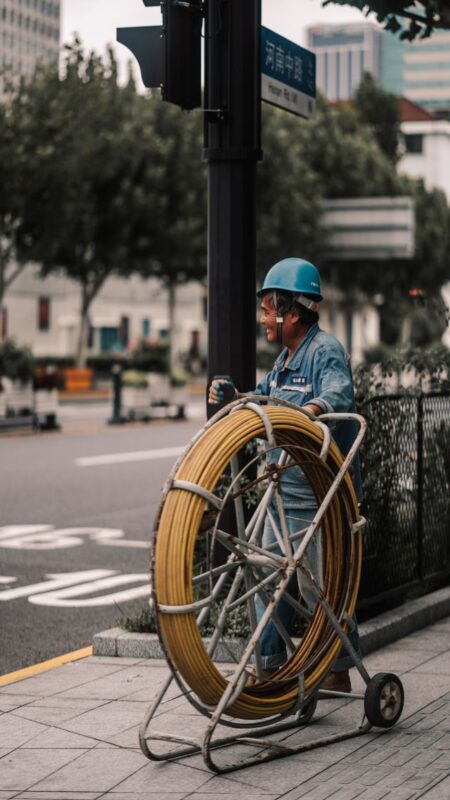
Cable machines and hydro jetting hoses are heavy, and a clear route from the driveway to the work area saves time on the clock. That route often ends at the cleanout access point, the capped pipe that gives direct entry to the main line.
If the cleanout sits in a yard or behind shrubs, clear a path to it before the appointment.
Locate the cleanout ahead of time, but leave the cap on. Opening a cleanout on a backed-up line can release waste under pressure, and that job belongs to the plumber.
Know where the main water shut-off valve is, and leave it alone unless water is actively overflowing. Plumbers need water available to trace the blockage and to confirm the line is clear afterward.
Preparation like this lets a licensed plumbing service get straight to clearing stubborn drain clogs and tracing the cause behind them.
Secure pets and share property details
A curious dog and an open toolbox don’t mix. Plumbers ask that pets stay in another room or in the yard for the length of the visit.
Unlock side gates and leave parking close to the door, since cable machines and jetters travel back and forth to the truck.
The plumber chooses a method based on property details, so share them before arrival. A home on a septic system needs different handling than one connected to a municipal sewer, so mention the tank and its location if known.
If the tank’s last service date is known, pass that along as well.
Report older piping material, past repairs, and any history of tree root intrusion. Roots in an aging line often call for hydro jetting followed by a camera inspection, and that planning starts with what the homeowner shares.
For a recurring clog, hand over a timeline: when it started, how often it returns, and which fixtures are involved. That record helps the plumber decide among a drain auger, hydro jetting, and a camera look inside the pipe.
Ask about the method and the cleanup
A short set of questions before work begins prevents confusion after. Ask which method the plumber plans to use and why it fits the symptoms described.
A cable machine handles many hard clogs and main-line blockages. Hydro jetting, which scours the pipe wall with high-pressure water, is the usual answer for grease buildup, scale, and root intrusion.
For a clog that keeps coming back, ask whether a camera inspection makes sense. The camera can show root intrusion, a cracked pipe, or a sag in the line, and it gives the crew a look at the actual condition of the pipe.
Cleanup questions matter too. Ask what the crew hauls away, when normal water use can resume, and what signs in the following days would warrant a return call.
Ask how long the visit should take and whether water use should be limited until the crew arrives.
None of this preparation clears the drain itself. It lets the visit start at the problem, with a clear path and a full history.