
Health and Wellness
The New Green Economy Depends on Mining

Efficiency is one of the essential factors of success. That is no different with mining, which is quick –and interestingly – becoming a cornerstone of the green economy. There is now a global goal of reducing carbon emissions and pollution, enhancing energy and resource efficiency, and preventing the loss of biodiversity and ecosystem service, according to the United Nations Environment Programme.
All that progress means that companies will be digging deep – with some taking that to the literal sense and digging into the earth. Investors are keenly watching the industry, looking for trends.
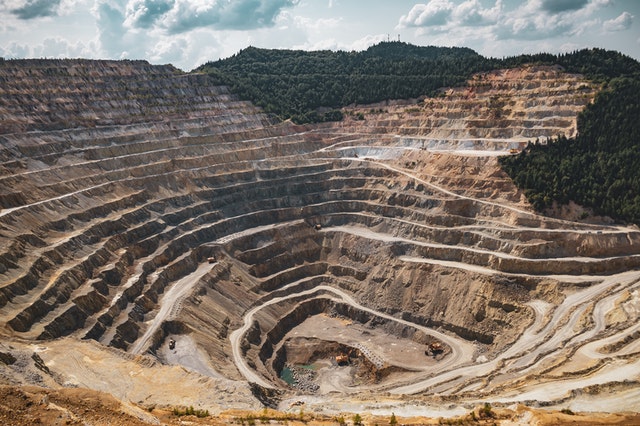
“The global green energy movement is made possible by metals. Mining is going to take on increased importance as the years go by, particularly when certain metals are limited to certain countries and resources become more difficult to find. Technological advancements to increase efficiency and maintain profitability as they search for metals becomes more intense will be essential to the industry,” said Saint Jovite Youngblood, owner of Youngblood Metals Mining.
Increasing employee efficiency at mining sites and also the efficiency of the actual equipment will continue to take on increased importance as the new economy will demand new technology that is dependent on certain metals.
“As countries switch to green energy, demand for copper, lithium, nickel, cobalt and rare earth elements is soaring,” according to CNN reporting. “But they are all vulnerable to price volatility and shortages, the agency warned in a report published on Wednesday, because their supply chains are opaque, the quality of available deposits is declining and mining companies face stricter environmental and social standards.”
So, how are mining companies going to effectively confront these challenges?
The answer is: strategically.
For starters, the companies are taking a technical deep dive themselves and will be using analytics and data to increase equipment utilization and efficiency. Picture rooms with monitors wrapping around the walls and multiple screens feeding data from sensors to employees who are keeping track of numerous data points.
“Technologies… help operations teams track and analyze information. This also includes driver efficiency and equipment utilization for each of the machines,” according to Cummins.
Secondly, fuel economy improvements will increase equipment efficiency as well as financials. Mine haul trucks have a 400 metric ton payload capacity or the equivalent of 200 passenger cars put together. Carrying the same payload while using less fuel will equal big savings for mining operations.
Technological advancements have positively impacted the mining industry. Over the span of just 20 years, mining equipment has taken great strides.
“I’m not sure that people fully grasp just how far we have come. Soon we will have IoT helping to further increase efficiency as humans and computers will work collaboratively in brand new ways. It seems to me that there has been a steady acceleration of technology to where we are now – and things are just going to keep getting better,” said Saint Jovite Youngblood, who emphasized the importance of such advancements.
If the current trend continues, the world will be a much cleaner and safer place or all, he noted.
“Today, a typical Cummins engine used in a mining application emits 90% less particulate matter (PM), oxides of nitrogen (NOx), and hydrocarbons (HC). This is in comparison to engines produced before the year 2000. Less NOx means less smog. Less particulate matter means less accumulation of these particles on ground or water,” according to the website.