
Life
Engineering Services That Drive Innovation in Biotech and Life Sciences

Biotech and life sciences are among the fastest-moving industries in the world. New discoveries are happening every day. But behind every breakthrough in a lab or a new treatment reaching patients, there is often a layer of engineering support that makes it possible.
Engineering services bridge the gap between complex science and real-world solutions. They help researchers work faster, scale up production, ensure accuracy, and even make healthcare more accessible.
In other words, while researchers dream up science, engineering makes sure those dreams actually work outside the lab. Together, they are driving innovation in ways that are transforming healthcare and improving lives worldwide.
In this article, we’ll explore the key areas where engineering services are powering progress in biotech and life sciences.
#1 Laboratory Automation and Robotics
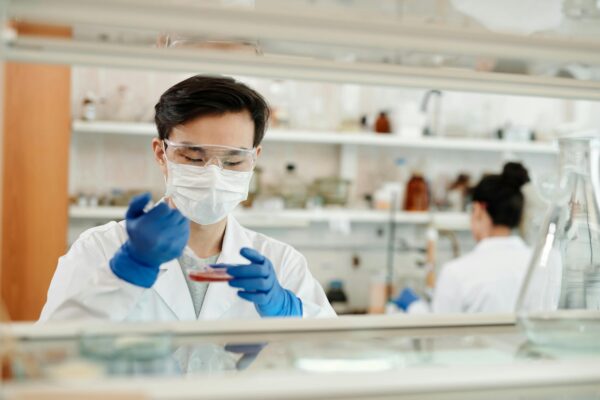
Engineers are developing an intelligent laboratory environment that is more than just a robotic arm. It’s a comprehensive system that integrates robotics, software, and artificial intelligence.
The main goal is to free human researchers from mundane tasks so that they can focus on creative problem-solving and analysis. These new tools are the workhorses of scientific discovery.
Liquid handling robots are a great example of this. These systems precisely transfer tiny amounts of liquid. This is impossible for a human to do consistently at a large scale.
The robots offer flawless accuracy and speed, which reduces human error. Some new systems even transfer liquid without using plastic tips. This makes them a more sustainable solution.
High-throughput screening (HTS) systems are another powerful tool, particularly in drug discovery and biological research. They can test millions of chemical compounds against biological targets.
This process previously required several weeks. But now, it can be completed within hours. Not surprisingly, the HTS market is booming. It was valued at just over $20 billion in 2024 and is expected to more than double, reaching almost $49 billion by 2033.
#2 Precision Instrumentation and Medical Devices
Engineering has made it possible to create incredibly precise instruments that are transforming medical and biological research.
At the forefront of this revolution is next-generation sequencing (NGS). It’s a powerful, massively parallel technology that can sequence millions of DNA fragments at the same time.
Miniaturization is another significant engineering innovation. Lab-on-a-chip (LOC) technologies are a great example of miniaturization. They put multiple lab functions on a single chip, which can be as small as a few square millimeters.
These devices use microfluidics to control tiny amounts of fluid. This allows them to perform complicated biochemical tests much faster and in less space than traditional lab equipment.
Precision-focused engineering services are making it possible to create advanced medical devices that improve care for both healthcare providers and patients.
Point-of-care devices are excellent examples. According to Gener8, these devices cover a wide range of devices, from simple consumables like glucose test strips to more sophisticated machines used for in-depth diagnostics.
Advancements in microfluidic technology are making point-of-care (PoC) diagnostics more accurate and efficient. A new semi-automated microfluidic device, for instance, has been developed specifically for PoC molecular diagnostics.
#3 Process Engineering for Biomanufacturing
A great discovery in the lab is only half the battle. The final challenge is scaling it up from a tiny sample to a mass-produced product for millions of people.
Process engineering is the final piece of the puzzle. It takes a successful lab experiment and turns it into a full-scale factory. This is challenging because living cells are fragile and unpredictable. Engineers must carefully manage oxygen, nutrients, and waste on a massive scale.
The process follows a few basic steps. It begins with cell line development. This is where a specific cell line is selected and sometimes genetically engineered. The goal is to create a reliable and high-performing cell factory.
Next is upstream processing, which involves growing a huge number of these cells. This happens in large bioreactors, which are carefully controlled for temperature and nutrients.
After the cells have made the product, it is harvested from the cell culture. Finally, the raw product is sent for purification and formulation. This step involves several rounds of filtering and washing to remove debris and other unwanted materials. The final product is then packaged as a liquid or powder.
Among the countries, the UK is already looking to expand its biomanufacturing infrastructure.
The Engine of Progress
Engineering is not just a support function for biotech, but it’s the central force driving innovation. Without these services, the incredible breakthroughs in biotech would stay confined to a lab bench.
As the industry pushes forward into exciting frontiers, the role of engineering will only grow. And this engineering-driven revolution will create a healthier and more sustainable future for everyone.