
Business
Benefits of Using Pneumatic Casters in Industrial Applications

Table of Contents
- Enhanced Shock Absorption
- Versatility in Terrain Navigation
- Reduced Noise Levels
- Applications Across Industries
- Considerations When Choosing Pneumatic Casters
Modern industrial operations demand solutions that offer both efficiency and adaptability. Pneumatic casters fulfill this need by providing a range of significant advantages, particularly through their air-filled tire construction. This unique design offers improved maneuverability, reduced vibration, and the ability to protect sensitive cargo, making it invaluable across a variety of demanding workplaces.
As industries evolve rapidly, the right choice of mobility equipment can significantly impact productivity and safety. Pneumatic casters can transform operations by minimizing equipment damage, reducing workplace noise, and making transportation on unpredictable surfaces more manageable. Their role in meeting these requirements has positioned them as a preferred choice for many facilities and sectors seeking heightened performance and reliability.
Enhanced Shock Absorption
A primary reason industries opt for pneumatic casters is their advanced shock-absorption capabilities. The air cushioning within these casters acts as a powerful buffer when equipment moves over rough surfaces or encounters sudden jolts. This protective feature is especially valuable in sectors where safeguarding delicate equipment or fragile goods is paramount. For example, in electronics manufacturing or laboratory environments, even small shocks can result in significant asset loss or equipment malfunction. Pneumatic casters help mitigate this risk, leading to sustained operational efficiency and fewer disruptions.
Versatility in Terrain Navigation
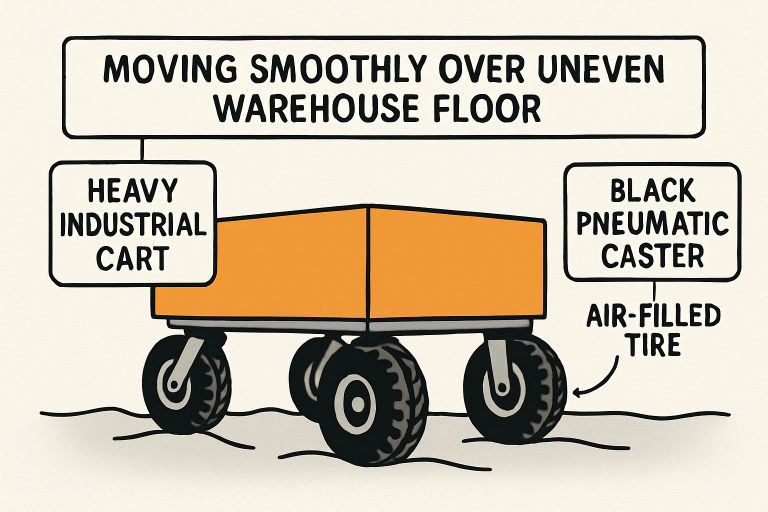
Pneumatic casters are designed to handle a variety of surfaces, a fundamental advantage for applications beyond traditional factory floors. Whether moving across concrete, gravel, or even grass, these casters maintain smooth, stable movement. This functionality is particularly beneficial for construction sites, warehouses with uneven flooring, and outdoor event setups. Their ability to seamlessly adapt to different environments reduces worker strain, minimizes cargo damage, and enhances operational speed.
In addition, the adaptability of pneumatic casters significantly contributes to workplace safety by reducing the risk of accidents that often occur when transporting heavy items over rough or unstable ground. Numerous safety-focused organizations, including the Occupational Safety and Health Administration (OSHA), recommend using appropriate mobility solutions to reduce workplace accidents and enhance overall job-site safety. Choosing the right caster is a crucial step toward meeting those guidelines.
Reduced Noise Levels
Noise pollution in industrial environments can pose serious health risks to workers and may disrupt sensitive work processes. Pneumatic casters play a vital role in maintaining a quieter workspace. The flexible, air-filled tires absorb much of the vibration and sound that would otherwise be generated by rolling equipment across hard surfaces. For industries that require strict noise controls, such as research facilities, healthcare, and laboratories, pneumatic casters help ensure regulatory compliance while improving working conditions. According to the National Institute for Occupational Safety and Health (NIOSH), reducing noise exposure in industrial settings not only protects hearing but also enhances concentration and productivity.
Applications Across Industries
Pneumatic casters have a wide-reaching presence in a variety of commercial and industrial applications, each with its own mobility challenges and requirements:
- Industrial Machinery: Casters attached to bulky production equipment make rearrangement and routine maintenance easier without risking floor or equipment damage.
- Material Handling Equipment: Warehouses and distribution centers rely on these casters to efficiently move products, reducing time spent on loading and unloading.
- Construction: Their robustness makes pneumatic casters ideal for transporting construction materials and tools across uneven terrains typical of building sites.
- Aerospace: The high-value and delicate nature of aerospace components benefits from vibration-dampening casters, which protect sensitive parts during transit within assembly and repair facilities.
Considerations When Choosing Pneumatic Casters
To truly benefit from pneumatic casters, several selection criteria must be considered. Load capacity requirements vary from one application to another, making it essential to select casters rated appropriately for the intended load. Wheel size and tread material should match the typical surfaces in the work environment; a larger wheel generally offers better shock absorption and easier rolling over obstacles. It is also essential to incorporate a maintenance schedule to keep the tires properly inflated, as under-inflated tires can impede performance and cause premature wear.
Additionally, factor in environmental conditions, such as exposure to chemicals, temperature extremes, and moisture, which can influence the material’s lifespan. Choosing features that match these demands helps maximize uptime and maintain consistent operations. Consulting with a caster specialist can further ensure the solution best meets organizational requirements while aligning with industry-specific regulations and best practices.
In summary, pneumatic casters are a robust investment for any industrial setting that values agility, protection, and worker well-being. Their unique combination of shock absorption, noise reduction, and ability to traverse diverse terrains allows for greater flexibility and efficiency throughout the production and transportation process. Employing pneumatic casters is a strategic move to safeguard both products and personnel, delivering tangible benefits across a spectrum of industrial applications.