
Business
6 Security Vulnerabilities Common in Commercial Business Parks

Commercial business parks rely on a silent assumption that is costly: each occupant believes the park takes care of security, and park management assumes tenants take care of their own. Practically, both are somewhat correct. But where most weaknesses exist is between those two assumptions. This is reality, not an abstract concept, and managers or owners needing to rationalize investment in security must recognize where the risk truly lies.
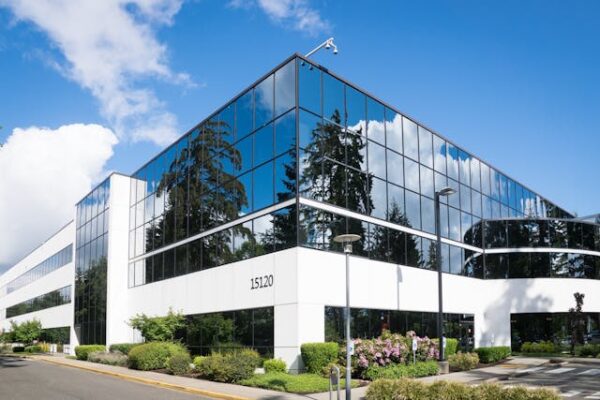
The Multi-Tenant Accountability Gap
When there are 20 or 30 separate tenants within a business park, the responsibility for security is spread thin. No one specifically “owns” the shared lobbies, common parking structures, or service corridors, and therefore, they are not monitored the same way someone’s office would be.
Where there’s one opportunity for crime, there will be soon be many: all the intruder needs to do is discover the one unguarded corridor.
Etching this out starts with a formal, written security matrix that establishes who exactly is responsible for what. Loose terms like “management maintains common areas” on paper is the equivalent of leaving a door propped open.
After-Hours Exposure
Most commercial parks empty out by 6:00 PM. That’s not just inconvenient for delivery drivers, it’s a predictable pattern that experienced thieves rely on. Sophisticated commercial burglary is rarely impulsive. Targets are scouted, access points are tested during business hours, and the entry happens well after everyone has left.
The after-hours period is when technology-only approaches fall apart. A triggered alarm means nothing if response time is 25 minutes and the breach takes four. Random-interval mobile patrols break the predictability that makes a site worth targeting in the first place. A criminal who can’t reliably know when a patrol will arrive is a criminal who moves on.
When Cameras Don’t Actually Deter Anyone
There are CCTV deployments that essentially create paperwork and little else: fixed cameras, covering predictable angles, the captured footage only ever seen after an incident has occurred, and “dummy” units located solely to reassure you there are no gaps in coverage. Experienced intruders can recognise non-operational cameras. But low-quality video is better than no video; even dummy cameras can serve a deterrent purpose. And operational cameras, whether viewed in real-time or after the fact, can lead to an intruder’s identification and eventual arrest.
This is where the technology-vs-human-judgement debate becomes practical. Security guards adelaide bring something a camera cannot: the ability to judge whether a situation demands an immediate response, whether an alarm was the result of a mechanical fault or a real intruder, and whether a person on the premises has a genuine reason to be there. According to the Australian Institute of Criminology, a significant percentage of commercial burglaries are “unforced”, that is, they occur through unlocked doors or windows, rather than forced entry. No alarm is triggered. No camera records a breach. Only a physical check would discover it.
Loading Docks and Service Entrances
The front gates may look impressive, key card access, barriers, intercoms. But then the loading dock around the back has a milk crate propping open the door so your warehouse team doesn’t have to swipe in every time. Service entrances are the most consistently under protected point in a commercial park.
They’re designed for high traffic, which means they’re inconvenient to keep secured, which means people stop securing them. Combined with the lack of lighting in alleys and staging areas, these points offer cover the main entrance would never allow. A lighting audit, a simple walk through after dark, will often show you how many ‘blind spots’ you have around service areas that no one ever thought to address.
What Maintenance Signals to the Outside World
The Broken Windows theory can be directly related to this. Flickering lights that nobody has bothered to replace, shrubbery that has been allowed to grow unchecked, a “no trespassing” sign that has long lost its legibility, graffiti that has been there for two weeks, none of these would actually count as a significant breach of your security. However, collectively, they all indicate that there is nobody attentively looking after this location.
Environmental design, or, as it is referred to at times, CPTED, treats the space itself as the means of discouraging potential offenders. Hedges which are neatly trimmed means better natural surveillance. Good lighting equates to less cover. A site where it’s easier to see somebody who shouldn’t be there. These don’t count as mere aesthetic decisions, however. They are all constituent parts of a defensive perimeter.
A maintained-looking site looks monitored, even in the absence of any actual people. A poorly-maintained site, on the other hand, looks unguarded.
Tailgating and Internal Access Control
Implementing access control systems has little effect if the proper behavior is not followed. For instance, if an employee sees someone at a secure door and holds it open because this person “seems to belong here”, the money invested in the key card access system has gone to waste. Tailgating, also known as piggybacking, is one of the top access control failures in multi-tenant environments and in most cases, the employee did not have malicious intentions.
It goes beyond technology, training is essential. Employees from all tenants’ businesses must be aware that it is their responsibility to question unfamiliar faces, this is not impolite. A short 15-minute training session on tailgating will help fill this hole in your security that sophisticated burglars will actively seek and exploit.
Security spend only makes sense as a system, where physical patrols verify what cameras flag, where access control is reinforced by behavior, and where the whole site is designed to make crime inconvenient rather than just documented.