
Business
Best Types of Security Fasteners for Modern Applications
Key Takeaways
- Understanding the different types of security fasteners is crucial for adequate asset protection in modern environments.
- Material choices and design features impact their suitability and security levels for particular applications.
- Installation and ongoing maintenance are vital to preserve fastener effectiveness and longevity.
Table of Contents
- Introduction to Security Fasteners
- Types of Security Fasteners
- Material Considerations
- Applications in Various Industries
- Installation Best Practices
- Maintenance and Inspection
- Emerging Trends in Security Fasteners
- Conclusion
Security fasteners play a critical role in protecting assets, equipment, and essential infrastructure in today’s world. Selecting the proper fastener is key to preventing tampering and unauthorized removal of assemblies, which helps maintain safety and peace of mind across industries. Many organizations and individuals rely on these specialized components for both temporary and permanent installations, making it essential to choose products from reputable sources such as Best Security Screws.
The increasing sophistication of tampering and theft attempts has elevated the importance of well-designed security fasteners. These specialized fasteners, distinct from their standard counterparts, provide an extra layer of protection often required for public facilities, business premises, and critical infrastructure. Knowing the unique types and their specific advantages will help ensure your assets are properly secured in a range of environments.
Properly chosen security fasteners do more than deter casual interference. They actively reduce theft and vandalism, protect vital systems, and support regulatory compliance. Material selection, environmental considerations, and the threat landscape all play vital roles when specifying the right fastener for a given use case. This comprehensive guide provides essential information to help you make informed decisions about the best security fasteners for your needs.
Equipping your site with high-quality, well-maintained fasteners enhances resilience and long-term performance. Whether safeguarding public park equipment, electronic enclosures, or transportation assets, keeping abreast of industry best practices and emerging innovations will future-proof your investments.
Introduction to Security Fasteners
Security fasteners, also called tamper-resistant or tamper-proof fasteners, are designed to deter or prevent unauthorized removal or manipulation. Unlike conventional screws and bolts, which standard tools can easily uninstall, security fasteners feature specialized head patterns that typically require unique driver bits for both installation and removal.
Demand for secure fastening has increased as the need to deter theft and vandalism, and to address liability driven by vandalism, grows in both the public and private sectors. For this reason, a diverse range of fastener options is now available to suit high-traffic locations, sensitive installations, outdoor environments, and high-value equipment. Crafting an effective security plan depends heavily on the strength and reliability of the fastener holding critical assemblies together.
Types of Security Fasteners
Different types of security fasteners are designed to withstand various tampering techniques and threat levels. Here are some of the most dependable options used in modern applications:
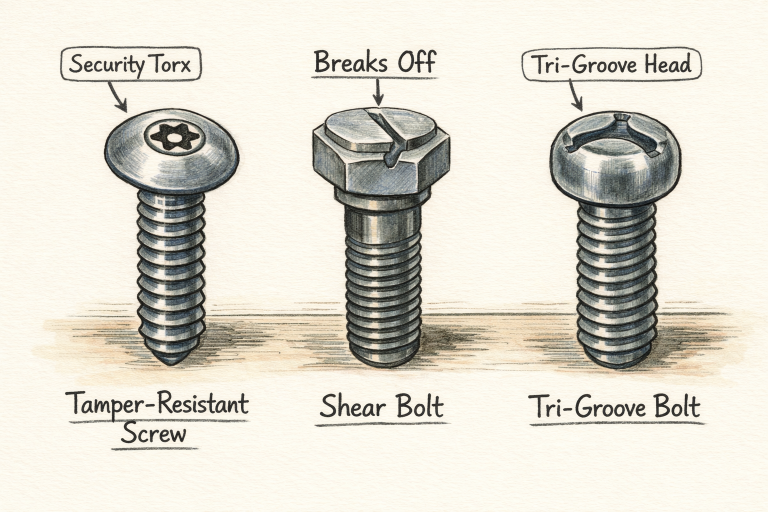
- Tamper-Resistant Screws: Available with head designs such as one-way, pin-in-hex, and spanner patterns, these screws can only be removed with specialized tools, making unauthorized disassembly much harder.
- Shear Bolts: Once tightened, the bolt head shears off, leaving a smooth, non-grippy surface. This design provides a permanent, tamperproof solution for high-security applications such as public spaces and utilities.
- Tri-Groove Bolts: These bolts feature a uniquely grooved conical head that requires a tri-groove socket for both installation and removal. This shape prevents tampering attempts using pliers and other conventional tools.
Fastener type selection is paramount; for mission-critical or public-facing assets, always opt for the highest security rating available within reasonable budget parameters. Information from reliable sources, such as Home Depot’s fastener guide, can further inform your decisions.
Material Considerations
The durability, lifespan, and resistance to both environmental and physical threats depend heavily on the material used to manufacture the fastener.
- Stainless Steel: Highly resistant to rust and corrosion. Best for outdoor installations and marine environments, where weather, salt, and moisture pose significant threats.
- Carbon Steel: While less corrosion-resistant than stainless steel, carbon steel offers excellent strength and is well-suited to high-load applications where toughness is a priority.
- Alloy Steel: Offers a premium combination of durability and wear resistance, ideal for high-stress areas subject to heavy use and impact.
Applications in Various Industries
Security fasteners are commonly used in the following sectors, each with unique risks and requirements:
- Public Infrastructure: Fixtures in parks, public benches, bus stops, traffic controls, and playgrounds commonly use one-way or shear fasteners to prevent theft and vandalism.
- Data Centers: Tamper-resistant screws and bolts secure server racks, access panels, and sensitive network infrastructure, providing vital layers of protection against physical intrusions.
- Correctional Facilities: Robust, tamper-proof fasteners anchor safety fixtures, monitoring equipment, and furniture, ensuring the integrity and security of confinement spaces.
Other industries, such as automotive, construction, and healthcare, also value tamper-proof fastening solutions. Insights into standard industry practices can be further explored through resources from Home Depot’s screws buying guide.
Installation Best Practices
Correct installation is crucial for the fastener’s intended security function. Always use the appropriate drive tool for your specific fastener type to ensure a proper fit and avoid damaging the head or fastener material. Installers must confirm compatibility between the fastener and the assembly material, accounting for both load requirements and potential corrosion risks. Adhering to detailed manufacturer installation instructions will further guarantee long-term tamper resistance and overall system security.
Maintenance and Inspection
Security fasteners are only effective when kept in optimal condition. Conduct scheduled inspections to check for corrosion, wear, or any signs of loosening and tampering. Replace components at the first appearance of degradation. Moreover, keep specialized removal tools securely stored and restrict access to authorized personnel to protect your asset’s integrity and maintain your security strategy.
Emerging Trends in Security Fasteners
Recent innovations are advancing the capabilities and intelligence of security fasteners. These developments include:
- Smart Fasteners: Sensor integration enables real-time tracking of tampering and environmental conditions, enabling predictive maintenance and enhanced situational awareness.
- Advanced Coatings: New coating technologies provide added resistance to extreme weather, chemicals, and abrasion, prolonging lifespan and complementing physical tamper-resistance features.
These emerging solutions help organizations adapt to evolving security challenges by combining hardware improvements with digital monitoring capabilities.
Conclusion
Security fasteners are a fundamental element of any robust protection plan, whether for public safety, sensitive infrastructure, or commercial assets. By selecting the appropriate fastener type and material, and by employing best practices throughout installation and maintenance, you maximize both performance and peace of mind. Stay informed about the latest security fastening trends and always prioritize using reliable, high-quality sources and components to keep your assets secure for years to come.