Health and Wellness
Minimally Invasive Techniques in Cosmetic Surgery
The Rise of Minimally Invasive Cosmetic Surgery
The landscape of aesthetic medicine has undergone a profound transformation, particularly by June 2026. We’ve witnessed a significant shift from traditional, highly invasive surgical procedures to a burgeoning array of minimally invasive and non-surgical alternatives. This evolution is driven by a confluence of factors, primarily patient demand for effective results with reduced downtime and fewer risks.
Patients today are more informed and discerning, often seeking subtle yet impactful enhancements that align with their busy lifestyles. The allure of achieving aesthetic improvements without the extensive recovery periods, general anesthesia, or visible scarring associated with conventional surgery is undeniable.
Here are some key benefits fueling the surge in popularity of minimally invasive cosmetic surgery:
- Reduced Downtime: Perhaps the most compelling advantage, these procedures allow individuals to return to their daily routines almost immediately, minimizing disruption to work and social life.
- Local Anesthesia: Many non-surgical treatments can be performed with local anesthesia, significantly reducing the risks and recovery time associated with general anesthesia.
- Outpatient Procedures: The majority of these treatments are conducted in an outpatient setting, offering convenience and often lower costs compared to hospital-based surgeries.
- Technological Innovation: Continuous advancements in medical technology have introduced sophisticated devices and techniques that precisely target specific concerns, such as unwanted fat or skin laxity, with remarkable efficacy.
- Clinical Safety: While no procedure is entirely without risk, minimally invasive options generally boast a favorable safety profile compared to their surgical counterparts, with fewer complications.
- Natural-Looking Results: The goal of many modern aesthetic treatments is to enhance natural features rather than create a drastically altered appearance, a preference increasingly voiced by patients.
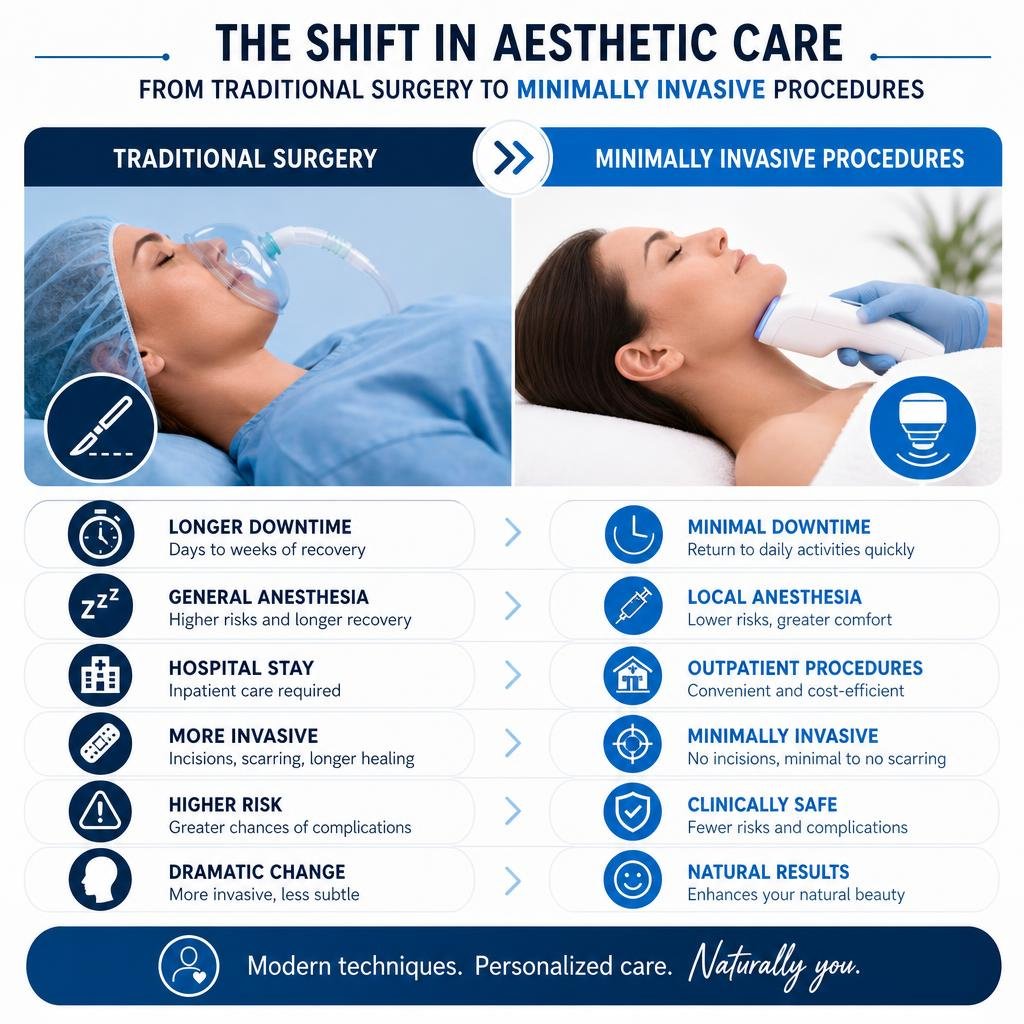
The aesthetic medicine field in 2026 continues to prioritize patient comfort, safety, and satisfaction, making minimally invasive techniques a cornerstone of modern cosmetic practice.
Non-Surgical Submental Contouring and Double Chin Reduction
The presence of submental fullness, commonly known as a double chin, is a widespread aesthetic concern. Over 68% of the population expresses dissatisfaction with their neck and chin fat, highlighting its impact on perceived age and overall facial harmony. This stubborn pocket of subcutaneous fat beneath the chin can obscure the jawline, creating an undefined profile that often resists diet and exercise efforts.
Achieving a well-defined jawline and a sleek neck contour is crucial for facial balance and a more youthful appearance. Fortunately, advancements in aesthetic medicine offer highly effective non-surgical solutions for minimally invasive chin reduction. These techniques are designed to target and eliminate localized fat cells, enhancing jawline definition and restoring aesthetic harmony to the lower face and neck.
When considering non-surgical submental contouring, patient candidacy is key. Ideal candidates typically have pinchable fat under the chin and are close to their ideal body weight. While these treatments primarily address fat, some also offer secondary benefits for mild tissue laxity. A thorough consultation is essential to determine the most suitable approach for each individual’s unique anatomy and aesthetic goals.
Cryolipolysis as a Minimally Invasive Cosmetic Surgery Alternative
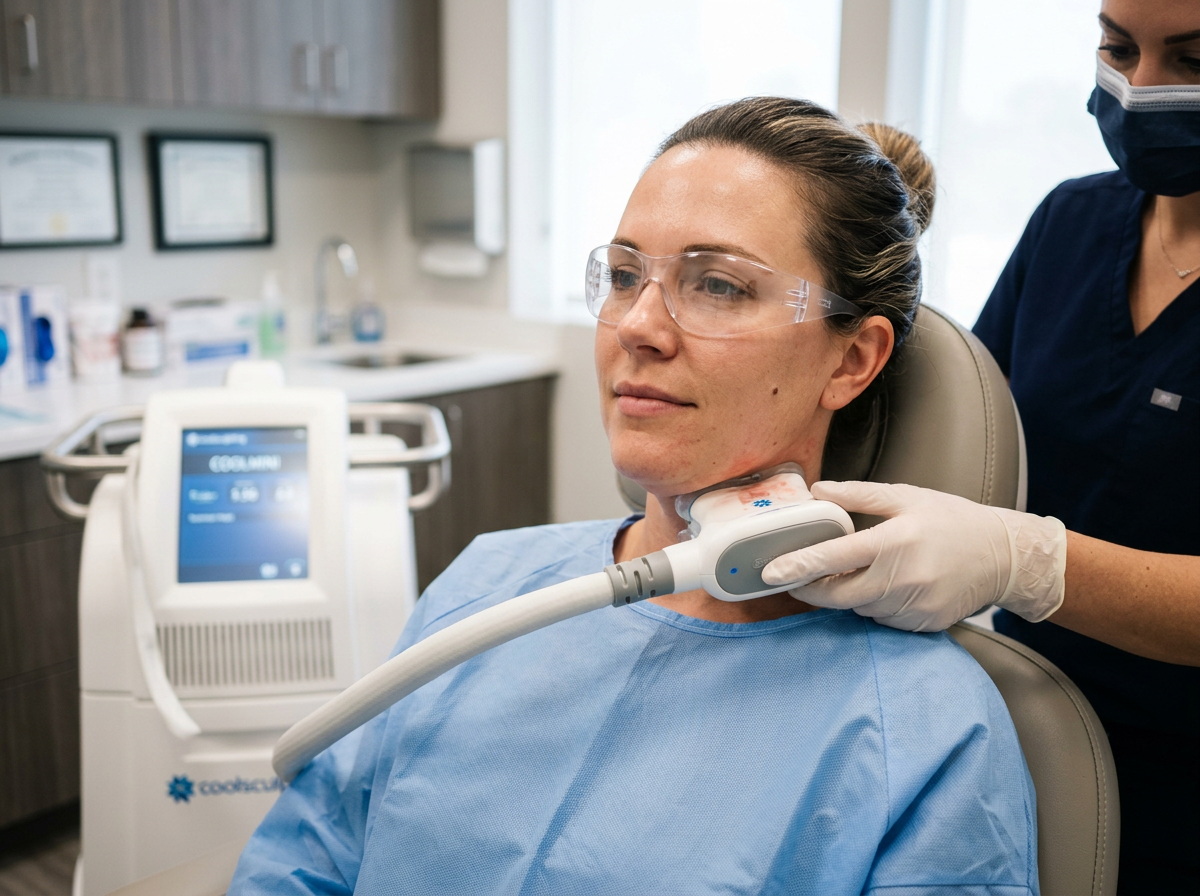
Cryolipolysis, more commonly known as “fat freezing,” stands out as a leading non-invasive method for localized fat reduction, including the submental area. This innovative technique leverages controlled cooling to target and eliminate fat cells without harming the surrounding skin or tissues.
The science behind cryolipolysis is elegant: fat cells freeze at higher temperatures than other body cells. During a CoolSculpting session, a specialized applicator delivers precise, controlled cooling to the treatment area. This causes the fat cells to crystallize and undergo a process called apoptosis, or programmed cell death. Once these fat cells are destroyed, the body’s natural lymphatic system gradually processes and eliminates them over several weeks to months. This results in a noticeable reduction in the fat layer.
For the double chin, the CoolMini applicator was specifically designed to fit the contours of the submental area, ensuring effective and precise treatment. CoolSculpting is FDA-cleared for the treatment of visible fat bulges in the submental and submandibular (under the jawline) areas. Studies have shown that cryolipolysis can achieve a 20 to 80 percent reduction of fat in treated areas, with chin treatments typically falling into the lower end of that range. Each session can reduce fat in the treated area by up to 25 percent.
The procedure is non-invasive, meaning no needles, incisions, or anesthesia are required. Patients often report an initial sensation of intense cold and suction, which typically subsides as the area becomes numb. The treatment usually lasts around 35-60 minutes, during which patients can relax, read, or work. The absence of downtime makes it a highly attractive option for those seeking effective fat reduction without interrupting their busy schedules. For more details on how this fat reduction method works, you can visit resources like this one: CoolSculpting in Guilford, CT | Fat Reduction.
Injectable Lipolysis vs. Minimally Invasive Cosmetic Surgery for the Jawline
Beyond cryolipolysis, injectable lipolysis offers another powerful non-surgical approach to double chin reduction. The most prominent example is Kybella, an FDA-approved injectable that uses a synthetic form of deoxycholic acid. Deoxycholic acid is a naturally occurring molecule in the body that aids in the breakdown and absorption of dietary fat.
When injected into the submental fat, Kybella’s deoxycholic acid works by physically destroying fat cells. Once these cells are destroyed, they can no longer store fat, and the body’s metabolic processes naturally clear them away. This results in a gradual reduction in submental fullness and an improved jawline contour.
Comparing injectable lipolysis to cryolipolysis for jawline contouring involves considering several factors:
- Mechanism: Kybella physically destroys fat cells through a chemical reaction, while CoolSculpting freezes them to induce programmed cell death.
- Treatment Sessions: CoolSculpting typically requires 1-2 sessions for optimal results, with each session lasting around 35-60 minutes. Kybella, on the other hand, often requires multiple treatment sessions (typically 2-4, up to 6), spaced several weeks apart (e.g., 6-8 weeks), with each session involving numerous small injections.
- Recovery Comparison: Both treatments are considered minimally invasive, but their immediate post-treatment experiences differ. CoolSculpting generally has no downtime, though temporary numbness, redness, and bruising can occur. Kybella, however, often leads to more significant swelling, bruising, and tenderness in the treated area, which can last for several days to a couple of weeks. Some patients may also experience temporary numbness or hardness.
- Contouring Precision: Both methods offer precise targeting of submental fat. Kybella’s injectable nature allows for very specific placement, while CoolSculpting’s specialized applicators (like the CoolMini) are designed to fit the unique anatomy of the chin area.
- Skin Retraction: While neither treatment is primarily designed for significant skin tightening, both can offer some degree of mild skin retraction as the fat volume decreases. Recent FDA clearances for CoolMini have even noted an improvement in the appearance of lax tissue in the submental area for some patients.
The choice between injectable lipolysis and cryolipolysis often comes down to individual preferences regarding injections, tolerance for post-treatment swelling, and the number of sessions desired. For a detailed comparison of these two popular methods, resources like this blog post provide excellent insights: Kybella vs. CoolSculpting for Double Chin: Comparing Treatments.
Comparing Non-Surgical Fat Reduction to Surgical Liposuction
While non-surgical options have revolutionized double chin reduction, it’s important to understand how they stack up against the traditional surgical approach: liposuction. For some individuals, surgical intervention may still be the most effective or preferred method.
Chin liposuction, specifically tumescent liposuction, is a well-established surgical procedure for removing excess fat from under the chin and along the jawline. During this procedure, a diluted saline solution containing a local anesthetic and epinephrine is injected into the treatment area. This numbs the area, constricts blood vessels, and makes fat removal easier. Small incisions are then made, and a thin cannula is inserted to suction out the unwanted fat.

Here’s a comparison of non-invasive alternatives (cryolipolysis and injectable lipolysis) versus surgical liposuction:
Feature Non-Surgical (Cryolipolysis/Injectable Lipolysis) Surgical (Chin Liposuction) Invasiveness Non-invasive (Cryolipolysis) or minimally invasive (Injectable Lipolysis) Surgical (requires incisions) Anesthesia Local or none (topical numbing for injectables) Local with sedation, or general anesthesia Downtime Minimal to none (CoolSculpting); few days of swelling/bruising (Kybella) Several days to a week of social downtime; wearing a compression garment Typical Results Gradual, 20-25% fat reduction per session; optimal results in 2-4 months More immediate, often more dramatic fat reduction Cost (per session/area) Varies, typically $1,200 – $2,500 per CoolSculpting session; $1,200 – $2,000 per Kybella session Varies widely, often $2,500 – $5,000+ for the procedure Suitability Mild to moderate fat; good skin elasticity; near ideal weight Moderate to significant fat; can address mild skin laxity; broader candidacy Risks Temporary numbness, bruising, swelling; rare PAH (Cryolipolysis); swelling, bruising, nerve weakness (Kybella) Bruising, swelling, numbness, infection, contour irregularities, scarring Skin Tightening Minor improvement in laxity for some (CoolSculpting); some retraction (Kybella) Can offer some skin retraction; often combined with other tightening procedures for significant laxity Patient selection is crucial. Non-surgical methods are generally best for individuals with localized fat pockets and good skin elasticity. Surgical liposuction can be suitable for those with more significant fat deposits or who desire more immediate and dramatic results. It’s also worth noting that while liposuction removes fat, significant skin laxity may still require additional procedures like a neck lift. For those exploring surgical options, further information can be found on resources discussing procedures like Chin Liposuction.
Long-term maintenance for all these procedures involves maintaining a stable weight. While the fat cells removed or destroyed are permanently gone, remaining fat cells can still expand with weight gain, potentially affecting the contoured results.
Frequently Asked Questions about Submental Contouring
We understand that exploring aesthetic treatments can bring up many questions. Here, we address some of the most common inquiries about non-surgical submental contouring to help you make informed decisions about your treatment journey.
How many sessions are typically needed for non-surgical double chin reduction?
The number of sessions required for non-surgical double chin reduction largely depends on the chosen method, the amount of fat present, and your individual aesthetic goals.
For CoolSculpting, many patients achieve their desired results with just one to two treatment sessions. Each session can reduce the fat in the treated area by up to 25 percent. Results are cumulative, meaning each subsequent session further enhances the reduction. Sessions are typically spaced several weeks apart to allow the body to process the treated fat cells.
For injectable lipolysis (e.g., Kybella), multiple sessions are usually necessary. Patients often require 2 to 4 sessions, and sometimes up to 6, spaced 6 to 8 weeks apart. This allows for the gradual destruction and clearance of fat cells, as well as adequate time for swelling to subside between treatments.
A thorough clinical evaluation during your initial consultation is essential. Your provider will assess your submental fat, skin elasticity, and overall facial anatomy to recommend a personalized treatment plan, including the estimated number of sessions. To learn more about who might be a good candidate for these treatments, you can read more here: Am I a candidate for CoolSculpting?.
Can non-invasive treatments tighten loose skin under the chin?
Historically, non-invasive fat reduction treatments primarily focused on eliminating fat and were not considered effective for significant skin tightening. However, advancements in technology have begun to blur these lines.
While the primary goal of cryolipolysis and injectable lipolysis is fat reduction, some patients do experience a mild degree of skin retraction as the underlying fat volume decreases. This is often due to the body’s natural healing response.
Notably, by June 2026, the CoolMini applicator for CoolSculpting received FDA clearance for its ability to improve the appearance of lax tissue in the submental area. An 18-week study demonstrated that 77 percent of participants had an improvement in submental skin laxity, and 75 percent reported a more toned chin. This suggests that for mild skin laxity, CoolSculpting can offer a dual benefit.
For more pronounced skin laxity, non-invasive fat reduction treatments may need to be combined with other skin-tightening modalities. These can include technologies that stimulate collagen production, such as radiofrequency (RF) or ultrasound treatments. Your provider can assess your skin quality and recommend a comprehensive approach if significant skin tightening is also a goal. For more information on addressing neck fat and double chin concerns, consider exploring resources like this: FAQ: What can I do about neck fat, double chin? Neck liposuction in New Haven County, CT.
What are the risks and side effects of cryolipolysis?
CoolSculpting, based on cryolipolysis, is generally considered a safe and well-tolerated procedure, particularly when performed by trained and experienced practitioners. However, like any medical treatment, it does carry potential risks and side effects.
Common and Temporary Side Effects: Immediately after the procedure, it’s common to experience:
- Numbness and Tingling: The treated area will feel numb due to the cooling, which can persist for several days or even weeks.
- Redness and Swelling: The skin may appear red and swollen, similar to a sunburn.
- Bruising: Some bruising is possible due to the suction of the applicator.
- Tenderness or Soreness: The area might feel tender to the touch.
- Cramping or Aching: Some patients report mild cramping or aching sensations.
These common side effects are typically mild and resolve on their own within a few days to a couple of weeks.
Rare Side Effects: One of the most discussed rare side effects is Paradoxical Adipose Hyperplasia (PAH). This is a condition where, instead of shrinking, the treated fat cells actually grow larger and harden, taking on the shape of the applicator. While rare, occurring in approximately 0.01% to 0.1% of treatments, it is a serious complication that typically requires surgical correction (liposuction) to resolve. The exact cause of PAH is not fully understood.
Other very rare risks can include nerve pain, skin discoloration, or frostbite, although these are exceedingly uncommon with proper technique and device calibration.
The overall safety profile of CoolSculpting is strong, with over 6 million procedures performed worldwide. However, it is crucial to choose a reputable provider with experience in cryolipolysis to minimize risks and ensure proper patient selection and technique. Being informed about all potential side effects, both common and rare, is part of making an educated decision about treatment. For more insights into potential risks and what to expect, external resources often discuss these in detail, such as the cautionary perspectives shared on platforms like Instagram Reels regarding ‘Paradoxical Adipose Hyperplasia’.
Conclusion
The journey to a more refined and confident profile has never been more accessible, thanks to the remarkable advancements in minimally invasive cosmetic techniques. By June 2026, options like cryolipolysis (CoolSculpting) and injectable lipolysis (Kybella) offer highly effective, non-surgical solutions for addressing the persistent concern of a double chin. These methods provide significant fat reduction, improved jawline definition, and often a boost in self-confidence, all with minimal downtime and discomfort compared to traditional surgery.
We have explored how these innovative treatments work, from the targeted freezing of fat cells to their natural elimination, and compared them to surgical alternatives like liposuction. We’ve also addressed common questions regarding session requirements, skin tightening capabilities, and potential side effects, emphasizing that while generally safe, understanding all aspects of a procedure is paramount.
Achieving your aesthetic goals is a deeply personal journey. The key lies in informed decision-making, guided by expert advice. We encourage anyone considering submental contouring to seek a thorough consultation with a qualified and experienced medical professional. They can assess your unique anatomy, discuss your specific concerns, and craft a personalized treatment plan that aligns with your expectations and ensures the safest, most effective path to the results you desire. The future of cosmetic procedures is here, offering sophisticated, subtle, and satisfying enhancements for a more harmonious you.