
Business
How Event Production Companies Can Choose the Right Portable Stage for Different Event
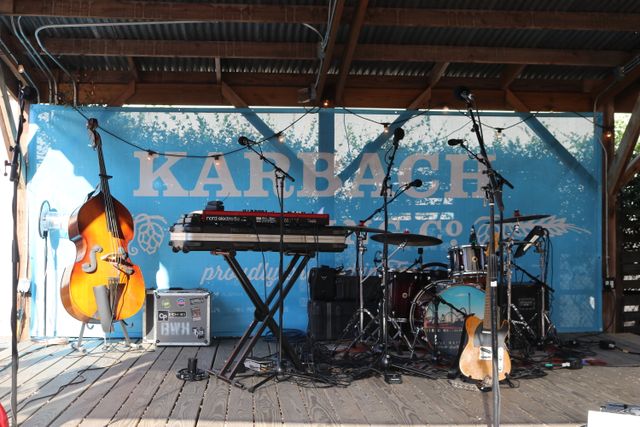
For event production companies, staging is more than an elevated platform. It affects how performers interact with audiences, how equipment is positioned, how quickly crews can complete setup, and how efficiently a production can move from one venue to another. Choosing the right system therefore requires more than comparing dimensions or prices.
A suitable portable stage should match the event’s purpose, venue, audience size, equipment requirements, transportation arrangements, and available labor. A platform that works well for a small corporate presentation may be unsuitable for a large outdoor performance. Likewise, selecting the largest available system is not always the most practical or cost-effective approach.
The right decision comes from balancing performance requirements with operational realities. Event production companies that evaluate these factors carefully can create more predictable setups, reduce unnecessary costs, and adapt their staging inventory to a wider range of projects.
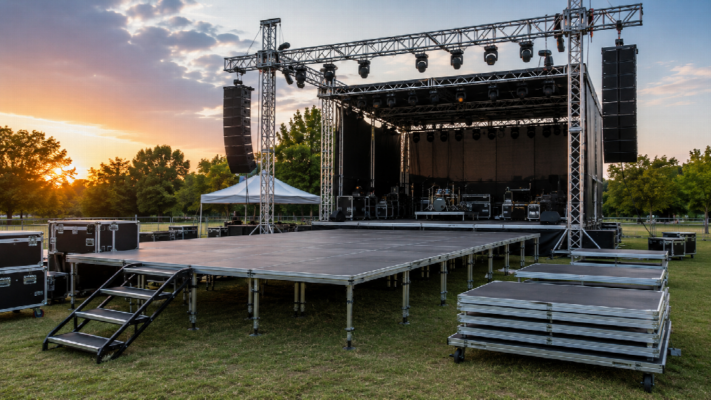
Start With the Event’s Purpose
The first consideration should be what the stage needs to accomplish. Different events place different demands on staging, and the intended use should guide every subsequent decision.
A live music performance may require enough room for performers, instruments, amplifiers, monitors, microphones, and other technical equipment. A corporate presentation may need considerably less floor space but could require room for lecterns, presentation equipment, branded displays, or multiple speakers.
Festivals and community events introduce another set of requirements. Production teams may need platforms that accommodate larger groups while allowing technicians to move equipment efficiently. Awards ceremonies, product launches, fashion shows, and promotional events can require different layouts again.
For this reason, production companies should avoid choosing a staging system based solely on a general category such as “large event.” Two events with similar attendance figures can have completely different staging requirements.
The better approach is to define the activities taking place on the platform and determine what equipment, personnel, and movement the space must support.
Consider Stage Dimensions Carefully
Size is one of the most visible factors when evaluating staging, but bigger is not automatically better.
A larger platform provides more usable space and greater flexibility. However, additional sections increase transportation requirements, setup time, storage needs, and potentially labor costs. A system that is unnecessarily large can also consume valuable venue space that could otherwise be used for seating, audience circulation, backstage operations, or production equipment.
A smaller platform has the opposite trade-off. It may be faster to transport and assemble, but insufficient space can create congestion and restrict performer or equipment movement.
Production companies should therefore consider the footprint of everything that needs to occupy the platform. This includes performers, instruments, speakers, monitors, lighting equipment, podiums, furniture, props, and other production elements.
It is also useful to account for movement rather than treating every available square foot as occupied space. Performers and crew need room to move safely around equipment.
Match the System to the Audience
Audience size can provide a useful starting point, but it should not be the only factor determining staging requirements.
A larger audience generally creates a need for greater visibility, which may influence stage height and overall dimensions. However, audience configuration matters too. A seated corporate audience, a standing festival crowd, and guests gathered around a central performance area create very different viewing conditions.
The distance between the audience and the platform should also be considered. A relatively modest platform may work well in a small venue where spectators are close to the performers, while the same configuration may appear inadequate in a large outdoor area.
Event producers should evaluate sightlines from multiple areas of the venue rather than focusing only on the front row. Poor visibility can affect the audience experience even when the platform technically provides enough room for the performers.
Evaluate Load Requirements
Every staging system has limits, and production companies need to understand both the overall weight capacity and how loads are distributed.
Equipment such as speakers, lighting fixtures, instruments, video screens, staging accessories, furniture, and production hardware can add significant weight. The number of people using the platform must also be considered.
Importantly, total weight is only part of the calculation. Concentrated loads can create different structural demands from evenly distributed loads. Heavy equipment positioned in one area may require additional planning compared with several lighter items spread across the surface.
Companies should always follow the manufacturer’s published capacity specifications and installation requirements. When an event involves unusually heavy equipment or complex technical installations, professional structural guidance may be appropriate.
Treating load capacity as an afterthought can create safety risks and operational complications that are far more expensive than selecting the correct system from the beginning.
Think About Indoor and Outdoor Conditions
Venue conditions can dramatically influence staging decisions.
Indoor events typically provide a more controlled environment, with predictable flooring, weather protection, and easier access to power and loading areas. Outdoor productions can introduce wind, rain, uneven terrain, temperature changes, and other variables.
An outdoor concert stage, for example, may need to accommodate changing ground conditions and additional environmental considerations. A platform designed for indoor use should not automatically be assumed suitable for an exposed outdoor installation.
Terrain is another important consideration. Grass, asphalt, concrete, and other surfaces can affect setup requirements. Production teams should inspect the site before selecting equipment whenever possible.
Weather planning is equally important. Rain can affect surfaces and electrical equipment, while wind can create additional risks for elevated structures and accessories. Appropriate anchoring, coverings, barriers, and other measures may be necessary depending on the system and venue.
The key lesson is that staging should be selected based on the actual environment rather than the event description alone.
Consider Setup and Teardown Time
Time is one of the most important resources for an event production company.
A staging system that takes significantly longer to assemble can increase labor costs and reduce the number of events a company can efficiently service. This becomes particularly important when multiple productions take place in the same week or when venue access is restricted to a narrow window.
Modular systems can provide advantages because they can be configured according to the requirements of individual events. However, modularity does not automatically mean faster installation. The number of components, connection methods, tools, crew experience, and site conditions all influence actual setup time.
Companies should therefore evaluate the entire workflow rather than relying on advertised assembly times.
A useful assessment includes loading, transportation, unloading, component organization, assembly, adjustment, safety checks, teardown, repacking, and return transportation. The real operational cost becomes clearer when all these stages are considered together.
Balance Portability With Stability
Portability and stability can sometimes appear to be competing priorities.
A lightweight system may be easier for crews to move and faster to transport. However, production companies must ensure that reduced weight does not compromise the system’s suitability for its intended application.
Conversely, a heavier platform may provide certain advantages but require additional labor and transportation resources.
The objective should not simply be to find the lightest option. Instead, companies should look for a practical balance between manageable transportation and the structural performance required by the event.
This is especially important for companies serving multiple venues. A staging system that is easy to move between locations can reduce logistical complexity, but it still needs to meet the demands of the environments in which it will be installed.
Assess Transportation and Storage Requirements
Transportation costs can become a significant part of staging ownership.
Production companies should consider how many vehicles are needed, whether components can be stacked efficiently, and how much loading and unloading time is required. The physical dimensions of the components can be just as important as their total weight.
Storage should also be considered before purchasing a system. Equipment that occupies excessive warehouse space can create ongoing costs, especially for companies maintaining several configurations.
Modular equipment can offer an advantage because components can potentially be combined differently for various projects. A company may therefore be able to maintain a flexible inventory without purchasing a completely separate platform for every event type.
However, modular inventories require effective organization. Components need to be labeled, inspected, maintained, and stored in a way that allows crews to locate them quickly.
Think About Reconfiguration
Event production rarely follows a single format. A company might manage a corporate presentation one week and a live entertainment event the next.
This makes flexibility an important consideration.
A configurable staging system can allow companies to create different footprints or arrangements depending on the venue. This can improve equipment utilization because the same inventory may support multiple event types.
However, flexibility can introduce complexity. More configurations may require additional planning and crew training. There is also a risk of purchasing components that are rarely used.
Companies should therefore examine their actual project history. If most events require similar layouts, a highly complex system may not provide enough value to justify the additional cost. If projects vary substantially, greater adaptability may offer a stronger return.
Consider Safety as a Core Requirement
Safety should influence staging decisions from the beginning rather than being treated as a final inspection item.
Production teams should understand the system’s load limits, assembly requirements, surface conditions, access points, edge protection requirements, and any applicable venue or local regulations.
The people assembling the platform should also understand the manufacturer’s instructions and inspection procedures. Regular checks can help identify damaged components, loose connections, worn parts, or other problems before equipment is deployed.
Safety considerations extend beyond the platform itself. Steps, ramps, cables, audience barriers, lighting equipment, and backstage access can all affect how safely people interact with the staging area.
A technically suitable system can still create problems if the surrounding event layout has not been planned properly.
Evaluate Total Cost Rather Than Purchase Price
Price is an important factor, but the cheapest option may not deliver the lowest overall cost.
Production companies should consider purchase price alongside transportation, labor, maintenance, storage, accessories, replacement components, and expected service life.
For companies that frequently rent staging, ownership can potentially reduce recurring rental expenses. However, purchasing equipment also transfers responsibility for maintenance, storage, transportation, and inspections to the company.
The right decision depends on utilization. A staging system used regularly across many events may justify a higher initial investment, while equipment used only occasionally may be more economical to rent.
Calculating the expected cost per event can provide a clearer comparison than looking only at the upfront price.
Build a Staging Strategy Around Real Events
The most effective approach is to look at the company’s existing and expected event portfolio.
Review previous projects and identify common stage sizes, audience capacities, venue types, setup constraints, transportation challenges, and equipment requirements. This information can reveal which configurations are used frequently and where current inventory creates inefficiencies.
Production companies should also consider future demand. Purchasing equipment solely for today’s events may create limitations as the business grows. At the same time, investing heavily in rarely requested configurations can tie up capital unnecessarily.
A balanced inventory might include commonly used components that can be combined for smaller productions and expanded when larger events require additional space.
Final Considerations
Choosing staging for different events is ultimately an exercise in balancing competing priorities. Size, weight capacity, portability, stability, setup time, transportation, storage, flexibility, safety, and cost all influence the decision.
There is no single configuration that is ideal for every production. A system that works exceptionally well for a corporate presentation may not be appropriate for a festival, while a large performance platform may be unnecessarily expensive and cumbersome for a small event.
Event production companies can make better decisions by starting with the requirements of each production and then evaluating how their staging inventory supports those needs. Looking beyond the initial purchase price to consider labor, transportation, storage, safety, and long-term utilization provides a more realistic picture of value.
Ultimately, the best staging solution is one that gives a production company enough flexibility to meet diverse event requirements without introducing unnecessary operational complexity. By evaluating both immediate event needs and long-term business impact, companies can build a staging strategy that supports reliable productions, efficient workflows, and sustainable growth.
The growth of digital commerce has changed the way consumers discover and purchase products. What is an online marketplace https://thesecretsouk.com/ can be understood as a website or application where numerous independent sellers present their goods or services to a shared audience. Such platforms make shopping more convenient by bringing different offers together, while sellers gain access to larger customer bases. Buyers can compare products, prices, and reviews before completing their purchases.