

My dog’s first bath went fine. His second one, three weeks later, did not. Somewhere between appointments I’d lost the rhythm, and Apollo had quietly decided the whole process was a stranger. That’s the thing about dog care: one visit isn’t a routine, and most dog parents don’t learn that until a bad appointment teaches them the hard way.
Here’s the promise of this article. You’re going to build a monthly hygiene schedule you can actually keep, without turning your weekends into a second job. You’ll learn what belongs in a basic core visit, how to add on extras without overpaying, and what to track between appointments so small issues get caught early. Plenty of owners skip the calendar planning and just look for Dog groomers Herriman the moment things get messy, which works fine until “messy” turns into an anxious, matted dog and a rushed booking.
Before we get into the schedule, one grounding detail: routine hygiene is about comfort and early detection, not just appearance. A dog who’s brushed, bathed, and checked on a predictable schedule is a dog whose skin, ears, nails, and teeth get eyeballed by someone else regularly. That’s the whole point.
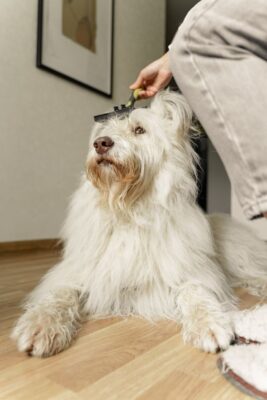
What Actually Belongs in a Monthly Visit
Most dog parents picture grooming as a haircut. That’s a small slice. The core of a monthly hygiene visit is the stuff you’d do yourself if you had an extra hour and a cooperative dog. Bath with a towel dry, ear cleaning, nail trim, teeth brushing, and a once-over for lumps, redness, or pests.
According to the American Veterinary Medical Association, regular preventive care helps problems get spotted before they become expensive ones. That principle applies to grooming too, since most groomers and hygiene providers catch skin and ear changes long before a casual petting session would reveal them.
Extras are where you customize. A blow-dry, a haircut, a paw trim, or a shedding treatment can all be added to a core visit. What I’d choose: add one or two extras per visit max, and rotate them. A full add-on package every month burns money fast and lengthens the appointment, which some dogs handle poorly.
Why Monthly Beats “Whenever It Looks Bad”
Reactive grooming is exhausting. You book when the smell wins, you pay more, and your dog gets handled by a new face every few months at a strange facility. None of that builds trust.
Predictable visits do the opposite. Same space, similar process, familiar hands. Dogs learn routines through repetition, and a monthly cadence means your dog walks into a known environment instead of a suspicious one. In my own experience, Apollo went from nervous shivering to trotting through the door in about four visits once we locked the schedule in.
The other payoff is tracking. When the same provider sees your dog every month, they notice the small changes: a new hot spot, a tick, a wax buildup in one ear, a chipped nail. You can’t notice what you only see twice a year.
Building Your Schedule Without Overthinking It
Pick a recurring anchor: the first Saturday of each month, the 15th, payday, whatever already lives in your head. Then work through these steps.
- Book the next three visits in one sitting, so the routine exists before motivation does.
- Set a phone reminder two days before each visit for a quick brush-out at home.
- Choose your core package as the default and treat extras as bonuses, not baseline.
- Keep a notes app entry dated by month: coat condition, ear condition, anything odd.
- Review the notes quarterly and adjust extras based on the season, not on mood.
One scheduling tip most people miss: pair the visit with something else you already do, like a grocery run or the dog park. Stacking the trip cuts the mental load in half, and your dog associates the appointment with a walk afterward. Positive associations are worth more than any treat bribe.
What to Watch Between Appointments
Your provider handles the deep clean, but the day-to-day checks are yours. Run through a quick two-minute scan in the living room once a week.
- Run your fingers through the coat and feel for mats forming behind the ears or at the tail base.
- Check inside each ear for redness or a waxy smell.
- Press a nail lightly to see if it clacks long on the floor.
- Sniff the breath up close, since changes there often signal dental issues.
- Look at paws for cracks, stones, or winter salt irritation.
The American Kennel Club is a solid resource for breed-specific coat needs if your dog’s hair behaves differently from the average mutt. A double-coated husky and a short-haired pit bull shouldn’t follow the same grooming script, and neither should their owners.
Questions People Ask Before They Commit
Isn’t monthly too often for some dogs? For long-haired and double-coated breeds, monthly is often the reasonable minimum. For short coats, the core visit is still useful for nails, ears, and teeth. It’s less about fur length and more about the wellness check.
What about the price of a membership? A monthly plan typically bundles the core package, a wellness check, and a discount on extras. Compared to booking everything a la carte when problems stack up, the predictable version is easier to budget, and easier to stick with.
How do I know it’s a hygiene visit and not a full groom? A hygiene visit skips the haircut by default. It’s the equivalent of a wash, nails, ears, and teeth, with styling as an optional add-on. For most owners, that’s the right starting line.
Your Dog’s Comfort Is the Real Metric
Handling matters more than tools. According to the Centers for Disease Control and Prevention, pets are a documented source of certain infections, which is one more reason routine bathing and sanitary trims aren’t vanity items. A clean, regularly checked dog is easier to live with, easier to travel with, and easier for a vet to evaluate.
The routine I’d take, if I had to pick: one monthly core visit, one rotating extra, one weekly two-minute home check. That combination covers about 90 percent of what most dogs need. The rest is adjusting for coat type, activity level, and how much time you’re honestly willing to spend with a brush in your hand.
Start by picking your anchor date for next month and booking it tonight, before the calendar fills up. Your dog won’t thank you in words, but you’ll notice the difference in how he smells, moves, and trots into the place he now recognizes. That’s the payoff, and it only comes from showing up again.