
Business
The Foundation of Resilience: Understanding CIRMP

The Comprehensive Integrated Risk Management Plan (CIRMP) is a multifaceted approach that addresses both predictable and unpredictable threats to business operations. CIRMP integrates sustainability and resilience principles. It helps organizations find and reduce risks. It also helps them respond to risks. This fosters a culture of readiness and adaptability.
In Australia, the growing importance of cirmp compliance critical infrastructure Australia has been recognized, with the government implementing regulations to enhance the resilience of critical infrastructure sectors. This shows that the world recognizes CIRMP’s role. It ensures essential services continue running and maintains business continuity.
CIRMP recognizes that risks are interconnected and can have cascading effects across various aspects of an organization, rather than existing in isolation. CIRMP uses a full and integrated approach as it helps businesses navigate today’s complex risks. It ensures continuity and long-term viability.
The framework encompasses several key components:
- Risk Identification and Assessment: A thorough analysis of potential risks, including those related to operations, supply chain, cybersecurity, natural disasters, and regulatory compliance, among others.
- Resilience Planning: Develop robust contingency plans and response strategies to mitigate the impact of disruptions and facilitate rapid recovery.
- Sustainability Integration: Incorporating environmental, social, and governance (ESG) considerations into risk management processes, fostering a responsible and sustainable business model.
- Continuous Monitoring and Adaptation: Regularly assessing and updating risk management strategies to align with evolving business needs and external factors.
The reasons for using a formal risk management program like CIRMP are compelling. They also see improved decision-making, compliance, and stakeholder confidence.
Navigating Disruptions: CIRMP’s Role in Mitigating Risks
These days, things are getting pretty shaky and uncertain out there. Businesses are dealing with all sorts of potential problems that could seriously mess up their operations. Economic issues, problems with supply chains, the big effects of climate change, and tensions between countries and regions – these threats can be really tough to handle. In fact, according to the FM Global Resilience Index, a huge 90% of companies that have a major problem with their supply chain end up losing money because of it.
This is where CIRMP (what does this acronym stand for?) comes into play – it plays a crucial role in equipping organizations to effectively navigate these disruptions. With CIRMP, businesses can integrate sustainability right into their risk management approach. This allows them to proactively reduce risks and limit the impact when disruptive events do occur.
One area where CIRMP really shines is in addressing the challenges brought about by climate change. We’re seeing extreme weather events happening more frequently and with greater severity than before. Organizations have to adapt their operations and supply chains to ensure they can remain resilient in the face of this. CIRMP helps businesses identify their vulnerabilities, so they can implement measures to mitigate risks and develop plans to minimize the impact of climate-related disruptions.
CIRMP also empowers organizations to leverage sustainability initiatives as a way to reduce risks and become more resilient overall. For example, investing in renewable energy sources can decrease their dependence on fossil fuels, which cuts the risk of volatile energy prices and supply disruptions. Similarly, embracing circular economy principles that minimize waste and shrink resource use can help build a greener, more sustainable supply chain.
By integrating risk management, sustainability, and business continuity all together, CIRMP provides a holistic framework for navigating the risks businesses face in today’s world. It helps them emerge stronger and more resilient when disruptions inevitably occur.
Leveraging CIRMP for Sustainable Growth
CIRMP is widely known for its ability to ensure business continuity and mitigate risks, its true strength lies in its potential to drive sustainable growth. CIRMP fosters resilience, innovation, and adaptability – it empowers organizations to seize opportunities and thrive even as the business landscape shifts around them.
The companies that prioritize sustainability and integrate it into their core business strategies have seen real, tangible benefits. Research shows that businesses with robust sustainability practices tend to perform better financially and have around 50% less volatility in their earnings compared to less sustainable businesses.
CIRMP helps facilitate this integration by aligning sustainability initiatives with risk management practices. This creates a positive cycle of resilience and growth. For example, by investing in renewable energy sources and efficient technologies, businesses can reduce their exposure to the risks of climate change and resource scarcity. But they’ll also save money and improve their competitiveness in the process.
So in addition to protecting against disruptions, CIRMP enables a forward-looking, sustainable approach that unlocks new opportunities for companies to innovate, adapt, and grow their bottom line over the long term. It’s a win-win from both a risk mitigation and business performance standpoint.
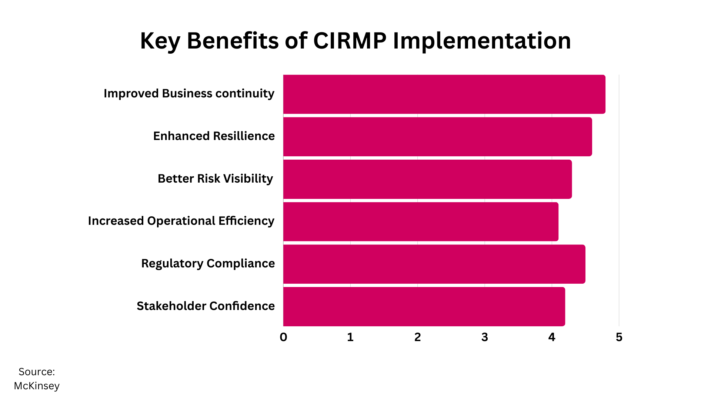
Moreover, CIRMP enables organizations to capitalize on the growing demand for sustainable and socially responsible products and services. By adding ESG principles to their operations, businesses can stand out in the market. They can attract conscious consumers and build long-term brand loyalty.
The world is more aware of the impact of business on the environment and society. Groups that adopt CIRMP will be well-placed to benefit. They will gain from mixing sustainability and resilience into their core strategies.
Comparison Table: Traditional Risk Management vs. CIRMP
| Criteria | Traditional Risk Management | CIRMP |
| Approach | Siloed, reactive | Integrated, proactive |
| Focus | Primarily on financial and operational risks | Holistic, encompassing environmental, social, and governance risks |
| Resilience | Treated as a separate initiative | Embedded into core business strategy |
| Sustainability Integration | Limited or absent | Seamless integration of sustainability principles |
| Adaptability | Limited flexibility to changing conditions | Continuous monitoring and adaptation to evolving risks |
| Stakeholder Engagement | Primarily internal | Inclusive of internal and external stakeholders |
| Long-term Viability | Limited consideration for long-term impacts | Emphasis on long-term sustainability and resilience |
This table highlights the key differences. It’s between traditional risk management and the comprehensive, integrated nature of CIRMP. By adopting CIRMP, organizations can address many risks. They can also foster resilience and drive sustainable growth. This will position them for long-term success in a changing business aspect.
FAQs
1. What makes CIRMP different from traditional risk management plans?
Traditional risk plans view sustainability and resilience separately, missing out on their connection and benefits. But CIRMP takes a different approach, blending sustainability and resilience principles into the main business strategy seamlessly.
CIRMP deals with both expected and unexpected risks by providing a comprehensive framework. This helps businesses anticipate and handle threats better, promoting a culture of preparedness and adaptability.
2. Can CIRMP work for small and medium-sized businesses (SMEs)?
Yes, CIRMP is flexible and can be customized to fit the needs of businesses of any size. Research shows that 60% of SMEs that use risk management see improved financial results, highlighting the importance of proactive risk management for long-term success.
By adopting CIRMP, SMEs can enhance their resilience, reduce risks, and get ready for growth. The key is to tailor the framework to suit the organization’s unique challenges and resources, ensuring practical and effective implementation.
3. What are the first steps to implementing a CIRMP strategy?
To kick off the implementation of a CIRMP strategy it’s crucial to start by conducting a risk assessment to pinpoint threats and vulnerabilities across all facets of the business. This evaluation should encompass financial, legal, reputational and environmental risks, among others.
After identifying the risks the next crucial step is to engage leaders who can foster a culture of resilience and sustainability, within the organization. Successful risk management initiatives typically hinge on involvement from leaders showcasing their dedication and endorsement from the top echelons.
Backed by leadership and a focus, on resilience companies can craft risk management strategies that also integrate sustainability efforts and resilient business continuity plans.
Conclusion
In the world of business navigating risks is an aspect of the journey. However, to maintain strength it’s crucial to emphasize sustainability, adaptability and effectively managing those risks. This is where the Comprehensive Integrated Risk Management Program (CIRMP) proves its value. It serves as a guiding framework that assists organizations in handling risks ensuring they can persevere and thrive.
Looking forward, businesses should maintain optimism. Be prepared to capitalize on opportunities. By embracing the principles of CIRMP they can ready themselves for whatever challenges lie. These principles ought to be integrated into their planning processes so they can confront uncertainties proactively sustainable growth and evolve into more resilient and ethical entities in the long term.
Finally, uno online helps me reduce stress and is a great way for me to relax at the end of the day.