
Business
AI Services in Restaurants: Reliability for Customer Experiences

In today’s evolving digital world, artificial intelligence (AI) is transforming industries across the board, and the restaurant sector is no exception. AI technologies are reshaping the dining experience. They promise unprecedented efficiency, personalization, and customer satisfaction. They do this by enhancing customer service and streamlining kitchen operations.
AI integration is speeding up. Restaurants are using these tools to optimize operations, give great customer experiences, and stay ahead of the competition. In this guide, we’ll cover the current state of AI in the restaurant industry. We’ll look at its impact on customer service and kitchen operations and cover data-driven strategies for customer retention. Finally, we’ll cover the legal and ethical issues around these cutting-edge technologies.
Current State of AI Integration in the Restaurant Industry
The restaurant industry’s adoption of AI technologies is no longer a novelty but a necessity driven by customer expectations and operational demands. From AI-powered chatbots and virtual assistants to automated cooking systems and predictive analytics, restaurants are embracing a range of AI solutions to enhance their service offerings and streamline internal processes.
The growth of AI in the restaurant sector is undeniable, with industry analysts and experts projecting continued expansion and innovation in the coming years. As consumer demand for seamless, personalized experiences increases, restaurants are recognizing the value of AI in meeting these expectations while optimizing costs and efficiency.
AI Technologies Enhancing Customer Service
In the competitive restaurant industry, customer service remains a key differentiator. AI technologies are proving invaluable in elevating the dining experience, offering personalized interactions, and reducing wait times.
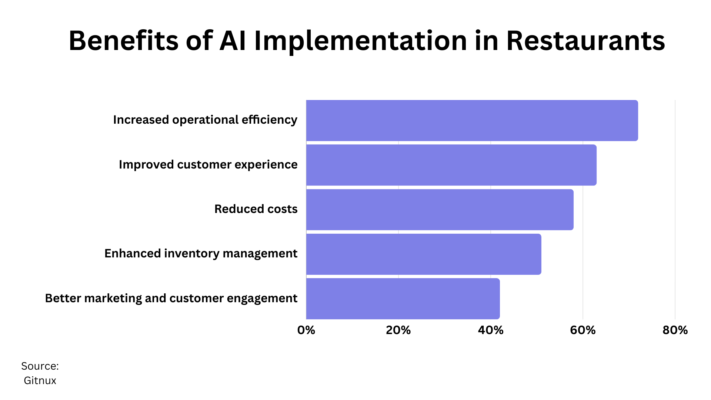
AI not only cuts costs but also improves service speed, pivotal factors in enhancing the dining experience.
Personalized Customer Interactions
AI-powered chatbots and virtual assistants of an AI driven restaurant answering service are revolutionizing customer interactions in restaurants. These smart-systems can talk to customers in real time. They answer questions, take reservations, and even suggest menu items. They base suggestions on each person’s likes and dietary limits. By using natural language processing and machine learning, these AI assistants can give a personalized and intuitive experience. They foster customer loyalty and satisfaction.
AI-Driven Data Analytics for Customer Retention
In the competitive restaurant industry, customer retention is paramount. AI-driven data analytics is revolutionizing how restaurants engage with their customers. It enables personalized marketing and targeted promotions. These strategies foster loyalty and encourage repeat visits.
Harnessing Customer Data for Personalized Marketing
By leveraging AI-powered analytics, restaurants can gather and analyze vast amounts of customer data, including purchasing habits, preferences, and feedback. This data is valuable and it can be used to make personalized marketing. The marketing can be tailored and targeted. It will resonate with each customer’s unique needs and interests.
For instance, AI algorithms can identify customers who frequently order a particular dish or visit the restaurant during specific times, allowing for targeted promotions or loyalty programs that incentivize continued patronage.
Predictive Analytics in Customer Preferences and Behavior
AI’s predictive capabilities extend beyond inventory management and into the world of customer behavior analysis. AI systems can analyze historical data and real-time trends. They can find patterns and forecast customer preferences. This lets restaurants adjust their menus, prices, and marketing to fit changing customer demands.
This proactive approach not only enhances the dining experience but also fosters stronger customer relationships, increasing the likelihood of repeat visits and positive word-of-mouth recommendations.
Strategies for Enhancing Customer Loyalty through AI Insights
Armed with AI-driven insights into customer preferences and behavior, restaurants can implement targeted strategies to enhance customer loyalty. These may include personalized loyalty programs, tailored promotions, and even customized menu recommendations based on individual tastes and dietary preferences.
Restaurants can use AI to give a personalized and seamless dining experience. This can help them build stronger emotional connections with their customers. It will also drive higher retention rates and long-term profitability.
Addressing Reliability and Trust Issues with AI
As with any transformative technology, the adoption of AI in the restaurant industry has raised concerns regarding reliability and trust. Ensuring consistent and accurate service delivery, as well as building customer confidence in AI-powered systems, is crucial for successful implementation.
Challenges and Solutions in Ensuring AI Reliability
One of the primary challenges in integrating AI into restaurant operations is ensuring reliable and consistent performance across various scenarios and environments. AI systems must handle complex situations. They must adapt to change and give accurate results. They do this in customer interactions and kitchen operations.
To address these challenges, the industry is working on developing robust AI models, refining algorithms, and implementing rigorous testing and monitoring protocols. Collaboration is essential as it includes tech providers, researchers, and restaurant operators. They must work together to find and fix potential issues. This will ensure that AI works well in the real world.
Building Customer Trust in AI Applications
Building customer trust in AI applications is paramount for successful adoption in the restaurant industry. Restaurants must be transparent about their use of AI technologies, communicating the benefits and limitations to customers.
Also, addressing data privacy and security concerns is crucial. Customers need to feel confident that their personal information is handled in compliance with regulations.
By showing AI systems are reliable and accurate, and by putting customer privacy and transparency first, restaurants can build trust with their customers. This will pave the way for wider AI adoption.
Legal and Ethical Considerations
As AI continues to permeate the restaurant industry, it is essential to navigate the legal and ethical implications of these technologies. Ensuring compliance with data privacy laws and addressing ethical concerns surrounding AI’s impact on employment and customer interactions are critical considerations.
Data Privacy Issues and Compliance with Regulations
The integration of AI in the restaurant industry often involves the collection and processing of customer data, including personal information, preferences, and purchasing habits. As such, restaurants must follow data privacy rules. These include the General Data Protection Regulation (GDPR) in the European Union and similar laws in other regions.
Failure to adhere to these regulations can result in significant fines, legal repercussions, and a loss of customer trust. Restaurants must implement robust data protection measures, obtain appropriate consent from customers, and ensure transparent communication about how customer data is collected, stored, and used within AI systems.
Restaurants must engage with legal experts and data privacy professionals. This is crucial to navigate the complex rules and limit risks. The risks are linked to AI-driven data collection and processing.
The Future of AI in the Restaurant Industry
As AI continues to evolve and mature, its impact on the restaurant industry is poised to become even more profound. Innovations on the horizon hold the potential to revolutionize various aspects of restaurant operations, from customer experience to supply chain management and beyond.
Innovations on the Horizon
One of the most exciting areas of innovation is the integration of AI with emerging technologies like the Internet of Things (IoT) and robotics. Imagine a future where AI-powered robots help with food prep. They ensure consistent quality and cut human error. IoT sensors monitor inventory levels and orders from suppliers.
Also, progress in natural language processing and computer vision could enable easier customer interactions. AI systems could understand complex queries and give personalized recommendations. They would be based on visual cues and preferences.
Expert Opinions and Industry Leader Insights
Industry leaders and experts are closely watching the development of AI technologies and their potential impact on the restaurant sector. Many are hopeful about the opportunities AI presents. It can improve efficiency, cut costs, and provide great customer experiences.
AI could revolutionize the restaurant industry. It would streamline operations, cut waste, and deliver personalized experiences. These experiences keep customers coming back.
However, experts also caution against the indiscriminate adoption of AI without careful consideration of ethical and societal implications. They emphasize the need for responsible and sustainable integration of AI, ensuring that these technologies complement and enhance human roles rather than replace them entirely.
Frequently Asked Questions (FAQs)
1. How does AI impact the employment of traditional roles in restaurants?
AI is not intended to replace human roles but rather to complement and enhance them. Some tasks may be automated. AI can free up staff to focus on complex and creative parts of their roles. These include personalized customer service and menu innovation. Restaurants should focus on retraining and upskilling. This will ensure a smooth transition for employees as AI is integrated.
2. What are the cost implications of integrating AI into restaurant operations?
The cost of adopting AI can be high. It includes hardware, software, and setup costs. But, in the long run, AI can save a lot of money. It does this through better operations, less waste, and optimized inventory. The return on investment will vary based on the scale of operations and the specific AI solutions implemented.
3. How do customers generally perceive AI interactions in restaurants?
Customers have mixed views on AI in restaurants. Some like the convenience and efficiency. But, others prefer the human touch. Building trust and transparency around AI implementations is crucial. Restaurants should offer options for AI-driven and human-led interactions. They should cater to diverse customer preferences.
Conclusion
AI services are now part of the restaurant industry. They are not a passing trend but a force that is changing how businesses operate and deliver great customer experiences. AI is set to revolutionize all parts of the dining experience. It will do this through personalized interactions, better kitchens, and data-driven customer retention.
But, as with any disruptive technology, the restaurant industry must also commit to fixing reliability and trust issues. They must navigate legal and ethical concerns and build a culture of responsible innovation.
Restaurants can embrace AI. They can do this while prioritizing customer privacy, transparency, and ethical practices. Doing so will let them harness the full power of these cutting-edge technologies. This will drive efficiency, boost customer loyalty, and secure a competitive edge in a crowded market.
As the future unfolds, the restaurant industry will continue to embrace AI. The embrace will surely evolve, with exciting innovations coming. There will also be a growing emphasis on sustainable and ethical use. Those who embrace this change and keep high service and excellence will thrive. They will thrive in the AI-driven dining of tomorrow.