
Business
How Digital Tools Are Transforming the Modern Construction Site

Key Takeaways
- Digital tools are revolutionizing construction by enhancing efficiency, safety, and collaboration.
- Technologies like Building Information Modeling (BIM), Artificial Intelligence (AI), and the Internet of Things (IoT) are central to this transformation.
- Real-world applications demonstrate significant improvements in project timelines, cost management, and risk mitigation.
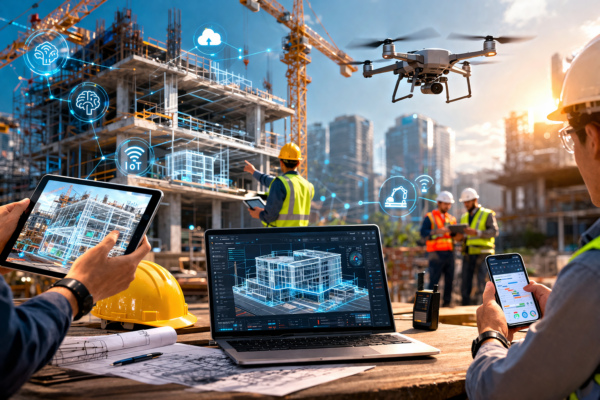
Table of Contents
- Building Information Modeling (BIM): The Digital Blueprint
- Artificial Intelligence: Smart Decision-Making
- Internet of Things (IoT): Connected Construction Sites
- Augmented and Virtual Reality: Immersive Planning
- Drones: Aerial Insights
- Digital Twins: Real-Time Replicas
- Cloud-Based Collaboration: Seamless Communication
- Conclusion
The construction industry is undergoing a dramatic digital transformation, reshaping how projects are planned, managed, and executed. Digital tools now permeate every phase of a construction project, offering significant gains in efficiency, safety, and communication for all parties involved. Not just a matter of convenience, these integrating technologies are setting new benchmarks for what is possible on the modern job site. Whether it’s managing worker schedules on cloud-based platforms or harnessing 3D visuals to coordinate intricate tasks, digital solutions ensure high standards and fewer errors from start to finish.
Contractors and developers are harnessing everything from advanced sensors to artificial intelligence to streamline workflow. For example, site preparation is becoming faster and more accurate thanks to innovations such as drones and smart surveying equipment. These changes impact not only how quickly and safely things are built, but also how teams interact and share information, setting a standard that even related sectors, such as landscape enhancements with artificial turf Colleyville, are adopting to deliver consistent results.
The adoption of digital strategies is more than an upgrade: it is now a necessity. Modern projects demand these innovations to keep pace with compressed timelines and tighter budgets. Increased focus on sustainability, risk assessment, and real-time collaboration is driving companies to invest heavily in digital tools, ensuring both safety and profitability.
Forward-thinking firms leverage these advancements to gain a competitive edge, maintain compliance with tightening regulations, and deliver projects that exceed client expectations. Clients now anticipate transparency and accuracy, and digital transformation is at the heart of meeting those demands in today’s fast-paced construction landscape.
Building Information Modeling (BIM): The Digital Blueprint
Building Information Modeling (BIM) is among the most influential tools in modern construction. It brings architects, engineers, and contractors onto a unified platform powered by a central 3D model. This shared digital representation helps prevent costly errors in both design and execution, increases collaboration, and dramatically improves communication between teams. With BIM, decisions are made quickly and with complete data available, leading to time and cost savings. The model isn’t static, as it can be updated in real time as the project evolves, ensuring everyone works with the latest information.
Artificial Intelligence: Smart Decision-Making
Artificial Intelligence and machine learning are increasingly playing a role in construction by turning massive amounts of data into actionable insights. On the job site, AI-driven software can analyze project risk, optimize labor allocation, and even forecast project outcomes by examining weather patterns and on-site conditions. AI unlocks real-time adjustments that help teams address changing project demands or unexpected obstacles without major disruption. By integrating AI solutions, companies dramatically reduce downtime and enhance resource utilization, making every dollar and hour count. As noted in a feature by Forbes, the rise of AI-driven platforms is helping builders manage increasingly complex projects effectively.
Internet of Things (IoT): Connected Construction Sites
IoT technology is revolutionizing construction sites through interconnectivity among tools, equipment, machinery, and workers. Smart sensors provide constant feedback about project progress, machinery health, and even site safety conditions. Wearables help monitor worker safety parameters such as fatigue or exposure to harmful substances. Collecting this real-time data enables teams to address maintenance needs instantly, manage inventory, and ensure regulatory compliance, while minimizing waste and shrinkage. Remote asset tracking and predictive downtime alerts are just some of the powerful benefits IoT brings to the field.
Augmented and Virtual Reality: Immersive Planning
Augmented Reality (AR) and Virtual Reality (VR) technologies are making construction planning far more engaging and accurate. AR overlays digital plans onto the physical job site using mobile devices or specialized glasses, allowing teams to identify conflicts or errors before construction begins. VR lets stakeholders “walk” through virtual models, making it easier to understand spatial relationships and design intent. These immersive tools reduce miscommunication and help owners, clients, and contractors gain confidence in the proposed solutions, all before a single foundation is poured.
Drones: Aerial Insights
Drones are rapidly becoming indispensable on construction sites for tasks like surveying, progress tracking, and safety inspections. With drones, managers can quickly map large areas, monitor progress, and identify hazards from a safe distance. Aerial data provides clear, high-resolution images and measurement capabilities that would take teams far longer to produce manually. Drones also make it much easier to access hard-to-reach or hazardous locations, enhancing both safety and efficiency.
Digital Twins: Real-Time Replicas
Digital twins are advanced digital replicas of physical assets, processes, or systems. In construction, they enable ongoing, real-time monitoring of a structure’s health and performance post-construction. This allows teams to optimize maintenance, conduct safety assessments, and improve building operations over time. Whether managing routine upkeep for bridges or optimizing energy use in complex facilities, digital twins are ensuring long-term project success and proactive risk avoidance.
Cloud-Based Collaboration: Seamless Communication
The rise of cloud-based collaboration tools is streamlining communication and document sharing among construction teams. Projects of all sizes can now benefit from platforms that host documents, drawings, and schedules in one accessible location. This means faster decision-making, easier coordination across multiple locations, and fewer mistakes from outdated information. Also, features like real-time chat, digital approvals, and remote inspections are simplifying oversight and ensuring that every stakeholder is well-informed throughout the build.
Conclusion
The digital revolution in construction is not just about upgrading old processes; it is about redefining how projects are delivered in an industry that values precision and safety. From BIM and AI to drones and cloud-based platforms, digital tools are enabling construction professionals to work smarter, safer, and more collaboratively. As innovations continue to emerge, staying abreast of these trends will be crucial for contractors and clients alike to thrive in the modern construction landscape.
When studying geography or planning a trip, many people ask, What are the islands of hawaii https://mauiexposition.com/ and how they differ from one another. This Pacific island chain includes eight main islands along with numerous smaller ones. Each island has its own climate, landscape, and cultural identity, from volcanic peaks to lush coastlines, creating diverse environments that attract visitors and support rich natural ecosystems.
The shift toward AI-driven coordination on construction sites feels less like “new tools” and more like a full workflow reset, especially when digital models, sensors, and field reporting start feeding one system instead of scattered spreadsheets. The real value seems to be in closing the gap between planning and execution so issues are caught before they become rework. I’ve seen similar ideas in practice around AI-enabled engineering https://groupbwt.com/blog/ai-enabled-engineering/ where the focus is on connecting design intent directly with execution logic instead of treating them as separate stages. The interesting part is how quickly things like predictive scheduling and real-time safety monitoring are moving from pilots to daily use on sites.