
Business
5 Essential Attachments That Make Farm and Estate Management Easier
Many estate managers already own a utility vehicle of some sort. The error is thinking of it as a runabout rather than the operational hub of the entire estate. A properly specified Quad bike carries more than enough towing and payload capacity to run a wide array of implements, meaning one machine can replace several single-purpose ones. This matters when cap-ex is tight and you’re trying to run with a small team.
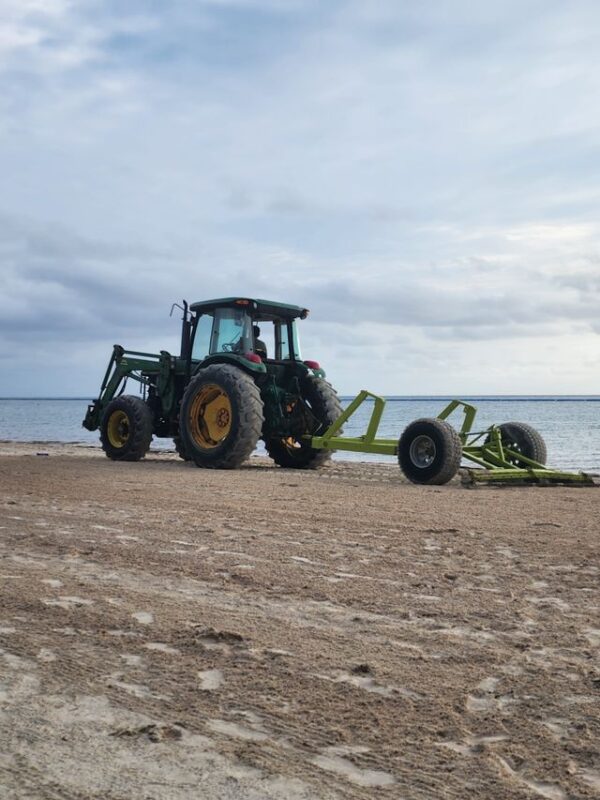
Before we get to the attachments themselves, there’s a soil argument to be had. A heavy tractor will put 12-20 psi through its wheels. An ATV will put 2-5 psi. This difference isn’t academic, soil compaction caused by oversize and excessively heavy machinery can reduce forage yields by 15-20% due to both restricted root growth and poor drainage (those are numbers from the agricultural soil science boys). On wet autumn or spring ground, running a great big tractor across your pastures to do a job that doesn’t really need a great big tractor does real, measurable damage. A utility vehicle doesn’t.
Flail Mower
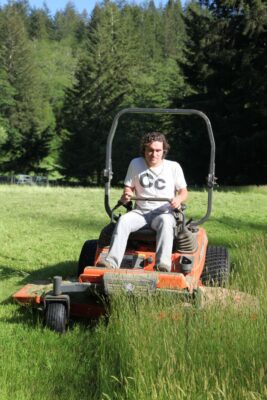
If there’s one attachment that earns its keep faster than any other, it’s a flail mower. Chain harrows and rotary cutters have their place, but a flail deals with the jobs they can’t, thick rush clumps, bramble regrowth along fence lines, rank grass that’s been left to go to seed, and overgrown headlands.
The cutting mechanism is forgiving over uneven ground, which matters on an estate with paddocks that have never seen a laser level. It mulches as it cuts, which means you’re not leaving windrows of dead material to kill the grass beneath. For paddock maintenance and rough amenity land, a mid-sized flail running off its own petrol engine or hydraulic drive does the work of a much bigger machine because you’re not fighting soil conditions to get it there.
Chain Harrow
You may not think so to look at them. It’s just a bit of weighted metal mesh pulled over your grass. But when it comes to sprucing up permanent pasture, chain harrowing is hard to beat.
After a winter of poaching and heavy stock, pasture becomes compacted, mossy, and bumpy. A run over with the chain harrow in early spring breaks up dung pats, pulls out dead thatch, and, most usefully, causes the grass over bare patches to tiller out and fill in the space. On managed amenity grassland, it smoothes out mole hills and maintains a flat, even surface. Use your chain harrow again in late summer to lightly open the sward before overseeding. This provides the new seed with a good, firm base to establish in, but without the expense of employing a contractor to cultivate in your seed.
One vehicle, one attachment, no contractor invoice.
Spot Sprayer or Small Boom Sprayer
Applying blanket herbicides is expensive and often not required. Most weed pressure on an estate is patchy, docks in one corner of a field, thistles along a gateway, ragwort through a paddock. A 12-volt mounted spot sprayer or a small towed boom with a 200 to a 400-liter tank will handle this work precisely and economically. The chemical cost difference between spraying targeted patches and treating an entire field is significant over a season. Practically, you’re not over-applying product to areas that don’t need it. A single operator can cover a large block of land in a morning, treating what needs treating and leaving the rest. That’s genuinely different from how most estates approach weed control, which tends to be either hand-pulling or calling in a contractor with a tractor-mounted boom for a job that didn’t require one.
Livestock Snacker or Space Feeder
Managing stock can be quite labor-intensive. Imagine having to carry bags, fill buckets, and drive back and forth to feed a large number of animals in different paddocks. This becomes even harder during winter.
A towed livestock snacker or space feeder can be attached to the back of your utility vehicle and will drop a metered quantity of feed as you drive through the flock or herd. This way, one operator can feed hundreds of sheep in a single pass without having to leave the seat. For cattle on winter stubbles or in outlying blocks, a mounted feeder on the front rack can do that job.
The labor and time saved here can quickly add up. For instance, over a four-month period, you can save so many hours from this single daily task that it justifies the cost of the attachment.
Grader Blade and Transport Box
Farm infrastructure, such as tracks, gateways, and fence lines, always needs upkeep. Ruts and potholes can appear on the tracks following wet weather. Stone or compacted dirt tracks need to have material maintained at their edges and pushed back from gateways and other high-wear areas. Post-and-rail fence maintenance means taking stone and gravel to places where a full-sized trailer can’t easily get it.
Rather than needing a full-sized tractor fitted with attachments such as a grader blade for maintaining tracks and a front or rear transport box for shuttling materials, a utility vehicle can easily take both attachments and be used around the farm or estate for a wide range of other tasks.
A grader blade with a fast hitch enables easy changes between front and rear mounting for maintaining tracks, while a front or rear transport box can carry whatever tools, posts, or materials needed in the field. Both the grader blade and the transport box can be removed in seconds when you want to use the utility vehicle for other tasks.
The point isn’t that utility vehicles are better than tractors. Tractors do jobs that ATVs can’t. The point is that a significant proportion of daily estate and farm management work doesn’t need a tractor at all, and doing it with the right vehicle and the right attachments is faster, cheaper, and kinder to the ground.