
House and Home
10 Critical Factors to Consider Before Choosing Your Next Home Flooring

The reason most flooring decisions ultimately lead to disappointment is that you are chasing the floorboards of your dreams instead of the floorboards that make sense for your life. That gorgeous white oak looks amazing in the showroom, but three months later it’s a pitted mess with black circular stains from your dinner plates. The trick is not to talk yourself into getting a different kind of floor, but to instead determine what kind of floor you want based on your needs. Here’s how to do that.
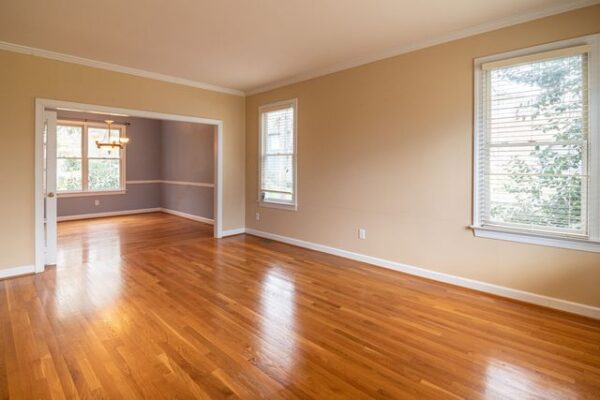
Conduct a room-by-room lifestyle survey before comparing any floorboards
Take notes on what happens in a room. What does the room typically see or experience?
The kitchen is likely to see grease spots, dropped dishes, water rings around the sink, and maybe a dog waiting patiently by the table. The entryway may have muddy boots and dripping umbrellas. Your home office desk may roll backwards and forwards eight hours a day. The playroom may have juice spills and toy-strewn floors. Bedrooms are mainly for bare feet.
Sound simple? Most people don’t do it. Most people fixate on a type of wood or tile or laminate they think looks nice, and then try to rationalize it into all their rooms. Flip it around. Let the room dictate the material, then let your style preferences narrow it down.
Think about moisture before choosing a material
Water is the enemy of many floor coverings. Don’t sacrifice solid hardwood in favor of a stylish site-finished plank throughout the house. Moisture will invariably get underneath the planks and cause bowing, warping and eventual replacement of the entire floor.
In particular, moisture is an issue for wet areas: the kitchen, bathrooms, entryways, laundry rooms and basements. These rooms require wet area materials like porcelain tile, SPC vinyl or water resistant laminate. Waterproof laminate and water resistant laminate are not the same thing. The difference is important. Waterproof laminate contains a core that resists water penetration, so it won’t swell from consistent dampness, like from a fridge leak that goes unnoticed for days. Water resistant laminate is more for occasional spills that can easily be wiped up. If you have a basement floor that sees use on a regular basis, don’t overlook the importance of underlayments that help prevent moisture from coming up from underneath the floor.
Determine the durability needs for your rooms
“Durable” is a subjective word. It helps to understand the numbers that define the durability of a flooring material.
For laminate, AC ratings determine the level of abrasion resistance. AC refers to the “Accelerated Abrasion” standard set by the American Standards Testing and Materials (ASTM). The AC rating system for laminate flooring goes from AC1 to AC5, with AC5 being the most durable and appropriate for commercial or heavy residential traffic. Your entryways, kitchen and living room need at least an AC3 or AC4, or else you’ll see scratches forming after just a couple years. AC1 or AC2 are best suited for light residential traffic.
Laminate that doesn’t say AC rating is a red flag, as well as luxury vinyl that doesn’t specify a MIL (the thickness in thousandths of an inch) measurement for the wear layer. That transparent layer on top of the design layer determines how much traffic the floor can withstand before the design wears off. As a rule, you want at least 12 MIL for low traffic areas like a spare bedroom. For an entryway with high traffic, at least 20 MIL is needed.
Last but not least, Janka Hardness is the measurement for how much pressure has to be applied to indent a wood floor. For example, oak falls in the middle of the pack on the Janka scale. Hickory and maple are towards the top and need a bit more power to dent, while pine and some tropical woods are softer and will scuff more easily. If you’re set on a solid hardwood floor in an area that sees considerable traffic, be sure to compare Janka ratings for species you’re considering before falling in love with the way a certain wood looks.
Underlying surfaces dictate your options.
Existing underfloor surface can be a factor in whether a flooring type is appropriate for a particular room. Old subflooring with dips and groans might call for luxury vinyl, and existing tile is going to factor into whether you want to replace the whole floor or not. This is another consideration that gets overlooked until the installer comes to the job and realizes that it’ll require additional work, which makes the project much more expensive.
Design around your pets instead of trying to fight them
Pets factor into nearly all the considerations listed above. Pets can wreck a floor in numerous ways, starting with scratching, then moving on to peeing and pooping everywhere. Dirt from a dog is likely to be scattered around entrances and exits, near the water bowl, and along the way to the window.
Scratches are much less noticeable on a textured surface versus a slick surface. Dense, low pile carpets are better for pets than high pile, and they’re less likely to hold odors. For areas that see a lot of pet traffic – entrance ways, along the way to the backyard, and around the couch where the cat likes to jump up and land – place washable area rugs to protect bare floors or existing carpeting.
Slip resistance, especially in older pets and people, is frequently overlooked as well. The slick surface of many porcelain tile, laminate and even vinyl flooring can be a hazard for seniors and for pets that like to slide across the floor at top speed when they’re excited. Matte finishes on tile and flooring eliminate this risk.
Focus on comfort, noise reduction and the feeling of the space
Hard surfaces amplify sound. A tile floor on an underlying hard surface can turn a clatter of dropped dishes into a sound that penetrates the upstairs living room like a garbage disposal has been turned on. Living areas that are over other living areas (or over a garage) should have carpets or cork floors or underlayments with good noise reduction properties in order to prevent noise from traveling to other parts of the house. The same goes for bedrooms. If you’re going to have a tile floor in the kitchen, have a thick underlay or nice carpet in the adjoining dining room so that the dining room isn’t perpetually echoing. The underlay is important for noise reduction and for comfort: it cushions your feet when walking and sitting, which is especially important if you spend a considerable amount of time walking around the house barefoot.
Barefoot comfort is a very subjective category that’s important to think about, especially for rooms that are used often. Some people get used to having cold floors in the bathroom, while others dread walking out of bed in the morning. If barefoot walking is an important consideration for your household, make that factor part of the decision for bedrooms, bathrooms, and other tiled or hard surfaced areas.
Consider allergens if they’re an issue for your household
Wall to wall carpet holds more allergens than hard surface area, as carpeting has fibers and grooves that hold onto pet dander, pollen, and other debris that gets tracked into the house from outside. For the sake of allergy and asthma sufferers, it’s best to stick to hard surfaces like luxury vinyl, tile, and laminate in areas where people gather like living and dining rooms. You should also avoid wall to wall carpeting in bedrooms if you’re prone to allergies, unless it’s low pile carpeting.
That doesn’t mean carpets should be banned from the house if you suffer from allergies. Low pile carpeting in bedrooms is a good alternative to high pile carpeting. The less surface area the better when it comes to allergen retention, and for allergy sufferers it’s much better to have low pile carpets in the bedroom and hard surfaces in the living area. Carpeting in a bedroom can still trap dust and allergens, but those allergens aren’t as easily disturbed.
Plan your project around the total cost rather than the materials price
The square foot price of a particular flooring product rarely reflects the final cost of the project. Installation, underlayments, removing and disposing of old flooring, transition strips between rooms, and new trim all add to the cost of a flooring project.
The removal costs are going to be dictated by what kind of old flooring you have. Carpet removal is a snap compared to old glued vinyl or ceramic tile, and even more so if there’s asbestos in the tile. Ask about removal costs and concerns before the job starts, rather than after.
Read the warranty language. Your flooring warranty is likely to be very different for commercial use than for residential use, and terms on moisture resistance or fading may be more limited than you’re led to believe. Read your warranty and the exclusions carefully.
Factor in resale value versus how long you plan to occupy a home
If you’re planning on selling your house in a couple of years, your priorities change. Hardwood flooring has a very strong resale value. According to one survey by the National Wood Flooring Association, 99 percent of real estate agents say that homes with hardwood flooring sell easier. This is very important information to consider if you’re in the market for a new home or planning to sell your current home sometime in the near future.
If you’re planning on occupying a house for many years to come, however, you should plan less around resale value and more around the comfort of the floorboards for your family. A material that has slightly less appeal for potential buyers but will stand the test of time with your family is a far wiser investment than trying to get the most money out of the house possible by selling it for a much higher price in a few years. Trying to maximize the potential future value of a home you’re not going to stay in for a very long time will only lead to you regretting the decision for the next several years.
Test the flooring in your house for lighting, color, comfort and scent
A four by four inch sample in the corner of a show room doesn’t represent how a floor is going to look in your home. When possible, get large samples of all the flooring you’re considering and place them where you’re planning on putting them to see how the lighting affects the color. See how comfortable the floor is by walking on them in socks, and check to see how water reacts to the surface. These are the kinds of considerations that a specialty showroom can help you with, like O’Krent Floors, which will ask questions about your family and lifestyle and make recommendations based on that information.
Sustainability is something to think about as well, and you can bring it up with a showroom that offers sustainable materials like bamboo, cork, and rubber. Most showrooms are happy to provide all the information you need on sustainable options.
A floor suitable for how you live is more important than a floor suitable for the trends
Trends change. How you live, especially in relation to your family, is more constant over a period of years. A product purchased based on how people use a space, rather than how it looks, is more likely to be appropriate for the home regardless of trends.