
Finance
Maximizing Your RESP: Strategies for Catching Up on Contributions

Key Takeaways
- RESPs allow a lifetime contribution limit of $50,000 per beneficiary.
- The Canada Education Savings Grant (CESG) provides a 20% match on your contributions up to $2,500 per year, with a lifetime maximum of $7,200 per child.
- Unused CESG room can be carried forward for future years, allowing you to catch up if you missed making contributions.
- Strategizing your RESP contributions, including lump-sum catch-up payments and maximizing government grants, can accelerate savings growth.
Planning for your child’s educational future can feel overwhelming, especially if you’ve missed some opportunities to contribute along the way. Fortunately, RESP rules offer flexibility, making it possible to catch up and ensure your savings go further for your child’s post-secondary goals. Understanding the RESP catch up rules can help Canadian families reclaim lost time and make the most of government incentives.
RESPs (Registered Education Savings Plans) are specifically designed to help families save for education, and life’s ups and downs shouldn’t prevent you from taking full advantage of these benefits. Whether a financial setback or simply an oversight led to missed contributions, there are strategic ways to fast-track your savings and maximize the government grants included with the plan. Carefully targeted catch-up contributions can unlock significant advantages for your child’s future education investment.
Understanding RESP Contribution Limits
One of the core benefits of RESP accounts is their built-in flexibility. While there’s no annual contribution limit, the Canada Revenue Agency sets a lifetime cap of $50,000 per child. You can contribute whatever amount suits your family’s budget each year, as long as you don’t exceed the lifetime maximum. This means families who have missed years can make up for lost time with larger, lump-sum contributions in better years. Keep in mind, though, that RESP contributions are not tax-deductible, but the earnings and grants grow tax-free until withdrawal, providing valuable long-term benefits.
Government grants, especially the CESG, are at the heart of RESP growth. The CESG matches 20% of your contributions, up to $2,500 annually, for a maximum of $500 per year. Over the life of the RESP, a child can receive a maximum CESG of $7,200. Families with lower incomes may qualify for additional federal grants, further boosting potential returns and providing greater opportunity to those who need it most.
The Role of the Canada Education Savings Grant (CESG)
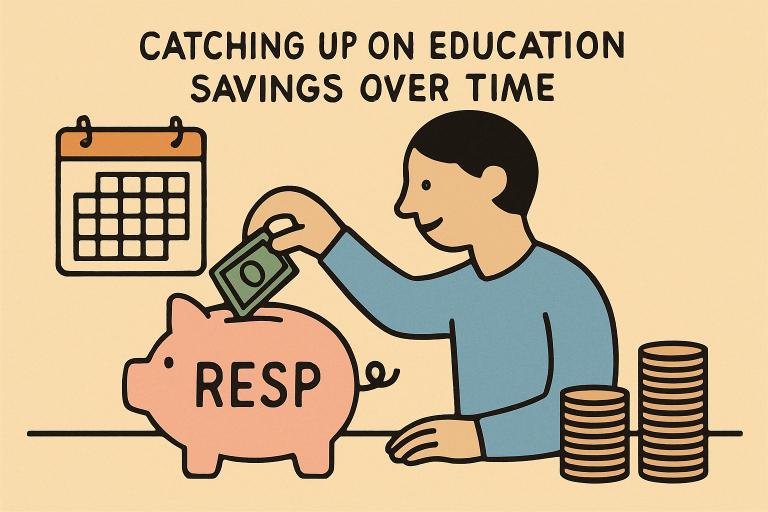
The CESG is a crucial incentive within the RESP framework. By contributing $2,500 per year, you qualify for a $500 annual government grant. But what happens if you miss a year? Fortunately, the unused CESG room doesn’t expire at the end of the year. Instead, you can carry forward any missed grant eligibility and catch up in future years by contributing more than $2,500, up to a maximum CESG of $1,000 per year (or two years’ worth of grant) until all accumulated entitlements are used.
Carrying Forward Unused CESG Room
If life gets in the way and contributions are missed, your family hasn’t lost the opportunity to benefit from government support. Any unused CESG room is carried forward and can be banked for future years. For example, if you contributed nothing last year, you could contribute $5,000 this year and receive a full $1,000 CESG, effectively catching up for the missed period. However, it’s important to note the timing: only one year’s worth of unused CESG can be claimed per year, in addition to the current year’s grant. Payment schedules and rules can be complex, so staying up to date on the latest details is essential; you can review REpracticalSG guidelines via the official Government of Canada RESP resource.
Strategies for Catching Up on RESP Contributions
Assess Your Unused CESG Room
The first step is to verify how much CESG room you have available. Your RESP provider can supply documents showing grant entitlement and unused contribution room. This figure will guide your catch-up contribution plan.
Plan Your Contributions Strategically
Once you know your available room, coordinate contributions so you maximize grant collection each year. If possible, structure annual catch-up deposits to take full advantage of the maximum CESG payment allowed. Regular, manageable contributions will keep you on track and spread the financial impact over several years.
Use Lump-Sum Deposits When Viable
If your financial situation permits, consider making a substantial, one-time contribution to your RESP to recover lost ground. This approach is particularly effective if you have accumulated several years’ worth of unused CESG room. Lump-sum payments accelerate the process and unlock grant eligibility faster for your beneficiary.
Review and Monitor Regularly
RESP rules and government grant programs evolve over time. Regularly check your RESP statements and stay informed about new policy updates that may impact your entitlements or contribution strategies. Reliable resources such as Fidelity’s guide to cashing out an RESP provide up-to-date insights on maximizing educational savings grants.
Tax Implications and Withdrawal Considerations
While RESP contributions are made with after-tax money, the advantage is that investment growth and government grant funds remain tax-deferred until withdrawn. These withdrawals, when designated as Educational Assistance Payments (EAPs), are taxed in your child’s hands. Since most students have minimal taxable income, the tax owing on RESP withdrawals is often negligible, making this an extremely tax-efficient savings strategy. For more on tax-efficient withdrawal planning, see this Fidelity guide to RESP withdrawal rules.
Additional Government Incentives
In addition to the CESG, families may access other federal incentives, such as the Canada Learning Bond (CLB), which provides up to $2,000 to eligible low-income families. The CLB includes a $500 initial deposit and $100 payments annually until the child turns 15. Even if you aren’t able to contribute right away, opening an RESP allows you to receive the CLB and begin earning investment income immediately, maximizing every dollar available for your child’s education.
Conclusion
Even if you’ve missed contribution years, RESP rules are designed to help families recover lost ground and optimize educational savings. By leveraging contribution flexibility, maximizing government grants, and remaining proactive about your RESP strategy, you can support your child’s academic future with confidence and security. Prioritizing catch-up contributions and understanding carry-forward rules transforms missed opportunities into tangible benefits and brings higher education within closer reach.
From my perspective, strategies built around maximizing grants only work if surplus income exists in the first place.