
Business
How to Respond to Behavioral Interview Questions Like a Pro

Table of Contents
- Understanding Behavioral Interview Questions
- The STAR Method
- Common Behavioral Interview Questions
- Preparing Your Responses
- Tips for Delivering Your Answers
- Practicing Your Responses
- Avoiding Common Pitfalls
- Conclusion
Understanding how to answer behavioral interview questions is crucial for job seekers. These questions are designed to reveal how you have navigated challenges, solved problems, and interacted with others in real-world situations. Employers pay close attention to the substance and structure of your answers because they know that past behavior is a strong indicator of future performance. For a deeper dive, check out this resource on behavior interview questions to hone your knowledge before your next interview.
Nailing these types of questions can set you apart from other candidates. By drawing on your actual experiences and communicating your thought process, you enable interviewers to see you as a solution-oriented, reliable professional who has demonstrated value in previous roles. Typically, these questions ask for situations in which you demonstrated leadership, managed conflict, or adapted to difficult circumstances.
Preparing excellent responses gives you the confidence to handle any curveball during the discussion. Instead of feeling flustered, you will be able to share specific stories that highlight your suitability for the role in question. Employing techniques like the STAR method lets you remain clear and concise while ticking all the boxes interviewers are seeking.
Since behavioral questions draw on your experience, it’s important to be reflective and strategic. Think about various professional scenarios you’ve encountered, both positive and challenging, and prepare thoughtful answers in advance. This proactive style ensures you are ready to impress hiring managers, regardless of the questions they ask.
Understanding Behavioral Interview Questions
Behavioral interview questions prompt candidates to provide examples from their past to illustrate their skills and competencies. These questions almost always begin with prompts like “Tell me about a time when…” or “Give me an example of…”. Hiring managers use them to see how you apply your knowledge and abilities in actual situations, instead of only discussing theoretical approaches. According to a Forbes report, many employers believe behavioral questions are one of the most effective ways to assess soft skills such as teamwork, communication, and adaptability.
The STAR Method
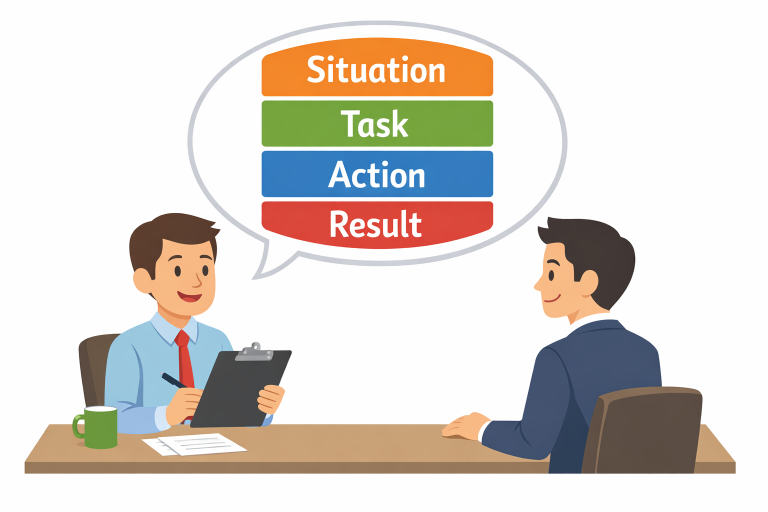
The STAR method is a structured way to answer behavioral interview questions, helping you communicate your point clearly and effectively. STAR stands for:
- Situation: Set the scene by describing the context within which you faced a challenge or needed to accomplish a task.
- Task: Define your specific responsibility or the challenge within that context.
- Action: Explain the steps you took to overcome the challenge or accomplish your task.
- Result: Finish your answer by sharing the outcome of your actions, ideally with a measurable impact.
This method ensures your answers remain concise, relevant, and insightful, making it much easier for interviewers to evaluate your fit for the organization or position.
Common Behavioral Interview Questions
If you want to prepare thoroughly, spend time thinking about these classic behavioral interview questions:
- Describe a time you had to manage a challenging project and the steps you took to handle it.
- Tell me about an instance when you resolved a workplace conflict.
- Share an example of a goal you set and reached.
- Explain how you adapted to a significant change in your work environment.
- Give a story where you exceeded expectations for a customer or client.
For each, practice shaping your answer using the STAR approach to ensure your responses are clear and impactful.
Preparing Your Responses
- Review the Job Description: Pay close attention to the job posting and identify specific skills or characteristics the employer values. Tailor your stories to highlight those traits.
- Reflect on Past Experiences: Think through your previous jobs, internships, volunteer experience, or even significant projects, and select a few scenarios that demonstrate a broad range of important skills.
- Use the STAR Framework: Lay out each story in STAR format before the interview to make it easier to recall and articulate under pressure.
Rehearse each scenario until you can deliver your example smoothly without sounding over-rehearsed. The best answers feel natural and authentic, not memorized.
Tips for Delivering Your Answers
- Be Concise: Aim to answer each question in 2 minutes or less. Avoid rambling or providing unnecessary details.
- Maintain a Positive Spin: Even when discussing setbacks, focus on what you learned and how you grew from the experience.
- Add Metrics: Whenever possible, support your results with numbers, percentages, or other quantifiable achievements. For further insights on impactful communication, check this Harvard Business Review guide.
Practicing Your Responses
Repetition is key to building confidence. Arrange mock interviews with a colleague or, if available, use career services. Recording yourself is also an excellent way to identify areas for improvement and polish your answers. The more you practice, the more fluidly you will speak during the actual interview, reducing stress and boosting your performance.
Avoiding Common Pitfalls
- Over-Talking: Share enough context to make your point, but avoid drifting off-topic or telling overly lengthy stories.
- Avoiding Vagueness: Stay specific. Instead of general statements, describe exact actions and results for a compelling answer.
- Neglecting Outcomes: Be sure to close your example with a clear, positive result – this is where you demonstrate your value.
Conclusion
Mastery of behavioral interview techniques can make a decisive difference in your job search. By preparing stories using the STAR method, practicing effective delivery, and steering clear of common mistakes, you can show potential employers that you possess the skills, judgment, and character they are seeking. Your preparation and confidence will shine through, giving you an edge in even the most competitive processes.
Great practical tips for anyone preparing for a job interview. I liked the advice on adding metrics to your answers.