
Business
How to Properly Seal Conveyor Transfer Points to Reduce Airborne Dust
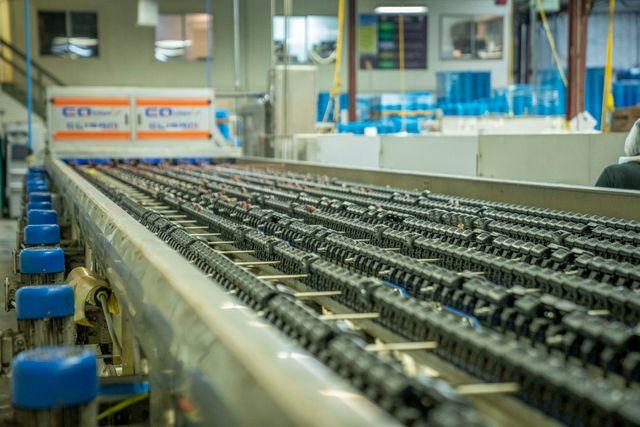
In the majority of cases, dust problems on belts are not because of bad housekeeping or the wrong dust control product. The real problem is desperately seeking to control dust that was never properly managed in the first place. Get the loading point sealed right, and you stop it being a problem in the first place.
Belt Sag Is Where Most Seals Fail
First and foremost: Before a pressing issue like sealing can be addressed, the belt has to be properly supported so that it stays flat. It seems basic, but this is the step that many sites overlook.
When a laden belt sags between troughing idler rollers, it’s really carrying out a kind of sine wave motion; essentially – it is opening a gap between the belt surface and the skirtboard seal with every cycle. It could be the best sealing material in the world, but if the belt is allowed to move vertically, tonnes of material and fines will make its escape with alarming ease.
So, how do you fix it? Support the belt properly at the loading zone with impact cradles or closely spaced impact beds. They’ll get and keep the belt nice and flat and absorb the material’s energy while it falls onto the belt. Voila! A stable, flat belt surface. Sealing works by giving a skirting something to work against – and if you aren’t able to establish this baseline, everything else you do will only be a temporary improvement.
The Dual-Seal Approach
A sealing system that uses a single, solid rubber compound strip and holds it secure by clamping it directly to the skirtboard will perform the material containment job only as well as it’s adjusted to dig into the belt, while the constant wear against it caused by over-adjustment makes it a material/belt wear item that degrades over time.
Remember, it’s the moving fingernail file and should be the one wearing out, not the belt itself. Unfortunately, that means a constant tension adjustment – compressing the seal into the belt more every day as the seal deteriorates due to belt wear is the only way to maintain containment.
What you want is to contain as much reliable long-term adjusted pressure against the belt with the lowest possible proximity to the contact surface. That means a softer, more flexible rubber that can act like a wiper blade with the least amount of friction or belt abrasion while holding its shape. Deploying high-performance conveyor skirting that is installed at the correct position, angle, and pressure when the belt and rubber meet would help.
Material Selection Matters More Than Most People Admit
While traditional rubber skirting is still the most common type of skirt material, it does have a downside. Hard rubber under contact pressure against a moving belt face creates friction. And, as we all know, friction wears. Over time, this wear will manifest itself as deep grooves that are cut into the belt cover, which in turn breaks the seal, allows fugitive material to escape, and ultimately damages a very expensive belt.
This doesn’t happen with polyurethane skirting. It runs at a much lower friction rate against the belt surface, wears much slower and has enough give to allow it to conform to minor belt irregularities without losing contact.
A properly designed skirt seal will enhance performance and nearly eliminate the need for skirt maintenance.
Clamping Systems And The Maintenance Reality
Skirting is a part that will be worn over time. The issue is that if its replacement or adjustment takes an hour with a wrench and a scaffold, it won’t be done proactively according to the maintenance schedule. A worn skirt that is 6mm above the belt surface due to friction isn’t doing any sealing at all.
Quick-release clamping systems specifically eliminate this teardown friction. Operators should be able to get in, realign, or exchange a worn seal strip, and get out in minutes. The seal will then take care of itself by doing what it is meant to do: actually be a seal. Bolted static designs that seemed a good idea in 1985 are the second most common cause of chronic dust problems, after poor suspension loading.
Also, the clamping system needs to allow incremental downward adjustment. As the outer seal strip degrades, it must be pushed further down towards the belt to maintain contact. A design that requires the entire assembly to come off if you need to drop even 5mm is a design that will be ignored.
Managing Air Pressure Inside The Chute
Ensuring that the belt edge is properly sealed is just one aspect of the challenge. As the material enters the transfer chute at a high velocity, it displaces air and causes the enclosure to become pressurized. This positive pressure will drive dust out of the transfer, through gaps in and around the chute opening, around the perimeter of the dust curtain and through the worn areas in the belt support system.
A stilling zone or a settling zone is a low-velocity area created by widening the construction of the transfer enclosure immediately downstream of the impact point of the material and drops the transfer velocity/energy down as quickly as possible. This allows the suspended dust to “fall” back onto the conveyed material before reaching the opening where the contaminants are drawn into the flow stream.
Dust curtains deployed within the transfer can do the same thing with the principle being “you want dust to fall, not to flow.”