
Photography
Simple Ways to Choose Matching Family Outfits for Holidays, Trips, and Photos

The same coordinated look can succeed beautifully at a holiday lunch and fail completely during a travel day. A dress that photographs well beside a decorated tree may feel awkward in a car seat. A shirt that looks effortless at a beach rental may appear too casual for a formal family gathering. Parents often discover that the hardest part is not finding attractive clothes; it is choosing pieces that can move through the real schedule surrounding the occasion. The day may include breakfast, driving, waiting, carrying bags, greeting relatives, supervising children, and standing for photographs before anyone reaches the main event. Clothing chosen only for the camera can become a source of complaints long before the picture is taken. A better starting point is to imagine the family in motion and decide which visual detail can remain consistent without limiting comfort. It also helps to identify the most demanding part of the schedule, because an outfit that works during that stretch will usually manage the easier moments around it. This keeps the wardrobe decision tied to the entire day.
A useful search begins after the family has discussed the location, expected weather, activity level, preferred formality, and the one detail everyone is comfortable sharing. That short conversation removes many unsuitable options before anyone opens a product page. Once those decisions are clear, browsing matching family outfits becomes a focused decision rather than an open-ended search. The aim is not to make every person identical. It is to choose a visual idea sturdy enough to survive holidays, trips, and photographs without taking over the day.
One Outfit Plan Can Serve Three Very Different Moments
A holiday, a trip, and a photo session may appear to need separate wardrobes, yet the same coordinated group can often work across all three when the base pieces are versatile. The key is to let the garments provide the connection and allow layers, footwear, and accessories to adjust the mood. A blue dress may feel festive with polished shoes, practical with flats, and relaxed with a light cardigan.
Holiday Gatherings Reward Clothes That Can Adapt
Holiday schedules are rarely as controlled as the invitation suggests. A family may move from a formal meal to a living-room game, an outdoor walk, or a crowded kitchen. Children may sit on the floor, adults may carry serving dishes, and everyone may encounter rooms with very different temperatures.
Choose one polished element, then keep the rest flexible. A coordinated dress can provide the visual focus while a removable layer handles temperature changes. Shirts can echo a stripe or color without requiring matching trousers. Shoes should suit the longest period of standing or walking, not only the arrival.
Travel Style Starts With the Suitcase Test
Travel exposes every impractical clothing decision. Bulky pieces take up space, delicate fabrics create care problems, and complicated outfits slow down hotel mornings. Before packing a coordinated look, ask whether each garment folds easily, works with at least one other item in the suitcase, and can be worn again if plans change.
A strong travel combination also survives separation. If a child spills something or an adult needs a different layer, the remaining outfits should still look related through color. This is why a simple blue base, striped top, or repeated accent often travels better than a highly specific theme.
The Camera Notices Color Before Tiny Styling Details
Family photographs become easier to compose when the group shares a controlled palette. The camera registers large areas of color and contrast before it captures a small hair clip or bracelet. Parents can therefore create a connected image without purchasing identical accessories for everyone.
Consider the background as part of the palette. Deep blue can stand out against pale walls, autumn foliage, light sand, or holiday greenery, while stripes introduce visual rhythm. Avoid adding several competing prints simply because they contain one matching color. One clear pattern and a few solid supporting pieces usually give the photograph enough structure.
A PatPat Blue Look Offers More Than One Styling Direction
PatPat currently displays the featured product as Matching Family Outfits Blue. The page presents selections for women, girls, babies, boys, and men. Its visual direction combines below-knee blue dresses with front buttons, belts, cap sleeves, and pockets alongside striped tee options for other family members. That mix allows a family to coordinate through color and pattern while using different garment types.
The listed fabric varies by piece. The page identifies the solid T-shirt as 60% polyester, 35% rayon, and 5% spandex; the striped T-shirt as 95% polyester and 5% spandex; and the dress as 60% polyester, 35% rayon, and 5% spandex. It currently describes the outfit as machine washable and suitable for tumble drying. These details belong to the exact product page and should be checked again before publication or purchase.
The page is currently marked out of stock. Families should therefore treat it as a styling reference unless availability changes. A group image should not be read as confirmation that one selection includes every garment shown; each wearer, size, and quantity needs to be reviewed in the cart.
Decide Whether Clothes Get Worn Again
Buttons, pockets, waist placement, sleeve shape, and garment length may not dominate the product photograph, but they influence the day. Parents should check whether children can manage the clothing during bathroom breaks, whether adults can sit comfortably, and whether a belt needs repeated adjustment.
Care also affects repeat wear. Read the instructions for the exact selected piece instead of assuming every garment in a family collection uses the same fabric. If the laundry routine feels unrealistic for the household, the clothes may remain in the closet no matter how good the first photograph looks.
Turn a Group Try-On Into a Ten-Minute Dress Rehearsal
A short practice session can prevent last-minute changes. Have everyone put on the complete outfit, including shoes and planned layers. Ask them to sit, reach, walk, and bend. Check dress length on stairs, shirt fit while arms are raised, and whether children keep touching a seam, belt, or neckline.
Then take one quick phone photograph in ordinary light. The goal is not to create the final portrait. It is to notice unexpected color clashes, transparent fabric, distracting logos, or a layer that hides the shared detail.
Build the Photo Look Around the People, Not the Pose
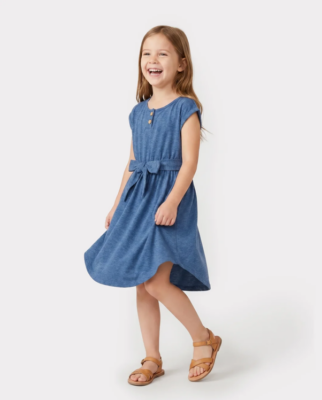
When selecting family photo outfits, think about how the family naturally interacts. A group with young children may look better walking, sitting close, or sharing an activity than standing in a rigid line. Coordinated color can hold the image together even when everyone is moving differently.
Plan one easy prompt instead of several poses: walk toward the camera, look at the youngest person, or gather around something meaningful. Keep the session short enough that the clothing remains part of the memory rather than the reason everyone becomes frustrated.
FAQs
Should Holiday and Travel Outfits Be Exactly the Same?
No. The same base garments can shift through shoes, layers, and accessories. Exact repetition is less important than maintaining a clear palette and similar level of formality.
How Many Colors Should a Family Use?
Two or three main colors are usually enough. One can dominate, another can appear in a stripe or print, and a neutral can support footwear and layers.
What Must Be Checked Before Ordering?
Review the exact product name, wearer option, size chart, garment details, fabric composition, care guidance, quantity, current inventory, delivery information, and return eligibility. Dynamic details should be verified close to checkout.
What If One Family Member Dislikes Matching?
Use a related solid color or allow that person to choose an individual layer. The group can remain visually connected without requiring everyone to wear the same print.
The Most Successful Plan Leaves Room for Real Life
Choosing coordinated clothing becomes simpler when parents stop planning for one frozen moment. Begin with the setting, identify the day’s most demanding activity, and choose one or two visual elements that can remain consistent. Then let fit, layers, footwear, and personal preference do the practical work.
For the featured PatPat design or a currently available alternative, review each family-member option separately, compare actual measurements with the product-specific chart, and confirm the cart before ordering. The best family look is not the one that stays perfect. It is the one that still feels comfortable, connected, and appropriate after the holiday meal, the journey, and the final photograph are over.