
Health and Wellness
Creating Healthy Workplaces: Essential Office Cleaning Guidelines
A clean office supports employee health, protects shared equipment, and gives visitors a positive first impression. Yet effective office cleaning requires more than emptying trash cans at the end of the day. Workplaces need clear routines for high-touch surfaces, restrooms, kitchens and individual work areas to maintain a healthy work environment.
The best plan reflects how people actually use the space. A small office with assigned desks has different needs from a busy workplace with shared stations and frequent visitors. These guidelines will help you build a practical cleaning schedule that fits your office without disrupting the workday.
Start with a workplace cleaning plan
Walk through the office and list each area that needs attention. Include obvious spaces such as meeting rooms and restrooms along with easy-to-miss spots like storage closets, printer stations, and interior door glass. Record how frequently employees use each space and note any recurring concerns.
Next, divide cleaning tasks by frequency. High-touch surfaces may need attention several times a day, while baseboards and light fixtures can follow a monthly or quarterly schedule. A basic plan might include:
- Daily cleaning for restrooms, break rooms, shared desks and reception areas
- Weekly cleaning for cabinet fronts, window ledges and low-touch furniture
- Monthly cleaning for vents, baseboards and hard-to-reach corners
- Seasonal care for carpets, upholstery and interior windows
Assign responsibility for every task. Employees can manage small habits such as clearing their desks and placing waste in the correct containers. Larger jobs should have a named staff member, facilities team, or service provider responsible for completion.
Businesses and not-for-profit organizations in Berks County that need outside support can consider Dust B Gone for professional office and janitorial cleaning services. When comparing providers, ask about custom cleaning plans, insurance coverage, service schedules, and how quality concerns are handled. A written scope helps everyone understand which areas and tasks are included.
Give high-touch surfaces daily attention
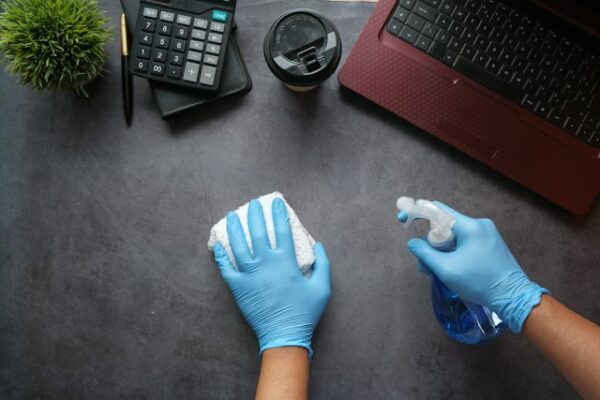
Some office surfaces collect far more hand contact than the floor or walls. Door handles, elevator buttons, shared phones, refrigerator handles, and conference room controls may be touched by dozens of people during a normal workday. Put these high-touch surfaces near the top of the daily cleaning list.
Cleaning and disinfecting serve different purposes. Cleaning removes dirt and many germs from a surface. Disinfecting uses an appropriate product to kill remaining germs. The CDC facility cleaning guidance explains that cleaning is often sufficient in many settings, while disinfection may be appropriate when someone has been ill or when a space has specific health concerns.
Always follow the product label. Check the required contact time, which tells you how long the surface must remain visibly wet. Wiping a product away immediately may prevent it from working as intended. Staff should also confirm that the product is suitable for the material because some formulas can damage screens, finished wood or sensitive electronic equipment.
Create a simple high-touch checklist for each room. In a conference room, for example, it could cover the door handle, table surface, chair arms, remote controls and video call equipment. A short checklist reduces guesswork and makes completed work easier to verify.
Keep shared spaces under control
Break rooms, restrooms and shared workstations deserve focused attention because many employees use the same surfaces. These spaces can also develop odors, clutter and visible grime quickly when no one knows who is responsible for them.
In the kitchen, wipe counters and tables daily, clean appliance handles and check the refrigerator for spills. Set a clear policy for abandoned food. A Friday afternoon refrigerator check works well in many offices because employees have time to take home personal containers before the weekend. Clean the microwave as soon as spills occur since dried food takes longer to remove and may create lingering odors.
Restrooms need scheduled checks based on traffic. A small office may require one thorough daily cleaning, while a busy workplace may need checks in the morning, around lunch and late in the day. Each check should cover soap, paper supplies, fixtures, floors and waste containers.
Shared desks require their own process. Keep an approved cleaner nearby and ask each employee to clear personal items after use. The next person should find a clean keyboard area, chair and work surface. Practical workplace hygiene tips can also help employers shape expectations around hand hygiene, shared equipment and common areas without placing the full burden on individual workers.
Improve air quality and floor care
Dust does more than make an office look neglected. It settles on vents, shelves, electronics and fabric surfaces, then returns to the air when people move through the room. Regular dusting and vacuuming can limit buildup, especially in carpeted offices.
Use damp microfiber cloths for hard surfaces because they capture dust instead of pushing it into the air. Work from higher surfaces to lower ones so falling particles are collected during the final floor cleaning. Computer monitors and other electronics may require manufacturer-approved products, so avoid spraying cleaner directly onto them.
Floor care should match the surface and level of traffic. Entryways often need daily vacuuming or mopping because shoes bring in grit, moisture, and debris. Place suitable mats at entrances and clean them often. A saturated or heavily soiled mat can spread dirt farther into the building.
Carpets benefit from prompt spot treatment and periodic extraction cleaning. Hard floors may require dust mopping, wet cleaning, and occasional refinishing depending on the material. Pay close attention to corners and edges where dirt gradually collects.
Air filters also need routine replacement according to the building system’s specifications. Keep vents unobstructed and report water stains, persistent musty odors, or visible moisture quickly. Cleaning can remove surface dirt, but an ongoing leak or ventilation problem requires maintenance at the source.
Support the routine with better office habits
Professional cleaning works best when employees support the basic routine. Small habits can prevent clutter and spills from turning into larger sanitation problems. Keep waste containers accessible, provide enough hand soap, and stock paper products before supplies run out.
Give employees a straightforward way to report problems. A shared facilities email address or digital form can capture issues such as an overflowing trash can, a restroom supply shortage or a spill in a hallway. Reports should identify the location, time and nature of the problem so the responsible person can respond without a long exchange of messages.
Desk policies should be realistic. Asking employees to remove all personal items every evening may not suit an office with assigned workstations. Requiring food to be discarded, confidential papers to be secured, and excess clutter to be cleared is easier to follow. Clean surfaces are also more accessible to the person performing the scheduled work.
Managers can reinforce these expectations during onboarding and occasional office reminders. Avoid vague instructions such as “keep the kitchen clean.” State what employees should do, such as wiping spills, labeling refrigerated food, and placing dishes in the dishwasher. For a broader look at the connection between routine upkeep and well-being, this article on how cleaning supports health offers useful context.
Review results and adjust the schedule
A cleaning schedule should change when office use changes. Hybrid work, seasonal weather, staff growth, and special events can all affect what needs attention. Review the plan at least every few months and after any major change in occupancy.
Inspect results during normal business hours when possible. Evening cleaning may look satisfactory in an empty building, but daytime observation can reveal overflowing kitchen bins, missing restroom supplies or entryways that become dirty by noon. Ask employees to report patterns instead of isolated preferences. Several reports about the same meeting room carry more weight than one person requesting a different fragrance.
Keep a simple record of service dates, supply use, and recurring problems. If one restroom repeatedly runs out of soap, the answer may be a larger dispenser or an extra midday check. If carpets near the entrance develop stains quickly, larger mats or more frequent vacuuming may solve the problem.
Clear standards make these reviews fair. Define what “clean” means for key areas, including empty waste containers, streak-free glass, stocked dispensers and floors free from visible debris. Once those expectations are documented, your office has a practical benchmark that staff and service providers can follow every day.
A clean office is about more than making desks and floors look presentable. Regular cleaning helps reduce the spread of germs, keeps shared spaces more pleasant and can make employees feel more comfortable at work. The products used matter too, especially in busy workplaces where cleaning teams need reliable supplies and clear handling instructions. That is why choosing a dependable industrial chemical supplier can be an important part of maintaining consistent cleaning standards.