
Other
A Forward-Thinking Approach to Workforce Verification and Compliance

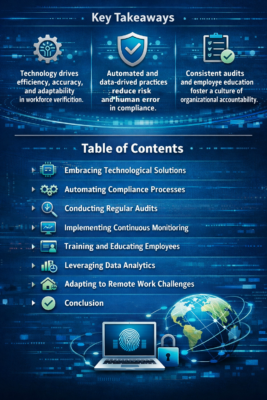
Key Takeaways
- Technology drives efficiency, accuracy, and adaptability in workforce verification.
- Automated and data-driven practices reduce risk and human error in compliance.
- Consistent audits and employee education foster a culture of organizational accountability.
Table of Contents
- Embracing Technological Solutions
- Automating Compliance Processes
- Conducting Regular Audits
- Implementing Continuous Monitoring
- Training and Educating Employees
- Leveraging Data Analytics
- Adapting to Remote Work Challenges
- Conclusion
In today’s rapidly evolving business landscape, organizations are under increasing pressure to ensure that their workforce not only meets operational needs but also complies with a complex web of legal and regulatory requirements. The rise of remote work, global hiring, and technological integration has made traditional verification methods less efficient, prompting companies to adopt more dynamic and forward-thinking strategies. Verifying employee eligibility, maintaining accurate records, and demonstrating compliance have become essential not only for mitigating legal risks but also for building trust and accountability within the workforce.
One of the central tools supporting these efforts is E-Verify business compliance, which helps organizations confirm the employment eligibility of their staff while ensuring compliance with federal regulations. Leveraging automated systems, secure digital records, and streamlined verification processes allows businesses to maintain transparency and reduce errors associated with manual documentation. Beyond regulatory adherence, this approach fosters a culture of diligence and integrity, enabling organizations to focus on productivity and strategic growth rather than being hindered by administrative bottlenecks. By integrating innovative verification practices with compliance frameworks, businesses can respond more effectively to workforce challenges while safeguarding themselves against potential legal and operational risks.
Embracing Technological Solutions
As businesses continue to navigate an increasingly complex workforce environment, embracing technological solutions has become crucial for enhancing efficiency and ensuring compliance. Automation and digital verification tools streamline processes that were once labor-intensive, reducing errors and freeing up resources for strategic initiatives. From onboarding new employees to maintaining accurate records, technology enables organizations to keep pace with evolving regulations while minimizing administrative burdens. These tools also enhance data security and accessibility, enabling faster response times and more reliable reporting, which is critical in industries where compliance is closely monitored.
In addition to workforce verification, technology plays a vital role in managing financial and tax-related obligations. For instance, integrating W9 compliance into digital systems allows businesses to accurately capture and maintain taxpayer information for independent contractors and vendors. This not only ensures adherence to IRS requirements but also reduces the risk of penalties associated with incorrect or incomplete filings. By combining technological solutions with robust compliance frameworks, organizations can maintain operational efficiency while meeting legal obligations. Such an approach not only mitigates risk but also positions businesses to be more adaptable, transparent, and accountable in a rapidly changing regulatory landscape.
Automating Compliance Processes
In today’s fast-paced business environment, automating compliance processes is crucial for organizations seeking to achieve efficiency and accuracy. Manual tracking of regulations and documentation is time-consuming and prone to errors, which can lead to penalties and operational disruptions. By utilizing digital tools and workflow automation, companies can streamline tasks such as policy tracking and reporting, ensuring compliance deadlines are consistently met.
Automation also supports proactive risk management by flagging discrepancies and tracking regulatory changes, allowing organizations to respond quickly to potential violations. Furthermore, it fosters scalability, enabling businesses to adapt to new regulations seamlessly. By integrating technology-driven solutions, companies enhance efficiency and cultivate a culture of accountability, transforming compliance into a strategic advantage that supports long-term growth.
Conducting Regular Audits
Routine internal audits remain one of the most reliable defense mechanisms against compliance breaches. Conducting frequent reviews allows an organization to identify procedural weaknesses, detect outdated or conflicting policies, and revise methods long before external regulators highlight deficiencies. Proactive audits provide granular insight into process effectiveness, enabling leadership to address minor issues before they escalate into significant legal or financial concerns. Maintaining an accurate audit trail—detailed records of all compliance activities—is vital for demonstrating accountability not only to auditors but also to employees at all levels.
Beyond internal oversight, regular audits help organizations foster a culture of continuous improvement and transparency. They encourage cross-departmental collaboration, as teams work together to identify gaps and implement corrective measures. Audits also support risk management by highlighting emerging compliance challenges that may arise due to changes in laws, technology, or business operations. Additionally, well-documented audit results can enhance stakeholder confidence, showing investors, partners, and regulators that the organization actively monitors and mitigates compliance risks. By embedding routine audits into organizational practices, companies not only safeguard against potential violations but also strengthen operational resilience and long-term strategic performance.
Implementing Continuous Monitoring
Continuous monitoring has become the gold standard in compliance management. Unlike periodic checks that can leave gaps in oversight, continuous monitoring solutions offer real-time detection of anomalies, unauthorized activities, or lapses in required documentation. Integrated tracking systems enable compliance professionals to respond promptly to potential threats or process deviations, thereby substantially reducing corporate risk. Through dashboards that visualize compliance status and employee activity, leaders enjoy unprecedented transparency, allowing them to identify trends and vulnerabilities before they develop into larger issues.
Beyond simply detecting issues, continuous monitoring allows organizations to analyze patterns over time, providing actionable insights that inform policy updates, employee training, and process optimization. The agility provided by real-time oversight creates a culture where compliance is integrated into daily operations, making it second nature to everyone in the organization. Moreover, such proactive monitoring enhances accountability at every level, fosters trust with regulators and stakeholders, and positions the organization to quickly adapt to evolving regulatory requirements. By embedding compliance into the workflow rather than treating it as a periodic obligation, companies not only reduce risk but also drive operational efficiency, ensuring that adherence to policies becomes a seamless part of everyday business practices.
Training and Educating Employees
Despite all significant advances in technology and automation, the essential human element of compliance remains fundamentally vital. Employees on the front lines must not only understand the existing rules meticulously but also grasp why they exist and how to follow them effectively. Regularly scheduled, interactive training programs—implemented during initial onboarding and continuously integrated into ongoing professional development—are crucial for keeping every employee up to date with shifting laws, evolving policies, and increasingly sophisticated digital compliance platforms. Practical, hands-on training empowers employees to promptly identify risks and report potential violations, thus serving as an invaluable early warning system for compliance managers. Moreover, a strong, consistent emphasis on comprehensive training cultivates a robust culture of transparency, trust, and shared accountability, which are essential attributes in fostering high-performing organizations. By prioritizing education and awareness, companies can better navigate the complexities of compliance in today’s fast-paced environment.
Leveraging Data Analytics
Data analytics is quickly becoming a competitive differentiator in compliance management. Collecting, analyzing, and visualizing workforce and compliance data enables organizations to identify patterns, detect anomalies, and predict emerging risks well before problems arise. By transforming raw data into actionable insights, analytics enables HR and compliance teams to allocate resources more efficiently, prioritize areas with the most pressing needs, and make informed, evidence-based decisions that enhance organizational resilience. Insights derived from data can inform hiring and onboarding procedures, monitor employee adherence to policies, and refine training programs to address recurring compliance gaps. Predictive analytics takes this further by forecasting potential risk areas, allowing preventative measures that minimize incidents, reduce operational costs, and improve overall accountability.
Additionally, advanced analytics platforms can integrate internal data with external regulatory updates, providing a dynamic, real-time view of compliance obligations. As laws, industry standards, and best practices continue to evolve, data-driven tools enable organizations to pivot quickly, maintain a high standard of compliance, and demonstrate measurable accountability to regulators and stakeholders. Ultimately, leveraging data analytics transforms compliance from a reactive, rule-based function into a proactive, strategic capability that supports smarter decision-making, mitigates risk, and enhances organizational performance.
Adapting to Remote Work Challenges
The widespread adoption of remote and hybrid workplaces has fundamentally changed how organizations approach workforce verification and compliance. With employees dispersed across various locations, employers must navigate the complexities of verifying new hires remotely, leveraging secure online identification, and facilitating flawless digital onboarding. Adapting to remote work also means revisiting wage and hour practices, tax jurisdiction rules, and data privacy obligations. The challenge is further complicated by maintaining a paperless, securely archived digital record to ensure compliance with every aspect of labor law. Leading organizations are addressing these complexities by adopting virtual audit trails, secure e-signature solutions, and compliance dashboards that keep all stakeholders informed and aligned regardless of location or time zone.
Conclusion
In today’s dynamic compliance environment, achieving workforce verification and regulatory adherence is an ongoing journey that demands both foresight and flexibility. Organizations that embrace innovative technologies, automate essential compliance workflows, prioritize regular audits, and invest in comprehensive employee training place themselves at a strategic advantage. The rewards are compelling: reduced legal exposure, optimized operational resources, and a more attractive workplace culture for both current and prospective talent. By grounding their practices in these core principles, leaders prepare their organizations not just for present-day challenges but for long-term security and success in an ever-changing regulatory landscape.
Great insights! Staying organized and proactive with compliance processes not only reduces risk but also improves overall efficiency. Investing in reliable solutions like compliancecertificates can help businesses stay compliant and prepared as regulations continue to evolve.