
Legal
Bicycle Accident Injuries And Your Legal Options Explained

Key Takeaways
- Bicycle accidents can result in a wide range of injuries, making legal guidance crucial for protecting your rights.
- Understanding your legal options can help you secure compensation for medical expenses, lost wages, and pain and suffering.
- Timely action is vital, as evidence can fade and legal deadlines may apply.
Introduction
Bicycle accident injuries are unfortunately common, especially in busy urban environments or areas with inadequate cycling infrastructure. When a cyclist is struck by a vehicle or involved in a collision, the injuries can be severe, and the path to recovery often involves medical treatment, rehabilitation, and complicated insurance claims. Navigating this process can be overwhelming. This is why it is essential to get the compensation that you are entitled to under the law if you’ve been hurt as a result of someone else’s negligence.
Cyclists are vulnerable road users, and the physical and financial impact of a serious injury can be life-changing. Many victims aren’t sure where to start or how to assert their legal rights following an accident. Whether you’re filing an insurance claim or considering legal action against a negligent driver, understanding your options is the first step toward rebuilding your life after a bicycle accident.
Common Bicycle Accident Injuries
Cyclists lack the physical protection offered by cars, so injuries tend to be serious. Common injuries include:
- Broken bones or fractures, particularly to arms, legs, and collarbones.
- Head injuries, including concussions and traumatic brain injuries, can occur even when wearing a helmet.
- Road rash, lacerations, or abrasions caused by contact with pavement.
- Spinal cord injuries or significant back trauma.
- Internal injuries affecting organs or causing internal bleeding.
Aside from the immediate physical trauma, bicycle accident injuries may lead to long-term or permanent disabilities. These outcomes increase the importance of seeking proper legal guidance to ensure all current and future expenses are accounted for in any claim.
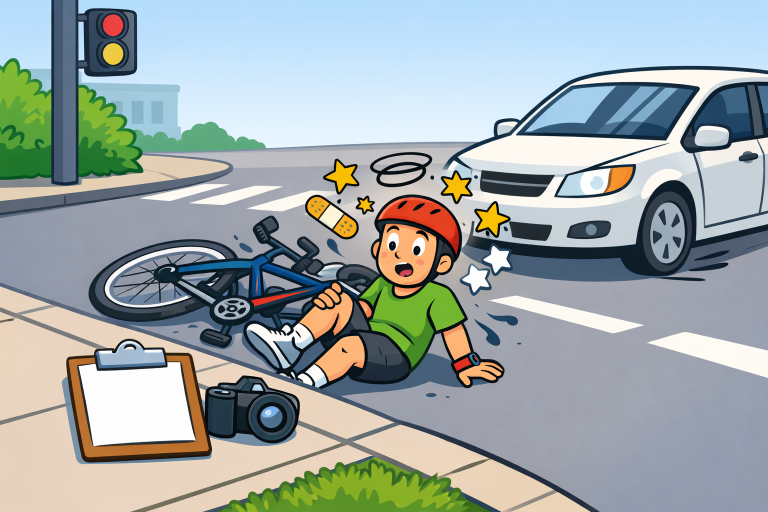
Factors Affecting Liability in Bicycle Accidents
Determining who is legally responsible for a bicycle accident can involve multiple parties and complex scenarios. Liability may rest with a motor vehicle driver, another cyclist, a pedestrian, or even a municipality responsible for road maintenance. To build a strong claim, you should document the accident scene, obtain witness contact information, and seek prompt medical attention. Traffic laws and right-of-way rules can influence liability and whether anyone was acting recklessly or negligently at the time of the accident.
Steps to Take After a Bicycle Accident
- Seek immediate medical attention, even for injuries that seem minor initially.
- Report the accident to the police so an official report is created.
- Document the scene and your injuries with photographs.
- Obtain contact and insurance information from all parties involved.
- Collect contact details for any eyewitnesses.
- Consult a personal injury attorney before discussing the accident with any insurance representative.
Taking these steps will help protect your health and your right to recover damages. For additional guidance on what to do after a serious crash, the New York City Department of Transportation’s Bike Smart guide offers helpful tips for cyclists.
Your Legal Options Explained
Filing Insurance Claims
Many bicycle accidents involve a driver with auto insurance, so your first step is often to file a claim against the at-fault party’s liability insurance. Some states require drivers to carry personal injury protection (PIP) coverage, which may help cover medical expenses regardless of fault. It’s important to understand the specific laws in your jurisdiction and file promptly, as delays can complicate the claims process.
Pursuing Personal Injury Lawsuits
If insurance does not cover all of your losses or if your claim is denied, you may be eligible to file a personal injury lawsuit against the negligent party. A successful lawsuit can help you recover compensation for:
- Medical bills and rehabilitation costs
- Lost wages, both present and future
- Pain and suffering
- Property damage (such as to your bicycle)
- Long-term care or life adjustment expenses
Proving negligence is essential in personal injury lawsuits. An experienced attorney can help you gather evidence, calculate fair compensation, and negotiate with insurance adjusters or represent you in court if necessary.
Maximizing Your Compensation
Documenting every aspect of your injury and its effects on your daily life is crucial. Keep detailed records of medical treatments, receipts, and any correspondence related to your recovery. Avoid making statements to the other party’s insurer without legal advice, as they may use your words against you to reduce their payout. Many accident victims may also benefit from third-party resources that offer detailed information on handling medical claims and documenting long-term effects. The Consumer Reports article on bike-riding safety tips provides valuable medical insights for both your recovery and your legal strategy.
Conclusion
Bicycle accidents can be traumatic, often leaving victims with serious injuries and complicated legal decisions. Knowing your rights and understanding your legal options empowers you to protect your future and pursue the compensation you deserve. By acting swiftly, gathering evidence, and seeking expert legal representation, you give yourself the best chance of moving forward after a bicycle accident.
I got doored last fall commuting to work and broke my collarbone. The ER bills piled up fast, and dealing with the driver’s insurance was a nightmare. While waiting for callbacks, I ended up down a rabbit hole reading about coverage gaps and stumbled on https://globe-life-insurance.pissedconsumer.com/review.html . It made me realize how little I understood my own policies. This article’s advice about documenting everything saved me, photos, receipts, witness info. I eventually got my medical costs covered, but the whole process taught me to review my coverage before I need it again.