
For The Love Of..., Health and Wellness
Can Yoga and Meditation Help Me Gain Peace of Mind, Lose Weight, and Feel Good?


Yoga, as it was traditionally taught in India, is an entire lifestyle, including vegetarian diet, holding yoga postures as a form of exercise, relaxation, meditation, chanting, and breathing. If you really do yoga the way it was developed over thousands of years, you would develop a calm demeanor, blissful state of mind, ability to relax, concentrate, work and achieve whatever you desire in your life, almost effortlessly. However, if you think of yoga as just another form of exercise and you hold specific postures for brief periods of time, you will be loosening up some constricted neuromuscular patterns, but you will not be fully engaging your mind, body, and spirit. There will still be many important health benefits, certainly more than sitting on a couch watching TV.
Can yoga help me lose weight?
The yogic vegetarian diet is based upon thousands of years of tradition with an understanding of how different foods affect the mind, body, and spirit. Yogic relaxation allows you to destress you thinking and relax your internal organs so that they can function at their optimal level. Yogic breathing increased oxygenation of all your body cells, enhances the flow of blood into all your organs, and increases your mind’s ability to focus on what you really want to attain in your life, including achieving your ideal weight. Yogic chanting facilitates the release of old mental habits and is another way for your body to let go of tension and for you to gain clarity of thought. Meditation brings you to an even higher level of concentration, contemplation, visualization, and clarity, which helps you to attain whatever goals you aspire to. Also, it is not just the yoga postures but the complete combination of diet, postures, meditation, chanting and breathing that will balance your mind/body/spirit and would create rebalancing your body chemistry until you attain your ideal weight.
Can yoga help you to lose weight? The answer is “Yes” if you do yoga with an understanding of the full complexity of this practice and if you approach your training with real dedication. The answer is “No” if you just hold some postures for brief periods of time and do not understand the messages in your own body and mind.
Is yoga really exercise, and does it hurt?
If you have not been exercising regularly or if you have done exercises that tighten your muscles, and then you begin to do some yoga stretches and hold these positions for a while, you will probably feel a lot of pain in your muscles – for a while. Just like any other exercise, yoga is an exercise. Moving your body in unfamiliar ways, especially if you have been holding tension in different places (e.g., your neck, your shoulders, your lower back), doing yoga stretches may help to loosen the tight fascia and connective tissues, but there may be some resistance in your body and in your mind, to change. Body posturing evolves over the years in response to all sorts of emotional reactions to people and events in your life. When you begin to move these postural tensions, the emotional memories stored in your brain and your body cells can be unleashed. You may feel physical pain and soreness as well as emotional pain and soreness that you did not expect. The end result is often a more flexible and pain-free body as well as a more peaceful and balanced mind. Using a yoga mat and wearing the best exercise clothing can be life-changing if you were to enroll in yoga classes.
How can yoga and meditation help me to alleviate stress?
The regular, consistent practice of either meditation or yoga can alleviate stress. But doing yoga once in a while or attempting to meditate one time, will probably not only not relieve stress, but it could create additional stress. The first few times you try to sit in meditation or to perform a few yoga postures, your body may be tight and resistant, and the positions may feel uncomfortable. You may also perform these postures incorrectly or have improper alignment, and this will create more stress in your body and in your mind.
Meditation can be difficult at the beginning. You may have thoughts running through your mind. Your body may feel agitated. You may find you have difficulty sitting still. The process of sitting quietly with your eyes closed may feel like torment to you if you are an active or hyper type of person. If you don’t understand how meditating actually works, you may want to take a short and simple immersion course with a trained teacher or a personal teacher.
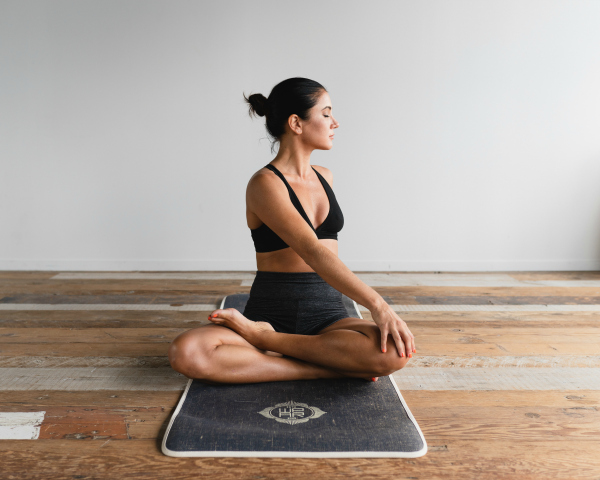
What are the best types of meditation for beginners?
If you are brand new to meditation, we recommend practicing mantra meditation or mindfulness meditation. These are both very simple and accessible practices. Try out each one the for 5-10 minutes for the first few times to see how it feels. If you are looking for a technique that can help you create more mindful states (mental clarity), you’ll love using the mantra meditation techniques with a set of mantra prayer beads or a traditional Buddhist mala.
If you have mastered the basics of mantra meditation and are looking for something more advanced, we recommend the advanced mantra meditation. This is a more advanced type of mantra meditation that includes deeper breathing and visualization techniques. If you are ready for a better technique, check out this advanced mantra meditation.
However, if you decide to study yoga and/or meditation, and practice it regularly with the assistance of a qualified, experienced and compassionate instructor, then both yoga and meditation can produce results that go far beyond merely alleviating stress. These yoga and meditation practices can provide lasting effects on the nervous system, and the brain as a whole, which can be a big benefit for your health and wellness.
Yoga classes consist of three parts – initial, main and final. Their specificity depends on the chosen direction of yoga. The lesson can begin with chanting a mantra, a short relaxation or a warm-up. For a beginner, it is important to carefully monitor what the teacher is doing and try not to miss small details. And for a professional, this course https://siddhiyoga.online/courses/restorative-yoga-teacher-training-certification will be very useful. In it you will find more information you need
Yoga and meditation are two sides of a coin. Experts often advice to start any new routine like practicing yoga or mediation under a trained mentor. Here at https://maharishiyogapeeth.com/ institute anyone can start as a fresher and become a ytt yoga teacher. Both beginners and professionals can train as yoga is the ultimate practice. It simultaneously stimulates our inner light and quiets our overactive minds. It is both energy and rest.
You can enjoy all these joys and gain much more through meditation. Meditation offers countless benefits for your body, mind and spirit. The main thing is to dig into this in more detail to do everything right, one day I discovered a lot of benefits and ancient wisdom here
It’s the same with positive emotions: you realize what brings you positive emotions, you use this knowledge to stabilize your state, to replace the negative with the positive. Discover empowerment here, it will help you to know yourself better
Absolutely! Yoga and meditation are powerful tools for achieving peace of mind, losing weight, and enhancing overall well-being. They promote mindfulness, reduce stress, and improve physical fitness. By integrating these practices into your daily routine, you can experience profound mental clarity, emotional balance, and a healthier body you can join https://namasteyogaschool.com to learn yoga and meditation from the source